Balikatan 2026 gears up for warfare in the Indo-Pacific—-NDF-Cagayan Valley
“They claim they are training but they’re actually undertaking full combat operations,” was the people’s criticism against the Balikatan exercises held in the coastal communities of the towns of Abulug, Ballesteros and Aparri in Cagayan province and in Basco, Batanes. They knew this was not simple training but the US preparing for its next war right on their backyards.
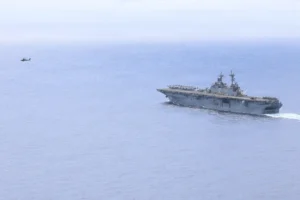
With 17,000 participating troops from the US, Philippines, Japan, Canada, Australia, France and New Zealand, the biggest Balikatan Exercises were held from April 20 to May 8 in the Philippines. Sea warfare training using missiles and drones was also held. Prior to this, Salaknib exercises were held in parts of Central Luzon.
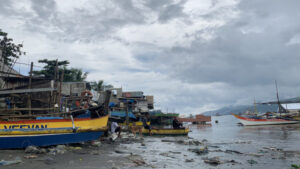
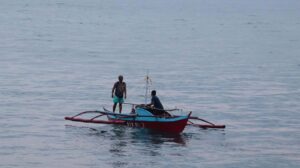
In Barangay Bagu in Abulug, Filipino, Japanese and American troops conducted Amphibious Operation Exercises, or naval military operation and warfare training, alongside air and ground maneuver exercises. These were held also on the shores of Ballesteros and in Barangay Dodan, Aparri and Itbayat, Batanes. As in the past, the live fire exercises and war maneuvers extremely terrified the communities. Fisherfolk also suffered as the ongoing war exercises banned fishing.
The local governments and other civilian agencies in these towns were also exploited as support groups and logistical backing for the ongoing war games.
Missile arc
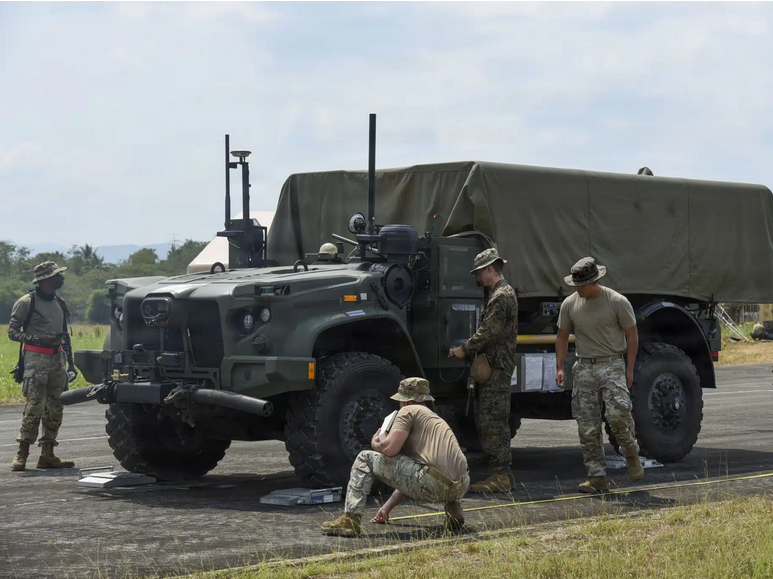
The deployment of US troops’ missile systems for the ongoing Balikatan in Itbayat, Batanes is even alarming the Cagayan Valley people extremely. The NMESIS anti-ship missile system was positioned there for the forward positioning of war materiel. It faces Taiwan, which is only 142 kilometers away. The NMESIS, which was earlier positioned at an EDCA site at Cagayan North International Airport, has a target range of up to 185 kilometers. Another missile system, the High Mobility Artillery Rocket System (HIMARS), with a target range of up to 499 kilometers, was also deployed on Itbayat island. HIMARS can destroy not only ships, but also other targets from land and air.
The US Marines say the positioning of NMESIS and HIMARS in Batanes is strategic for strengthening its defense capacity because it can spread firepower across the islands there.
The Typhon missile system first deployed in Ilocos Norte is in Northern Luzon, and its precise location there remains undisclosed.
An advance surveillance sensor dropped by a UH-60 Black Hawk helicopter in the Bashi Channel area was aimed at these missile systems. This is one proof that Balikatan is not just a simple exercise, but part of intensified war preparation moving toward actual missile exchanges. This live sensor is activated and ready to fire once it detects any movement or approach of Chinese troops, ships and weapons.
Aside from NMESIS and HIMARS in the Luzon Strait area, Japan also fired its Type 88 surface-to-ship missiles in the ongoing Balikatan on the coastal area of Paoay, Ilocos Norte, which also faces Taiwan. India’s Brahmos Missile, which the AFP flaunts as its arsenal’s strongest weapon, was also positioned on the coast of Zambales near the disputed Scarborough Shoal and is set to be used in simulation firing in the joint maritime strike drills.
The positioning of these missile systems in strategic locations is part of the US, Japan and their allies’ building of a “missile arc,” where a chain of missiles is positioned along its designated first island chain.
Playing with fire
This missile arc aimed at China is a fuse that will ignite the outbreak of war in the Indo-Pacific. It is laid out in the First Island Chain, or the major archipelagos in the West Pacific Ocean surrounding China. This includes the Kuril Islands in Japan, the Ryukyu Islands in Taiwan, northern Philippines and Borneo. The First Island Chain aims to encircle and defeat China in order to strengthen US power in Asia and seize its natural resources and dominate its trade.
Palawan, Zambales, Ilocos Norte and Cagayan Valley are the designated key locations in the Philippines included in the First Island Chain. Batanes and Ilocos Norte serve as entry points in the north toward the Bashi Channel, the important passage connecting the South China Sea and the Western Pacific, which the US is guarding and wants to control, while Palawan and Zambales serve as springboards for attacks in the west. The missile arc of the imperialist US and Japan include these sites precisely for positioning missiles.
The much hyped biggest Balikatan Exercises triggers China to warn the US and the Philippines that this is “playing with fire.” China matched the Balikatan 2026 with its own war exercises in the South China Sea, near the Philippine northeast. It shut down air travel in its territory and also deployed powerful weapons, missiles, ships and warplanes such as the carrier strike group Liaoning. The weapons China lined up against Balikatan are said to be among the world’s most powerful and sophisticated war weapons and equipment. These include a drone carrier warship, missile launcher and the 052D Class Destroyer Cangzhou aircraft carrier, from where it launched a cruise missile in that war exercise. It also unveiled a submarine hypersonic missile. China displayed the rapid and continuous strengthening of its own armament and military forces.
Disorder, not stability
These events are clear indicators that the war between the two rival imperialists, the US and China, will sooner or later erupt. Balikatan is not just drills or innocuous exercises, but a rehearsal or final training for an impending war.
The US-Marcos regime’s inclusion of Cagayan Valley and other key locations in the Philippines into the First Island Chain where missiles and war equipment are positioned is extremely dangerous. By flaunting the Balikatan Exercises as aiming for stability and peace in the Asia-Pacific region, the AFP, the Marcos regime and the imperialist US are utterly deceiving the Filipino people. This is belied by the severe disorder and suffering currently being experienced by the people in Iran and the Middle East, which the imperialist US attacked with impunity in order to seize their natural resources and oil and dominate the region.
Allowing the Philippines to be exploited as a springboard for war is the apex of the Marcos regime’s servility to its imperialist US master. These missiles and war weapons are freely positioned in the country because of the military agreements the Marcos regime entered with the US.
People’s war against imperialist US rule
In this regard, the National Democratic Front of the Philippines–Cagayan Valley (NDF-CV) said that the positioning of US and Japanese powerful weapons and war equipment in the region intensifies imperialist aggression and enforces its domination in Asia-Pacific, as it does in the Middle East. This is a blatant violation of Philippine sovereignty and directly endangers the Cagayan Valley region and the entire Philippines from retaliation by China and other enemies of the US.
“The AFP and the US-Marcos regime will be accountable for the people’s detriment here once the war they are provoking in the Asia-Pacific breaks out, and they will be charged with war crimes,” NDF-CV spokesperson Salvador del Pueblo said.
The NDF-CV emphasized, “Now is the critical time to strengthen the Cagayan Valley people’s anti-imperialist alliance and the struggle to stop the imperialist US war of aggression and expel its war equipment from the region and the entire country. Intensify the people’s war above all because only this can defeat US imperialist rule.”