US military equipment prepositioning and use of civilian facilities in CDO extremely endangers Filipinos
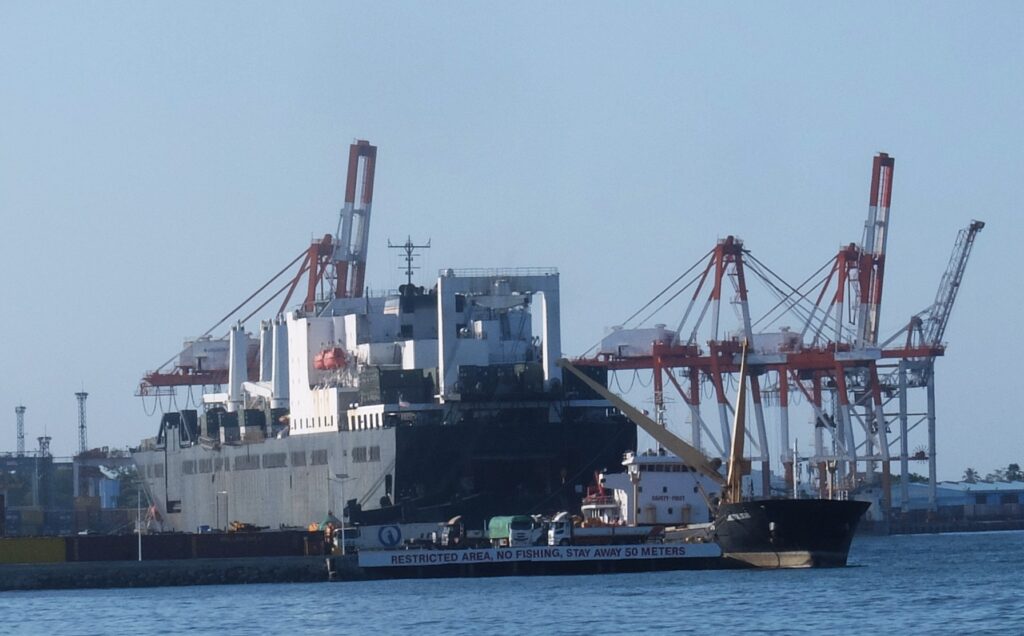
The Communist Party of the Philippines (CPP) strongly condemns the US military for using civilian facilities to preposition its military vehicles in Cagayan de Oro City and eventually transporting them from the city to Subic Bay in Zambales using commercial roll-on/roll-off (ro-ro) ships.
It was only this April that the US publicly admitted it had stationed Humvees in the city for the pre‑Balikatan war games in March, and that it conducted a “rehearsal” for transferring said vehicles.
“The secret prepositioning and rehearsal for transferring war matériel is a slap in the face of Cagayanons after they expressed their concern over the US presence in their city,” CPP information officer Marco Valbuena said. “This shows the US’ blatant contempt for Philippine sovereignty and its utter disregard for Filipino civilians’ sentiments.”
Valbuena also denounced the collusion of the 4th ID with American troops in deceiving the people of Cagayan de Oro.
“The 4th ID chose to endanger the security of thousands of city residents and nearby communities rather than defy the orders of their American masters.”
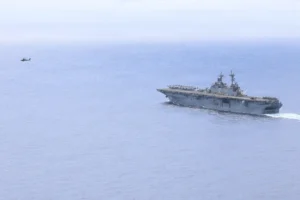
The prepositioning and the “rehearsal” for the transfer of war matériel in Cagayan de Oro were carried out under the US Marines’ “distributed maritime operations” (DMO) concept, which disperses its equipment, fuel, troops, and weapons across scattered islands to “deny targets” to its enemies. This “rehearsal” aims to practice the rapid shuffling of military assets—vehicles, missiles, cannons, and others—using “host-nation infrastructure,” or Philippine facilities, both military and civilian.
The US had reportedly been scouting since last year for commercial ro‑ro ships to move its equipment and vehicles to islands with shallow waters where warships cannot dock. Calling this “21st Century Foraging,” the US actively sought civilian facilities, resources, and services to “sustain and move” its military forces instead of “relying on traditional military supply lines.” This forms what the US calls a “hybrid military‑civilian” supply chain.
“The height of convenience for the US military use of civilian ships is equal to the gravity of danger for Filipinos,” Valbuena said. More areas and facilities run and manned by civilians are exposed to attacks by US’ enemies.
“This deliberately blurs the line between civilian and military spheres, turning civilian lives and property into military targets,” he said. “It is a direct violation of the principle of protecting civilian in times of war.”
International humanitarian law strictly prohibits targeting civilian property during war. Such protection is voided when these are used for military purposes. A civilian barge or ro‑ro ship delivering military vehicles, tanks, missiles, or other combat gear may become a legitimate military target.
“The US’s intent is clear, even if it claims that the use of civilian ships is merely a ‘rehearsal’ and done during ‘peace time,’” Valbuena said. “It will use Filipino civilians as cannon fodder once it is attacked by its enemies.”