NDFP SOPC: Violence in Tacloban rooted in a rotten system; national liberation assures true child protection
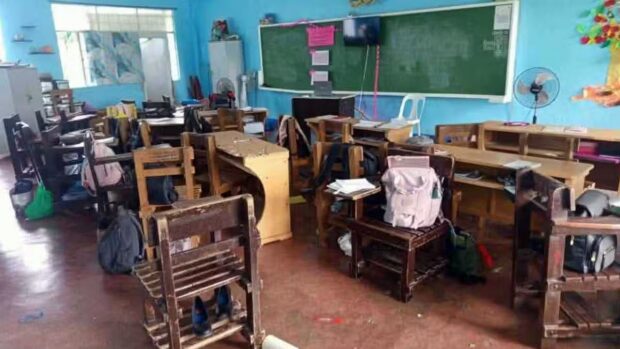
The Special Office for the Protection of Children (SOPC) of the National Democratic Front of the Philippines (NDFP) extended condolences to the families, relatives, classmates, teachers, and communities affected by the June 22 school shooting in Tacloban City. SOPC head Coni Ledesma in an official statement emphasized that this tragedy is not merely an individual misfortune but a symptom of a rotten system.
According to the SOPC, the school shooting in Tacloban exposes the violent and destructive character of Philippine society that shapes the lives of Filipino children. “It should compel everyone to ask why so many young people are caught up and grow up in poverty, social neglect, and various forms of violence,” she said.
Ledesma explained that the current system has normalized a culture of violence and impunity. Children witness extreme poverty, the state’s fascism, corruption, and the lack of genuine opportunities for their future every day. These conditions infuse violence into a child’s consciousness.
“As investigations, public discussion should not be reduced to the mere actions of individual children. Attention must be directed toward the social, economic, political, and cultural conditions that reproduce violent behavior among the youth,” Ledesma emphasized.
Ledesma also strongly opposed any attempt by the reactionary government to use the tragedy to propose anti-child policies.
“There should be no room in public discourse to use this tragedy as pretext to lower the minimum age of criminal responsibility. Such proposals do not address the roots of violence and merely shift blame onto children themselves,” she explained. She stressed that the real issue is not punishing children more serverly but dismantling the culture of impunity perpetuated by the ruling class.
The NDFP shared that organs of political power (people’s government) in revolutionary areas actively implement programs for children’s welfare. These include literacy campaigns and education grounded in their communities’ conditions. These programs aim to shape children into responsible participants of society with high social consciousness.
“Fundamental to the NDFP’s perspective is the recognition that children flourish when their families and communities are empowered,” she said. “Landlessness, unemployment, low wages, forced migration, and the lack of social services undermine children’s welfare.” Thus, she said, true child protection cannot be separated from the struggle for land reform, national industrialization, economic sovereignty, and democratic rights.
In closing, Ledesma said a truly child-friendly society is one where every child is guaranteed the conditions necessary for their full development and participation in social life.
“Such a society can only be achieved through the eradication of imperialism, feudalism, and bureaucrat capitalism which are the fundamental sources of exploitation, oppression, and violence that continue to afflict Filipino children and their families,” she said. “Only in such a society can Filipino children genuinely enjoy peace, dignity, security, and the opportunity to realize their fullest potential.”