Government housing is a business to make money out of the poor
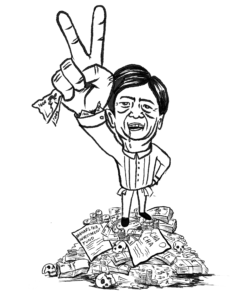
The Pambansang Pabahay Para sa Pilipino Housing (4PH) project started in 2022 by the Marcos regime is bogus and anti-poor in essence. It insidiously aims to drive the poor from their communities through promises of relocation, and make profit from them through high amortization fees.
In partnership with private developers, the program aims to construct 1 million houses annually for six years to address the estimated 6.5 million housing shortage, with homeless families, mostly in Metro Manila, comprising over half or 3.7 million. (This target is ambitious, considering the state has built only around 300,000 houses annually in previous years.)
An estimated ₱1 trillion per year is needed to achieve the regime’s annual target. The houses it plans to build will have a 25-square meter floor area and a pricetag of ₱1 million. However, rather than allocating public funds, the regime plans to shift the cost to private companies. The state has only provided ₱36 billion “interest subsidy” to cover 5% to 6% of the annual interest on beneficiaries’ amortization. Even with the state covering the interest, the poor will still have to pay ₱3,000 per month for 30 years. The developer will earn a total of ₱2.1 million, including a 6% annual interest, twice the original price of each unit.
This is way too prohibitive for families below the poverty line, which is set at ₱12,000 per month. They struggle to pay for housing costs even at the usual range of ₱900 to ₱2,000 monthly.
Another stupid plan of the 4PH schme is the plan to erect mid-rise building in urban poor communities which the poor can ill-afford. They have little chance of making regular payments on amortizations which are intentionally set high beyond their reach. This will surely result in the their displacement and eventual eviction.
At its core, the 4PH is a profit-making scheme for private housing developers. Because this is funded by private developers and banks, they are set to manage and stand to benefit from it. State agencies, as well as local governments, will end up being agents of developers and banks.
Similar to previous anti-poor solutions, the 4PH includes relocating the poor to “mega-townships” in Nueva Ecija and Laguna. The regime touts this as “rural development” under its grand infrastructure project, Build Better More.
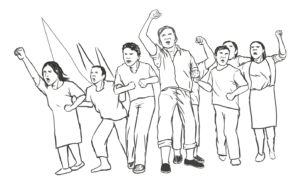
Urban poor groups said a real housing program should be funded and managed by the state, not by private real estate companies. They say subsidizing amortization interests is not enough.
The urban poor demand building public housing near workplaces and public services to ensure sustainability. Therefore, the poor should be granted priority access to land where their houses are currently standing through in-city and onsite relocation.
Most importantly, the root causes of poverty should be addressed not only in urban areas but also in rural areas. The rising number of homeless people in large cities is due to the overflow of unemployed people from rural areas who are forced to move to cities to seek work. They are forced to live in crowded communities near commercial centers and industrial enclaves because of their low wages and income, lack of jobs, unemployment, and high prices of commodities and services, including housing.