Garbage crisis in Davao City underscores local government's mismanagement
Davao City’s severe garbage problem was emphasized following the collapse of the sanitary landfill in Purok 8, Barangay New Carmen, Tugbok District on May 20. The collapse occurred after continuous rains severely flooded the city, killing a resident, burying 15 houses, and forcing at least 123 families to evacuate.
Environmental groups have long warned that the New Carmen Landfill has far exceeded its capacity and should already have been closed. The Department of Environment and Natural Resources (DENR) suspended the landfill’s operations after the collapse to supposedly allow “stabilization measures” and ensure compliance with proper waste segregation and processing.
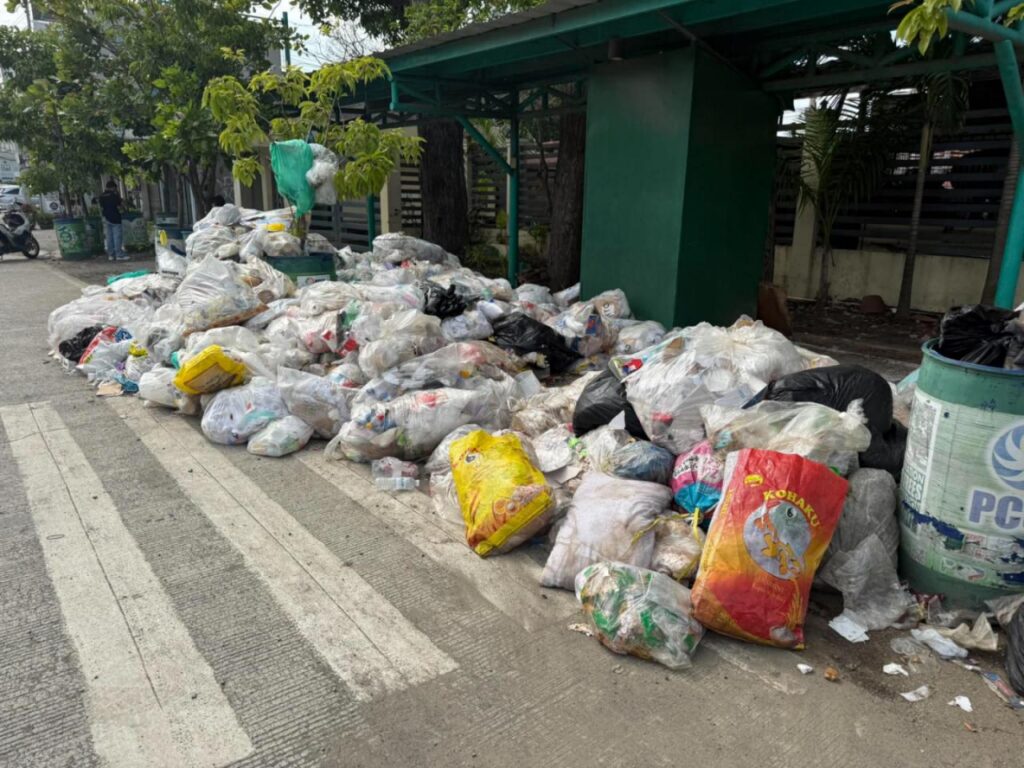
While it remained closed, garbage estimated at 750 tons per day piled up along roads and in communities.
The Davao City local government consequently drew criticism. Interfacing Development Interventions for Sustainability (IDIS) blamed weak segregation enforcement in the city despite repeated warnings. The group reported that only 53 out of 182 barangays in Davao have Material Recovery Facilities. Worse, many of these were built for compliance with the law and are not operational. The local government also failed to provide workers sufficient support in garbage collection and processing.
In response, city mayor Baste Duterte ordered on June 5 to dump the city’s garbage in front of the DENR Region XI office. He aimed to pressure the agency to reopen the landfill despite uncertainties. Many netizens criticized the move as “trolling,” bullying, and childish. Reports said Duterte’s move effectively held public sanitation “hostage” just to “get back” at the DENR instead of fixing the systemic problems plaguing the city.
Duterte is currently rushing the opening of a 9-hectare sanitary landfill costing ₱559 million right beside the collapsed site. According to IDIS, this landfill will not be sufficient if the volume of garbage produced daily in the city is not reduced.
IDIS also continues to oppose the planned construction of a waste-to-energy plant in Biao Escuela funded by a ₱5 billion loan from Japan. The group said such a plant’s incineration technology is detrimental to health and the environment. It is also extremely costly and debt-dependent.