Groups launch fact-finding mission regarding the Toboso massacre
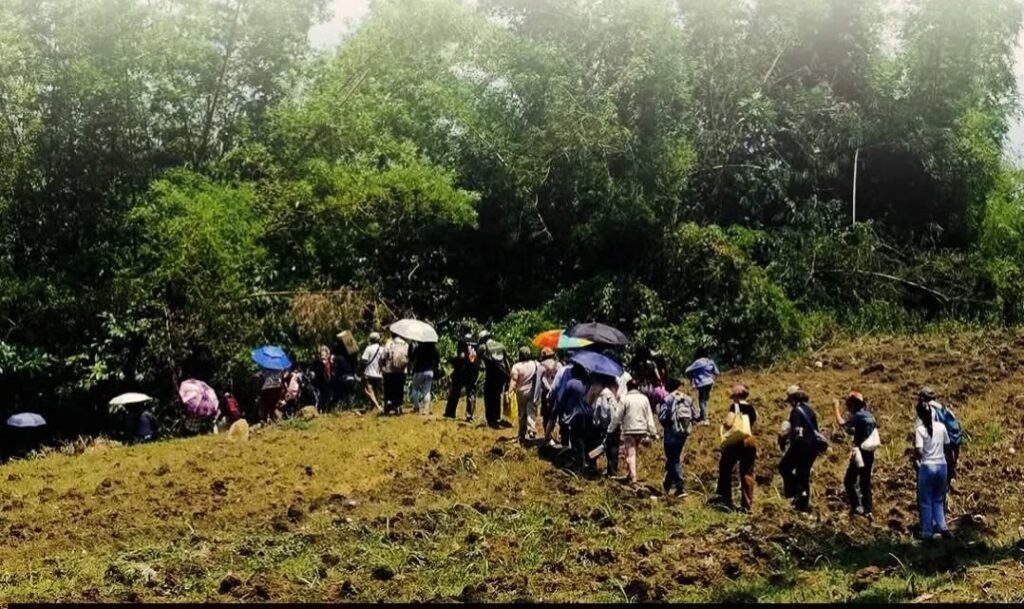
Various groups launched a National Fact-Finding and Solidarity Mission (NFFSM) in Barangay Salamanca, Toboso, Negros Occidental on May 14 to investigate the April Toboso massacre. At least 117 delegates participated in the mission, composed of local and foreign human rights defenders, lawmakers, activists, church people, student leaders and journalists.
Led by Manindigan-Negros, groups from Negros Island welcomed the mission. It aims to investigate and clarify the events that led to the bloody massacre of 10 New People’s Army (BHB) Red fighters and nine unarmed individuals on April 19 in Barangay Salamanca.
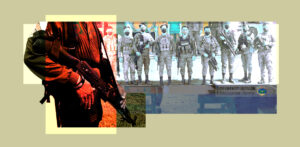
The size and breadth of the delegation defied the military’s intense militarization and harassment in Toboso and across the island. Their presence compelled local governments and officials to allow the activity. San Carlos Bishop Gerardo Alminza also supported and blessed them. “Your courage to seek the truth amid fear and intimidation is concrete proof that truth, justice, and peace still matter,” he said.
The NFFSMs’ method
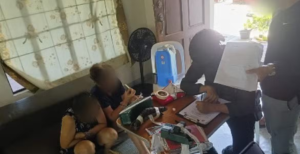
The delegation specifically visited Sitio Sinugmawan and Sitio Plaringding where residents said they heard gunfire. They conducted focused group discussions and house-to-house interviews to talk with residents. They spoke with at least 30 residents who said they could be considered “key informants” because they had direct experience of the events.
The residents said they first heard gunfire around 3 a.m., followed by intermittent shooting until 7 a.m. in Sinugmawan. Soldiers harassed, “visited and searched” at least 18 households that morning looking for alleged NPA combatants.
Sitio Plaringding residents shared that they heard successive gunshots between 9 a.m. and 11 a.m. Others still heard gunfire until 4 p.m. They also recounted the 79th IB abducting a mother and her 14-year-old son who were going to the fishpond to gather shellfish. The military took the mother and son to a hill where they were subjected to interrogation. The mother and son witnessed the soldiers’ indiscriminate shooting at the fishpond.
The 79th IB forcibly evacuated 653 individuals from the community from April 19 to April 22. The delegation thus could not interview anyone who could verify the 79th IB’s claim that there was an intense firefight at the fishpond where the bodies of 19 allegedly massacred persons were found.
Civilian status confirmed
The delegation’s interviews established that at least six of the 19 victims were civilians. Residents said they personally interacted with student leader Alyssa Alano, farmer-organizers Maureen Santuyo and Errol Wendel, journalist RJ Ledesma, and Filipino-American activists Kai Sorem and Lyle Prijoles. Residents said they never saw any of the six carrying firearms during their presence in the community.
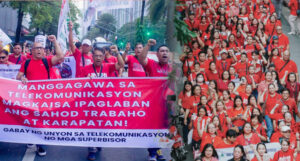
The Unyon ng mga Manggagawa sa Agrikultura (UMA, or Union of Agricultural Workers) also explained the presence of the six in Barangay Salamanca. The group sent Santuyo and Errol Wendel to the barangay to help organize and carry out social investigations and studies on the conditions of farmers and farmworkers, specifically in Hacienda Bedonia. Their other companions had the same purpose.
Hacienda Bedonia is a clear example of feudal and semi-feudal exploitation in the Philippines. The hacienda’s 16 farmworker families have been tilling its 18 hectares that long should have been allotted to them. UMA chairperson a mission delegate Ariel Casilao said that the researchers had even reported to them before the massacre that the land is persistently denied to the farmers.
A landlord relentlessly claims the said hacienda despite lacking sufficient documentation. This, they say, is why the community formed the Hacienda Bedonia Farmers and Farmworkers Association, an UMA member.
Casilao said the conditions in the hacienda proves the government’s land reform is a failure and bogus. He said 18% of farm holdings on the island are entirely owned by a few hacenderos, landlords and plantations and agribusiness corporations, both local and foreign. Farmers reportedly remain without control, ownership and opinion over their land. UMA recorded 38 cases of land grabbing across the island.
UMA further explained that it should not be surprising why NPA was in the area or nearby the researchers. Casilao said it simply means, and even the Negrosanon masses know, that the people’s army is always present to help peasants wherever there is a land problem.
“They only differ in their manner of helping: they are armed,” he said. He emphasized, however, the clear distinction between the state and civilians and the armed combatants of the NPA. These rules are stipulated in international humanitarian law, and are specifically written in the Comprehensive Agreement on Respect for Human Rights and International Humanitarian Law (CARHRIHL). This was signed by the negotiating panels of the Government of the Republic of the Philippines and the National Democratic Front of the Philippines on March 16, 1998 in The Hague, The Netherlands, and specifically focuses on areas of armed conflict.
What crimes did the 79th IB commit?
The National Union of People’s Lawyers listed the 79th IB’s possible crimes in the Toboso massacre. Through documented witness testimonies, the delegation further confirmed the soldiers’ numerous human rights violations. These include the soldiers’ use of civilian houses, harassment and intimidation of residents, restrictions on agricultural work, indiscriminate shooting near households, illegal detention, and the use of a farmer as a human shield.
The delegation also established “evidence tampering” or movement and planting of evidence to support the narrative proliferated by the 79th IB. This included weapons and war materiel presented by the military as having been seized from the victims. Forensic pathologist Dr. Fortun also recently reported that three of five subjected to autopsy had wounds on their backs but the corpses in the photographs circulated by the military were all lying on their backs.
The delegation identified soldiers’ desecration of the victims’ bodies as grave crimes of war and international humanitarian law. The soldiers left the bodies under the scorching sun and submerged in fishpond water for two days and only “recovered” them on April 21. The wrong remains was also given to the family of Errol Wendel.
Meanwhile, state forces overtly harassed the delegation. Soldiers tailed the teams conducting the investigation and photographed them. The 79th IB soldiers also swarmed into Barangay Salamanca on May 13, a day before the mission. American delegate and International Coalition for Human Rights in the Philippines (ICHRP) member Pastor Sadie Stone was prevented from entering the Philippines on the grounds that she was “blacklisted” in the country for participating in political activity in 2016.
The delegation calls for accountability of the 79th IB and the 303rd IBde, along with an end to militarization in Negros Island. They demand justice for the massacred and for all the victims’ families.