Philippines stopping au pair system in the Netherlands evades accountability to Filipino migrants
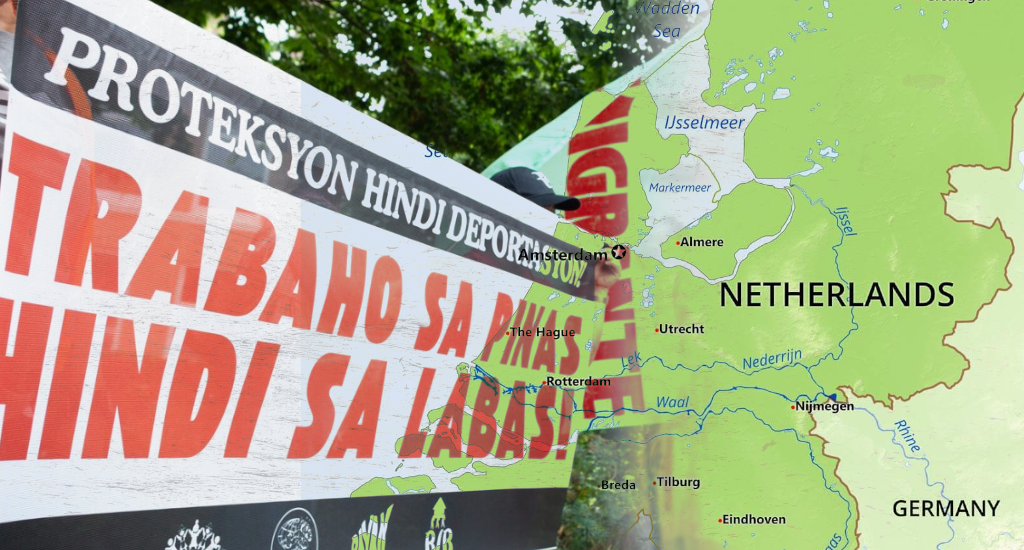
Gabriela-Pinay in Holland and Migrante Netherlands denounced the Philippine embassy for its decision to abruptly stop approving contracts of Filipinos who seek to work as “au pair” in the Netherlands starting July 1. They said that the government imposed a total shutdown of access for migrant workers instead of asserting for stronger protection for au pairs.
An au pair refers to a young woman or man aged 18 to 30 employed as a child caregiver (nanny) for a host family abroad. This arrangement is common in Europe and the US. Around 2,000 are currently under the au pair system in the Netherlands, where 36% are Filipinos.
In exchange for their services, au pairs receive free lodging, food, and allowance in a foreign country. It is called a “cultural exchange program” where an au pair can learn a new culture and develop foreign language skills.
Under the guise of “cultural exchange,” most au pairs perform heavy housework and caregiving under inhumane working conditions such as excessive work hours, low pay, isolation, and vulnerability to abuse. According to Migrante Netherlands, many Filipina au pairs who are victims of abuse have approached the group in recent years.
Their condition and absolute dependence on host families render au pairs vulnerable to abuse and deception. Most endure abuse out of fear of being expelled from the country.
In the Philippine embassy’s decision to halt the au pair system, Gabriela-Pinay sa Holland said the embassy failed to confront the reality that this is deeply rooted in the global exploitation of women’s labor and racial minorities. Families in wealthy countries rely on the cheap labor of migrants to sustain their economic life.
Protection and welfare of au pairs
Many Dutch families rely on the au pair system to manage their households and support childcare at a low cost. This is because the economic crisis in the Netherlands force couples to both work to raise their income.
For performing real and essential domestic labor, au pairs must be guaranteed a living wage and meaningful labor protections. According to Gabriela-Pinay sa Holland and Migrante Netherlands, the Philippine government must assert their rights and welfare before the Dutch government.
This includes ensuring mechanisms for reporting complaints and support systems for abused workers, and holding agencies and host families accountable for abuse.
“Filipino women are not commodities for export,” said Gabriela-Pinay in Holland. It added that Filipino migrant women need dignity, justice, labor rights, and the right to move safely.
Migrante Netherlands called on the Dutch government to seriously review the au pair system. The group said au pairs should no longer remain in a precarious condition between caregiving work and “cultural exchange” that places them in a situation prone to exploitation.
Beyond criticizing the au pair system, the two groups push the Philippine government to address unemployment in the country, low wages, lack of land for cultivation, and the absence of genuine industrial development. They said these conditions drive Filipinos to seek work abroad under dangerous conditions.