On Bonifacio Day Thousands of Filipinos flood the streets anew against corruption
Thousands of Filipinos nationwide once again filled the streets on November 30, Andres Bonifacio Day, to protest the rampant corruption being exposed in the government. The people’s calls echoed from demanding to hold all involved in corruption accountable to urging the resignation of President Ferdinand Marcos Jr, Vice President Sara Duterte, and other corrupt officials.
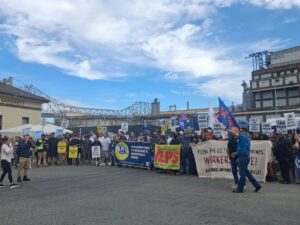
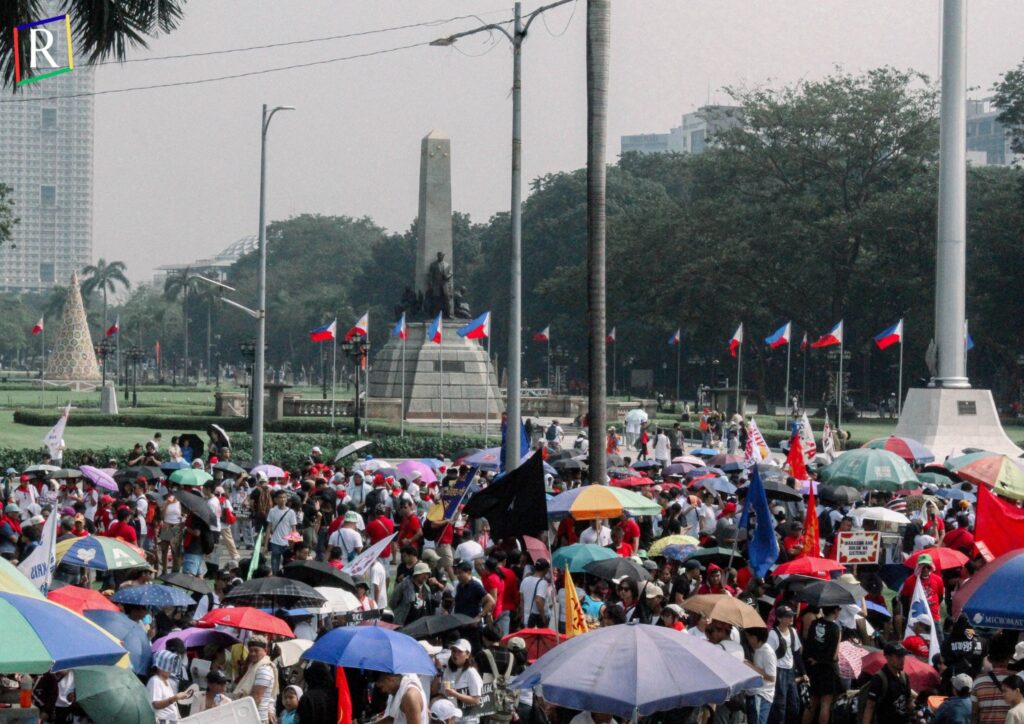
Led by the Kilusang Bayan Kontra Kurakot (KBKK, or People’s Movement Against Corruption), more than 20,000 people gathered at Luneta Park in Manila for the protest Baha sa Luneta 2.0: Protestang Bayan Kontra Kurakot. Various groups, forces, and sectors participated in the protest, including workers, farmers, urban poor, students, women, and members of the church.
The Marcos regime’s efforts to sabotage the protest failed to stop the people’s clamor for accountability and justice. The protest pushed through despite police attempts to block the Luneta program and undermine the KBKK’s clear coordination with local government and agencies. It was delayed by several hours, but the speeches, cultural performances, and other forms of people’s expression were carried out.
Groups under KBKK united under the basic call: “Hold everyone involved accountable!” As previously declared, the group openly accepted the various calls of other groups organized under the basic unity.
The Bagong Alyansang Makabayan (Bayan) led progressive groups in the call “Marcos and Duterte, resign!” According to Bayan, Marcos must be investigated and held accountable for his key role in the budget insertions and fund releases for projects that squandered hundreds of billions in public funds. Duterte had already been proven guilty of corruption, which led to her impeachment earlier this year.
Bayan pushed for a National Transition Council to replace and temporarily administer the government should the dubbed king and queen of corruption are removed from power.
After the Luneta Park protest, Bayan forces marched to Mendiola to specifically hold Marcos accountable. Other political forces also joined the march aside from Bayan.
As before, thousands of police blocked the march to Mendiola with barbed-wire barricades, container vans, and police vehicles. Bayan was forced to hold its program in front of the University of the East on Recto Avenue.
According to Bayan, the excessively disproportional security around Malacañang exposed the deceptive nature of the government that claimed to defend the people’s right to protest. “Marcos Jr’s paranoia and brutality are symbolized by the absurd sight of the DILG secretary, the president’s alter ego, standing atop a container van surrounded by police forces and multiple layers of barbed wire,” the group said.
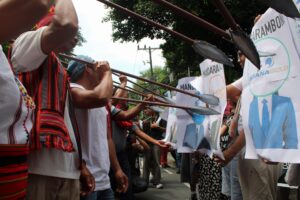
Protesters ended the Recto Avenue program by burning an effigy of Marcos wearing a crown and US flag as sash. “Let us continue Bonifacio’s and the Katipunan’s unfinished struggle by fighting for genuine freedom and democracy in our country,” Bayan declared.
People’s protests in other parts of the country
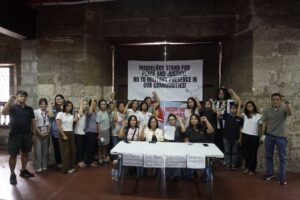
In other cities and provinces, groups allied with KBKK held mobilizations and activities to condemn the Marcos regime’s corruption. In several areas, they were joined by Catholic Filipinos who protested following the Catholic Church’s anti-corruption stand.
In Northern Luzon, actions were held in Baguio City, San Fernando City in La Union, Ilocos Sur, Ilocos Norte, and Santiago City in Isabela. The most notable was the protest of hundreds in Baguio City called Baha sa Burnham, led by the Baguio-Benguet Laban sa Korapsyon Network.
In Central Luzon, progressive groups held a protest in Tarlac City. Groups from other provinces such as Pampanga and Bulacan joined the protest at Luneta Park.
In Southern Tagalog, demonstrations and protests were held in Calamba City in Laguna, Bacoor City in Cavite, and Calapan City in Oriental Mindoro. No fewer than 3,000 individuals marched in Calamba City under the leadership of Bayan-Timog Katagalugan.
In Bicol, protests were held in Legazpi City in Albay and Naga City in Camarines Sur.
In Panay, the Kahublagan Kontra Kurapsyon (KKK, or Movement Against Corruption) led protests and actions. In Iloilo City, thousands of Ilonggos joined Catholic Church leaders. Sectors and groups also held programs in San Jose in Antique, Roxas City in Capiz, and Kalibo City in Aklan.
In Negros Island, hundreds of Negrenses gathered in Bacolod City under the leadership of Taumbayan Ayaw sa Magnanakaw at Abusado Network Alliance (TAMA NA, or People Against Thieves and Abusers Network)-Negros, the Roman Catholic Diocese of Bacolod, and One Negros Ecumenical Council (ONE-C).
In Central Visayas, the Kalihukang Sugboanon Kontra Korapsyon (Kasukko, or Cebuano Movement Againsta Corruption) led the people’s anti-corruption protest in Cebu City. Various groups held a morning program including a march to Metro Colon.
In Eastern Visayas, Bayan led progressive groups for a program in Tacloban City.
In Mindanao, actions were conducted in Davao City, Cagayan de Oro City, and General Santos City. In Davao City, the Dutertes’ bailiwick, Bayan-Southern Mindanao unflinchingly called for the removal from power of Sara Duterte and Marcos for their involvement in corruption.
Catholic Filipinos stand against corruption
Meanwhile, in several cities and provinces, Catholic Filipinos held separate protests following the call of the Catholic Church and its leaders. These actions were called the Trillion Peso March Movement (TPMM). The Church’s main protest center was the EDSA gathering. Catholic Filipinos reportedly held actions in no fewer than 86 dioceses across the country.
Prior to the day of action, KBKK and its allied groups attempted to join the EDSA protest, but obstacles with the organizers arose. The entire TPMM was hesitant to allow KBKK into the rally because some of the latter’s allies directly demanded accountability from Marcos and Duterte.
On the protest’s very day, former Catholic Bishops’ Conference of the Philippines chairperson Cardinal Pablo Virgilio David said they did not support the call for Marcos and Duterte to resign, thus they protested at EDSA instead of Luneta. Many groups that joined the Luneta Park protest expressed disappointment at what they called a divisive statement from the cardinal.
In response to Cardinal David’s remarks, Luneta protest organizer KBKK released a clarification to the cardinal’s statements. KBKK corrected several points in the cardinal’s speech, including the minimum unity for the Luneta rally.
“Although we in KBKK and some from the Trillion Peso March Movement (TPMM) tried to hold a joint rally on Nov. 30, some hesitated or disagreed because they did not want to name corrupt dynasties on banners and placards. Nevertheless, our shared goal remains—to hold the corrupt accountable and end the rotten system of governance,” the group said.
KBKK again expressed its openness and readiness to engage in dialogue with Cardinal David, the TPMM, and others, aiming to unite everyone toward our great aspirations for the nation.
Despite the differences between the two groups in Metro Manila, some organizations under both coalitions managed to unite in Iloilo City and Bacolod City. The Church and progressive groups marched together on the streets of both cities.