ICC encourages participation of victims of Duterte's "war on drugs"
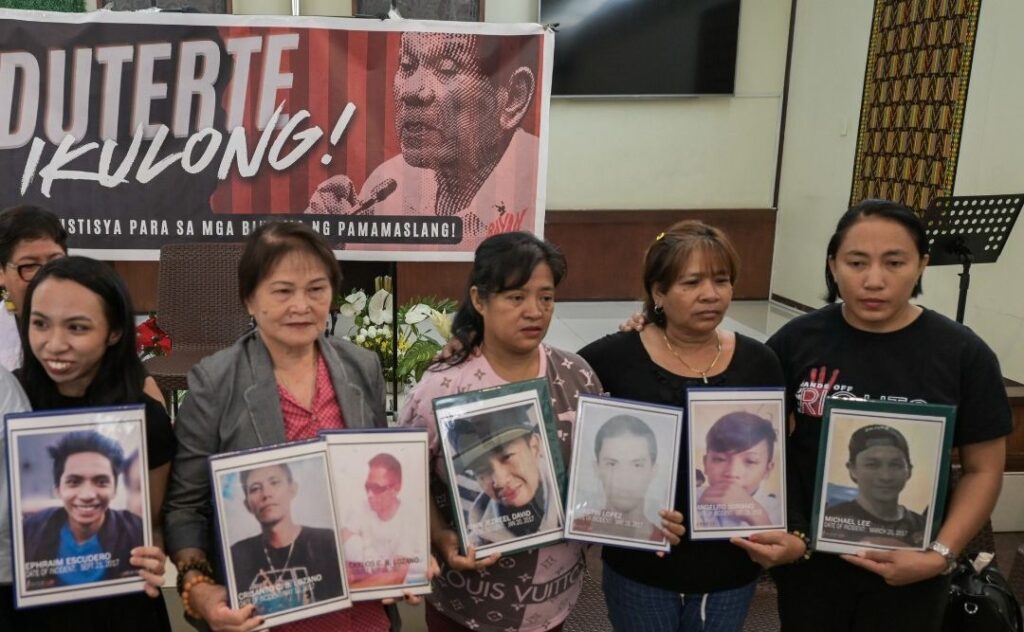
The International Criminal Court encouraged victims of Rodrigo Duterte’s bogus war on drugs to register with the Victims Participation and Reparations Section (VPRS). Opening this section of the court to victims and witnesses is a unique aspect of the ICC. The role of VPRS is important for facilitating the participation of victims throughout the process, from the start of the investigation to the granting of reparations after the verdict.
The duties of VPRS include the following: 1) provide information to victims about their rights and help them participate in the ICC process; 2) support and guide victims in obtaining reparation or compensation and ensure they have access to the reparation process which may be in the form of money, restitution, property, rehabilitation or symbolic acts; and 3) coordinate with the Trust Fund for Victims to provide comprehensive support to victims throughout the judicial process.
The “war on drugs” victims welcome the order of Pre-Trial Chamber I of the ICC on March 21 to the VPRS to recommend a process for application and registration of victims. Victims’ counsel and registered ICC assistant to counsel Atty. Krissy Conti said the victims are ready to talk to VPRS about ways and mechanisms suitable to their situation.
“We eagerly await the court’s further instructions and the VPRS’ guidelines,” she said.
Attorney Conti clarified that the ICC will process not only 43 cases, as stated in the ICC prosecutor’s released document from which the arrest warrant against Duterte was derived.
“We must reiterate that the number of victims covered by the case is larger than the number of victims cited by the Office of the Prosecutor in its request to issue a warrant of arrest,” she said. The trial at the ICC is not for individual cases of murder, but for crimes against humanity, particularly murder, she explained.
The pre-trial period is also a time of discovery and disclosure of evidence. The prosecution will also provide the evidences it will collect to the defense or to Duterte’s lawyers. The court asked the Duterte camp to convey to the judges the general direction of his defense by April 11.
“Until the charges have been confirmed by the Pre-Trial Chamber I however, we cannot determine the exact scope of the case and ergo, the precise identity of victims who can participate,” she said. Duterte will next appear in court only in September and only then will the judges determine if the prosecution has sufficient evidence and if the case will proceed to trial.
Victims may participate as witnesses or by submitting their views or concerns, Attorney Conti said. On the other hand, their non-participation in the process will not result in the dropping of charges against Duterte.
This makes the call for some for the victims to withdraw the case as “senseless”, Conti said. Among those who may be considered by the ICC as victims of Duterte’s crime, if the case proceeds to trial, are the families of victims of extrajudicial killings, survivors and affected communities. Meanwhile, families of EJK victims, former government officials who have direct knowledge of Duterte’s government policies and operations, activists and sectors who documented the crimes and submitted evidence to the court and “protected witnesses” may become witnesses at the hearing.
The ICC strictly protects the victims’ identity throughout the judicial process, and there are measures to defend their safety, physical and psychological condition, dignity and privacy, Atty. Conti said.