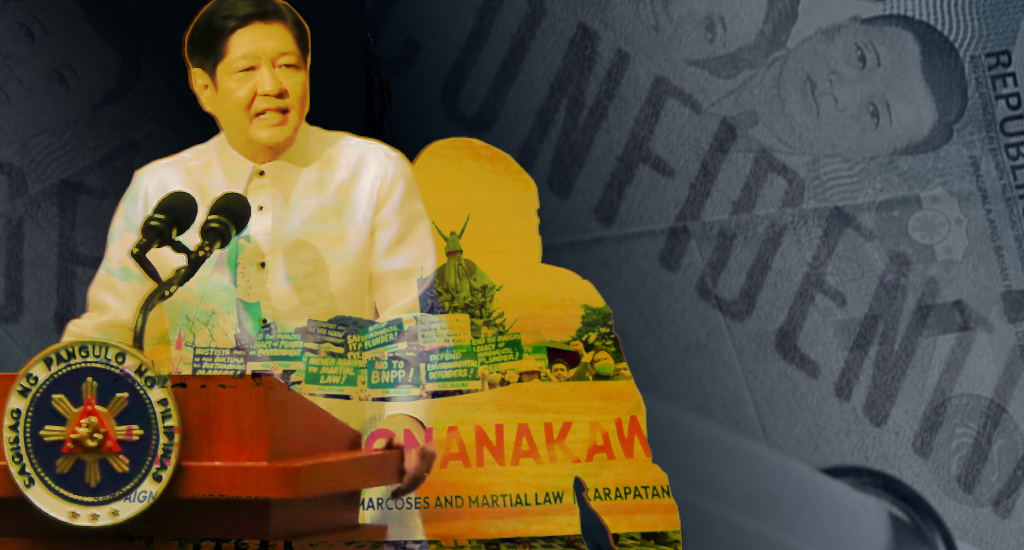
Philippines’ GDP growth is bogus and corruption-driven
The Marcos regime’s boasting of the Philippines’ GDP growth has been proven hollow, based on the latest data released by the Philippine Statistics Authority. According to the agency, GDP grew only 4% in the third quarter of the year. Excluding pandemic years, this is the slowest in the past 14 years.
The 4% growth is far from the 5.6% growth in the same quarter in 2024. Many economists were mistaken for predicting a 6% economic growth in the third quarter, indicating the regime will certainly not meet its target of 5.5–6.5% GDP growth for full-year of 2025.
An Ibon Foundation study stated the biggest decline is in public construction at 26.2%. The regime falsely attributes this to the supposed “stricter DPWH process” amid scandals of anomalies and corruption in flood-control projects.
But according to Ibon, this shows that corruption has primarily driven the regime’s bragged local economic growth in the past.
“Corruption has bloated government spending, expanding the wealth of a select few instead of contributing to real economic development and improving Filipinos’ welfare,” the institution said. Public construction spending rose by 27% during the regime’s first three years. This is nearly double the rate of infrastructure spending under the Duterte regime (14.8%) and several times larger than under the Aquino II regime (-28.6%).
But even the GDP increase is useless to ordinary citizens, according to Ibon. Stagnating wages and salaries pushed down household spending. This grew by only 4.1%, the lowest in the past 15 years (excluding pandemic years). Household consumption makes up 70% of GDP.
Worse, real wages continue to decline as prices of goods and services remain high. The highest daily wage level at ₱695 in NCR has a real value of only ₱550. Nominal wages are far from the living wage of ₱1,225 per day. Filipino families are sure to experience more hardships amid the widespread damage from successive storms this November.
In any case, using GDP as the sole metric for development is a major problem, according to Ibon.
Rather than GDP, Ibon asserts that true development can only be measured by growth in real wages and family income, access to health services, education, and housing. Likewise, the proper bases of measurements should be true poverty and inequality reduction, food security, and the development of the Filipino industrial and agricultural sectors.