Correspondence: The challenge of being a full-time revolutionary
Loren, a young woman, first became socially conscious during the pandemic. She was enraged at the Duterte regime’s lockdown that ran over important events in her life, such as marching at her senior high school graduation and holding her 18th birthday. Her parents lost their jobs, and their family lost someone as they had nothing to pay the hospital bills.
“It was impossible for me to stay blind at that time,” she recounts. She was immersed in social media and followed the posts of activist teacher Chad Booc. From online discussions, she realized the importance of joining mass organizations of young people like her who were roused by various issues in the country.
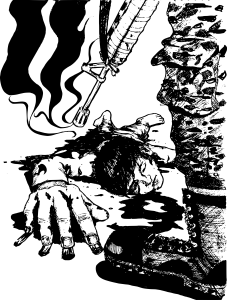
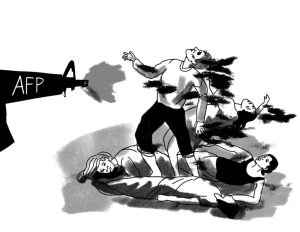
“I became a regular (participant) in Discord and other online meetings,” Loren recounts. But despite her interest, there was a time when she stopped being concerned about societal issues. She was agitated again when she heard about the gruesome killing of Booc and others known as the New Bataan 5.
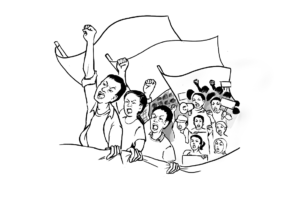
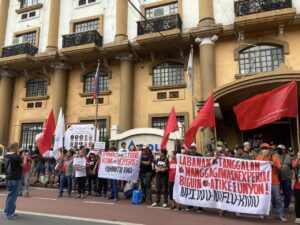
“I wept, got infuriated and endlessly condemned the fascist regime all day when I learned what happened to Teacher Chad,” she recalls. “I couldn’t keep the sorrow and anger to myself, I joined street marches, to demand justice for the person who helped me become aware and stirred me to act.”
She never left the streets since. She returned as a student of the National Democratic School (PADEPA) and participated in lightning protests.
When schools opened, she entered a university as a “scholar of a relative.” Here she faced the issue of education’s high cost and the state’s neglect of her sector. Because of this, she persevered to organize among her fellow students.
“Those in power will not simply hand over what the youth deserves,” she states. She proved this when her application for financial aid in her last year of college was not processed. “I had to grovel to persevere with my studies or else join thousands of other students in hoping to enter public universities.”
Despite this, she still hoped to finish for she just had one more year to earn a diploma. But she also realized the frivolity of a diploma to change the oppressive feudal-patriarchal system and the society that doubly oppresses young women like her.
“I jokingly remarked to my comrades that I don’t need a college diploma since I ‘finished PADEPA’ and persevere in studying theory and practice,” she says.
In her experience, full-time activist life in the city means struggling daily and opting to overcome ingrained bourgeois culture.
“I no longer join my friends’ gimmicks,” says Loren who used to like vaping and smartphone dating apps. “I desire more to learn theories and study Marxism-Leninism-Maoism and teach PADEPA, participate in actions no matter how early in the day, immerse with farmers and workers and go to schools to raise awareness, organize and mobilize.”
There are times when she feels like abandoning work. To overcome these moments, she draws lessons on how other comrades resolve such contradictions. She thinks about the revolution’s long history and the many lives sacrificed. But many remain despite knowing they may not see victory. She greatly admires the comrades who are advancing the national democratic cause for their children, and the memory and legacy left by martyred comrades.
“I’m embarrassed before my organizer Teacher Chad who is among the fascist regime’s thousands of victims,” she says. “I am not a perfect activist and organizer, but I will not tire in learning, teaching, rectifying, overcoming, loving and struggling.”
This year, Loren is facing another crossroads—whether to continue full-time in the city, or go to the countryside.