US holds 3 simultaneous war games in the Philippines
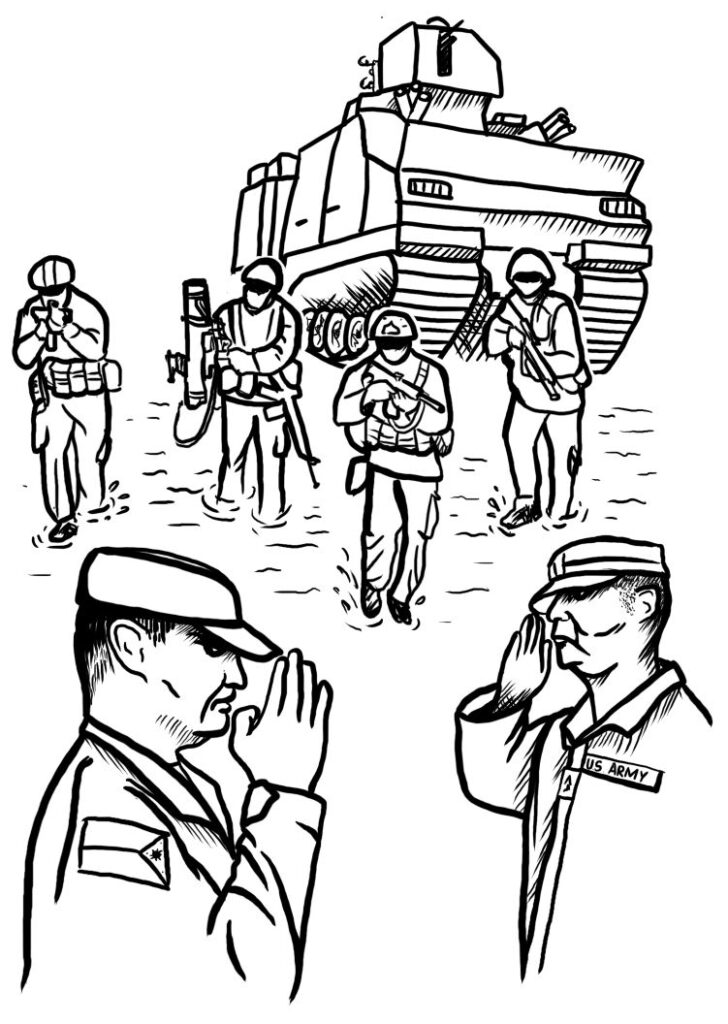
The presence of thousands of American, Australian, and other foreign troops in the country’s territory for instigative and large-scale war games is a blatant assault on Philippine sovereignty. Since May, the US has been simultaneously launching three of these exercises, one in partnership with the Australian military. These are Kamandag (May 26–June 6), Kasangga (May 19–June 24), and Salaknib 2025 Phase 2 (May 19–July 20).
Kamandag was launched in Batanes; in Capas, Tarlac, where live-fire drills were held; and in Burgos, Ilocos Norte, where a maritime strike operation was conducted. There are also activities in Palawan and other parts of Luzon, as well as in Tawi-Tawi in Mindanao.
US and Philippine troops used the Navy-Marine Expeditionary Ship Interdiction System (NMESIS) and High Mobility Artillery Rocket System or HIMARS in Kamandag. NMESIS is an anti-ship missile system. It is mounted on an unmanned ground vehicle (a large truck) called the ROGUE Fires Carrier and is equipped with a Naval Strike Missile (NSM).
The war games involve 2,031 US Marine Corps soldiers and 2,028 personnel from the Philippines. Military personnel from South Korea, Japan, and the United Kingdom are also participating in the war games. Personnel from France, Canada, Bahrain, Australia, Indonesia, Thailand, and the Netherlands are serving as “observers.”
Kasangga opened at the 4th ID camp in Cagayan de Oro City and is being conducted at Camp Kibaritan, Kalilangan, Bukidnon. At least 90 soldiers from the Australian Army and 140 soldiers from the Philippine Army are participating in the war games. Kasangga will run until June 24.
Meanwhile, Salaknib, conducted by the US and the Philippines, is currently underway in Northern Luzon.
According to the Communist Party of the Philippines (CPP), the US conducts these war games in the country to tighten its control over the AFP.
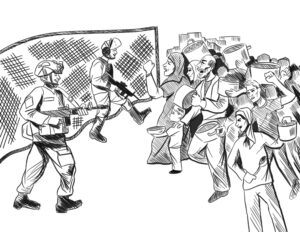
“The Filipino people oppose these war games. In addition to endangering Filipinos, they are also a scourge to residents who are deprived of their livelihoods to make way for the exercises,” CPP chief information officer Marco Valbuena said.
The large-scale and intensive war games, as well as the subservience of the AFP and the Marcos regime, are the reasons why many countries in Asia now regard the Philippines as a US proxy, according to the CPP. Neighboring countries in Asia are not blind to Marcos and his generals’ obedience to US directives and plans.