Dozens of “EDCA sites” and planned military factories Accelerated US preparations to use the Philippines as base for imperialist war
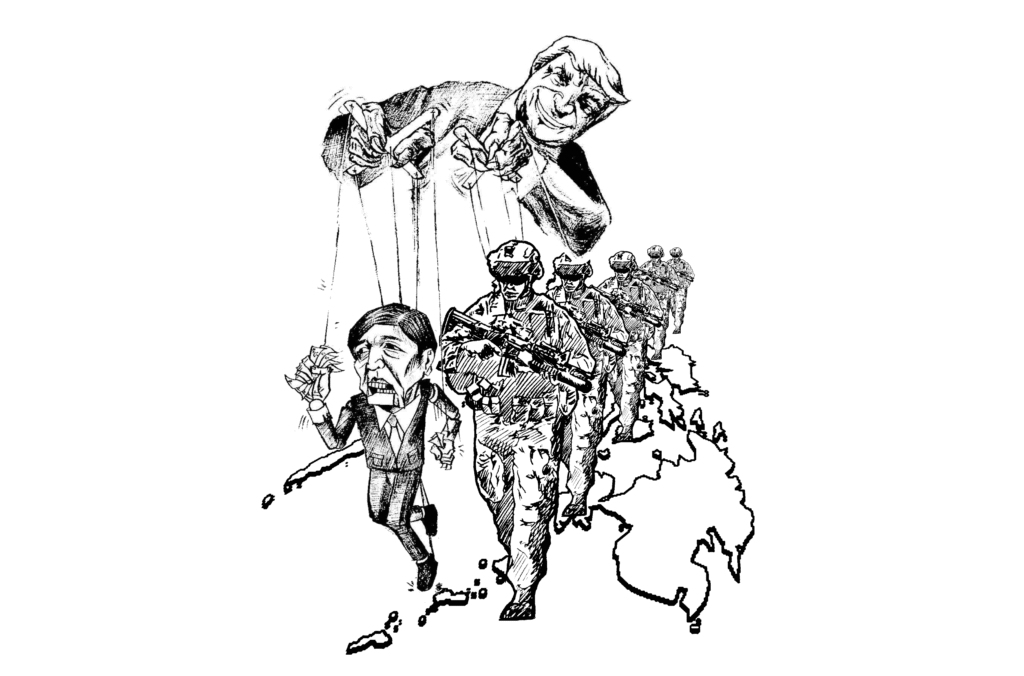
In the past two years, the US aggressively expanded its military presence and constructed strategic military infrastructure in the Philippines. In 2024, it deployed the Typhon Missile System in northern Luzon. This year, it deployed the NMESIS, MADIS, and other weapons of war.
Also this year, the US took over the naval facility in Oyster Bay, Palawan, ordered the construction of an ammunitions factory in Subic, and released initial funding for the construction of the Subic-Clark-Manila-Batangas Railway. (See related article in AB, July 7, 2025.) All these comprise US preparations to turn the country into a large forward operating base for an imperialist war it is provoking against China.
The number of Philippine military bases which the US controls and utilizes is clearly more than the nine “agreed sites” under EDCA (Enhanced Defense Cooperation Agreement). Camouflaged by non-stop war games, the US has accelerated the construction of barracks, warehouses, and other infrastructure inside Armed Forces of the Philippines (AFP) camps to host the growing number of American troops, equipment, and vehicles that are now permanently stationed in and around the country.
In June, the US Congress approved $1–5 billion in funding to “upgrade” the AFP’s naval dock in Oyster Bay. The US now uses the port for “freedom of navigation operations” and “joint patrols” in the South China Sea alongside Australia and Japan. Since 2020, the US has transformed the once-quiet fishing community into a key facility for its naval ships and drones to provoke Chinese vessels and heighten tensions in the South China Sea. The AFP and US claim these patrols “defend Filipino fishers,” when in fact, it is the US and its massive ships that have deprived them of their livelihood in Oyster Bay and surrounding waters.
Reports in July also revealed that the US is building another naval base off the coast of Palawan, facing the municipality of Quezon. The location was reportedly chosen for its proximity to the Second Thomas Shoal, which has seen maritime friction between the Philippines and China. This base will house inflatable boats used in attacks and serve to supplement those already used by the Philippine military in its skirmishes with Chinese vessels. The US aims to activate the base in the first quarter of 2026.
Also this year, the US began laying the groundwork to use the Philippines as a large storage site for weapons and military equipment. This follows the 2025 Joint Vision Statement on Defense Industrial Cooperation signed by the Marcos regime and Donald Trump’s government last March. This allows the US to ensure the rapid and continuous supply of military goods in the event than an inter-imperialist war breaks out.
Under the guise of “collaboration” and “improving AFP defense capability,” the US will setup factories for ammunition, unmanned systems (drones), facilities to process “critical mineral” components for bombs, and “additive manufacturing” such as 3D printing in various parts of the country.
In May, the US deployed a 3D printer at Fort Magsaysay in Tarlac capable of producing small drones (called first-person view or FPV drones) suited to the terrain and climate of the Philippines. Such drones were used during the second phase of the Salaknib Exercises to “saturate with eyes” the forests and rural areas of Northern Luzon. The AFP’s 7th and 5th ID assisted in this activity. Even earlier, the AFP and the Marcos regime opened Aurora for US drone manufacturing in 2024.
The factories, machinery, and military hardware that the US will deploy in the Philippines will be directly operated by its military and by the agents of capitalists from the US military-industrial complex.