Outrage and resistance against Kenya's oppressive and puppet state
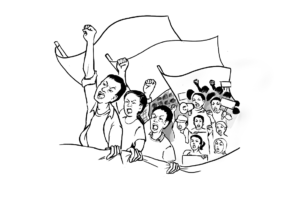
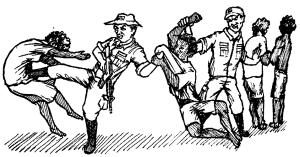
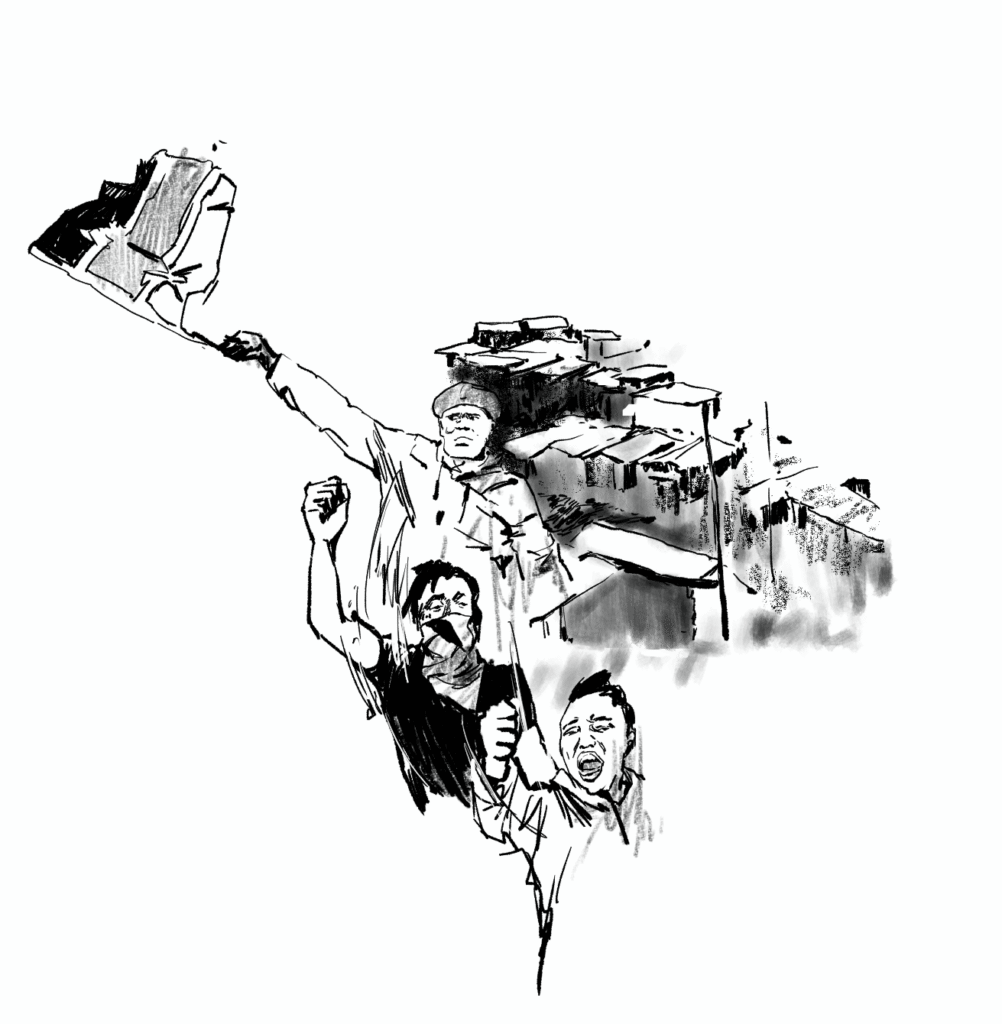
In June, outrage and protest flared up anew in Kenya against the government’s anti-people tax proposal and its subservience. On June 25, thousands of Kenyans stormed the streets of Nairobi, Mombasa, Kisii, and other cities to commemorate last year’s protests. The police’s violent dispersal killed at least 16 people and injured more than 400.
On July 7, police broke up demonstrations commemorating the 35th anniversary of “Saba Saba” or “seven seven” in the Kiswahili language, killing 38 protesters, injuring 107, and arresting more than 500. On this day in 1990, a massive rally took place that pushed the then president of Kenya to change the system of governance. People used the occasion to demand the ouster of current president William Ruto.
The protests gained momentum in 2024 against the Finance Bill, a proposal that imposes heavy taxes on basic goods and services, eliminate subsidies, and cut the budget for social services. The International Monetary Fund dictated this proposal as a condition for lending. Its goal was to increase government revenue to ensure repayment of debt, which stood at $76.6 billion in April—equivalent to 75% of Kenya’s gross domestic product (GDP). The proposal was withdrawn last year but not completely scrapped. Instead, Ruto cunningly pushed through piecemeal parts of the bill in parliament.
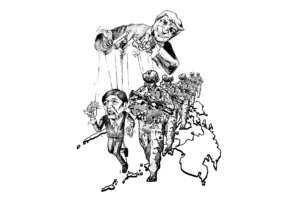
For many Kenyans, the Finance Bill reflects the Ruto regime’s neocolonial and neoliberal line. Workers and the poor sectors of Kenyan society will certainly bear the burden of these heavy taxes. They know these cannot be endured by ordinary citizens who are already mired in poverty, lacking formal jobs, and facing persistently high prices of commodities and services. They condemned Ruto’s subservience to imperialist institutions’ dictates.
The protests expanded into a movement calling for Ruto’s ouster following a series of violent dispersals, mass arrests, rising cases of abductions and enforced disappearances of protest leaders, and killings.
Alongside the severe economic crisis lies the political crisis of the ruling class. Former deputy president Rigathi Gachagua now actively challenges Ruto’s power. Gachagua was impeached in 2024 for constitutional violations, promoting ethnic division, and undermining government authority.
Condition of Kenyan society and people
Kenyan society remains pre-industrial and agrarian. Its agriculture relies on small and fragmented production. Agriculture accounts for up to 37% of GDP and 40% of total employment. Industry remains limited, with manufacturing comprising only 8% of GDP.
The country has faced a severe employment crisis in recent years. In 2022, the unemployment rate reached 13.9%, affecting the youth the most. An estimated 67% of Kenyan youth aged 15 to 34 are unemployed.
Meanwhile, 80% of jobs—over 17 million out of 20 million total—are in the informal sector. In 2024, 90% of all newly created jobs were informal, mostly in small-scale retail trade and small-scale manufacturing.
The Kenyan worker’s wages remain pegged at $177/month (₱6,680), while daily living wages for a family of five stands at $138 (₱7,880) in rural areas and $299 (₱17,000) in urban areas.
Outside the cities, Kenyan farmers face landlessness, small plots, backward production, unequal land ownership between men and women, and widespread poverty. About 50% of the country’s land is classified as agricultural, but only 20% is suitable for farming. Another 20-30% is used for export crops such as tea, coffee, and flowers.