Economists denounce limited ₱20/kilo rice program
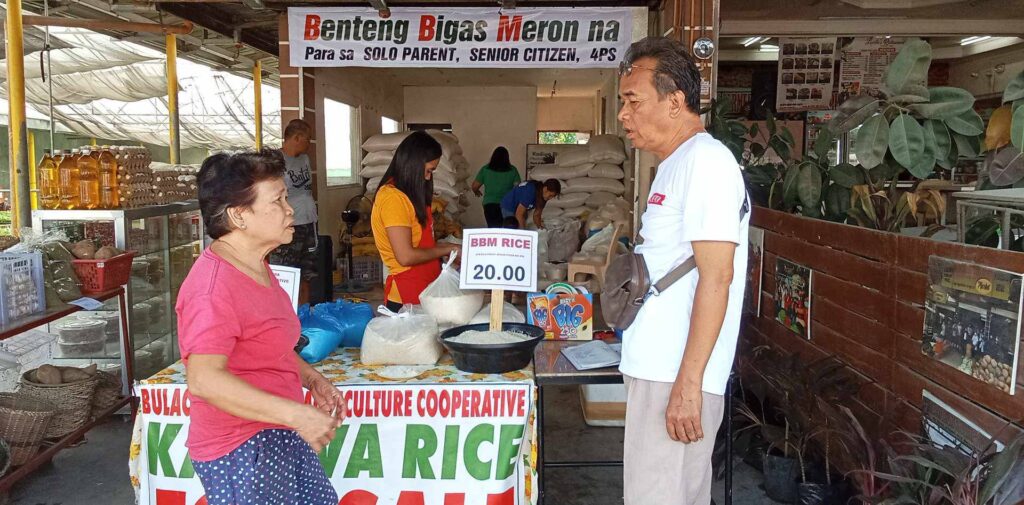
Ibon Foundation economists denounced the ₱20/kilo rice program dubbed “Benteng Bigas Meron Na!” (BBM Na!) as a gimmick that does not address the root of the crisis of high rice prices.
“The ‘BBM Na!’ program lacks sincerity. It only rations rice to poor families, restricts funding, and neglects the millions who also struggle to buy food,” Ibon Foundation said in a statement on May 23.
The program was first launched in Cebu on May 1 but was immediately halted after criticism that the Marcos clique was just using it to boost its chances in the elections. On May 13, the gimmick was expanded to 30 Kadiwa centers in Metro Manila and neighboring provinces. Only beneficiaries of 4Ps, senior citizens, solo parents, and persons with disabilities can buy rice under this program. They can only purchase up to 30 kilos per month.
Behind the regime’s boast, Ibon said that the ₱4.5-billion allocation for the program will only cover 997,761 families until December 2025. This does not even reach half of the 4Ps beneficiaries alone. The 30-kilo monthly limit is also insufficient because the average Filipino family consumes about 50 kilos per month, according to the Philippine Statistics Authority.
“The limited 30 kilos per month falls short by 20 kilos compared to the 50-kilo consumption of a five-member Filipino family,” Ibon said.
As of May, the cheapest varieties of rice in markets still cost ₱43 to ₱50 per kilo.
Everyone knows that the ₱20/kilo rice program is just a gimmick to quell public anger over a promise that remains unfulfilled. The Department of Agriculture itself admits the program’s limitations. It even claimed that expanding ‘BBM Na’ to cover 15 million families or half the population would create problems in the local palay market.
Farmers have long condemned the rice import liberalization program, which they say harms small farmers by pulling down local palay farmgate prices and driving them to bankruptcy. They call to end relying on imported rice, for direct support for farmers, bulk purchase of local palay at reasonable prices and its sale at low prices, and repair of agricultural infrastructure such as damaged irrigation systems.
“Already halfway through its term, the Marcos administration still fails to achieve affordable rice because it refuses to take decisive action,” Ibon said.