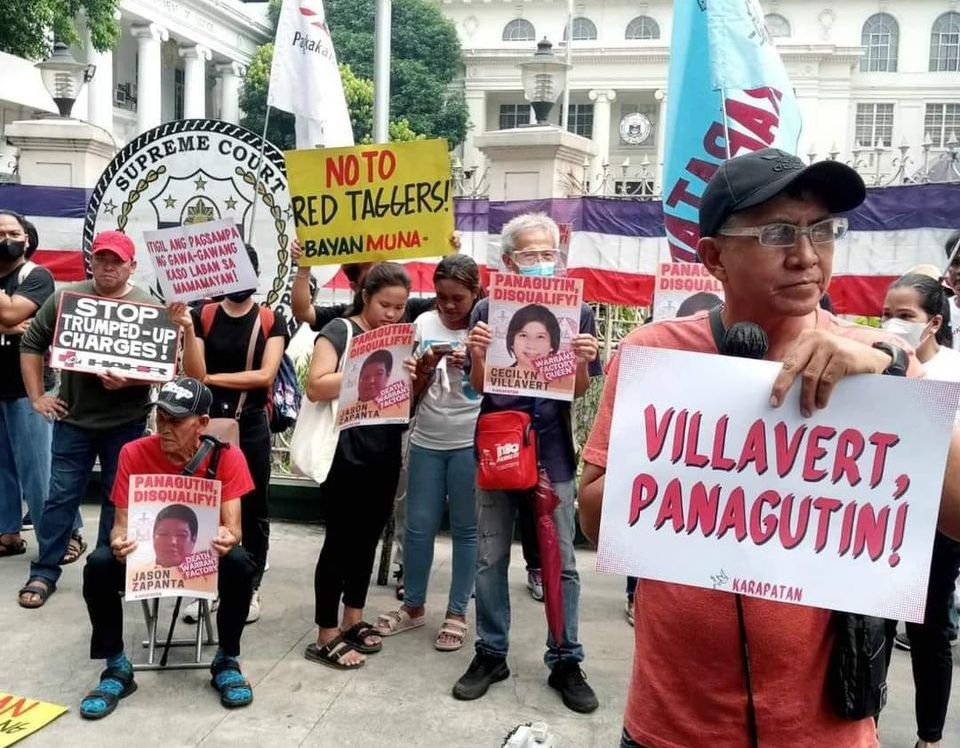
Human rights groups and advocates recognize Supreme Court's decision against illegal searches
Human rights groups and advocates recognized the Supreme Court’s recent decision upholding the constitutional right against illegal searches and seizures. The decision requires the search warrant to specify the exact location to be searched. Unless this information is provided, the warrant is considered a “general warrant” and is therefore unconstitutional.
“This ruling is especially significant since State forces, including unscrupulous judges, have been known to routinely violate this right in issuing and serving search warrants against activists targeted for persecution,” Karapatan secretary-general Cristina Palabay said.
Among such judges is Judge Jason Zapanta, who issued a search warrant against farmer-leader Erlindo Baez without even questioning the police who requested it. Another is Judge Cecilyn Burgos-Villavert, dubbed a “factory” of defective warrants.
Among these defective warrants, one was used to search the Bayan-Manila Tondo office in 2019. According to Karapatan, the address specified in the warrant was Barangay 183, but the raid took place in Barangay 178. The warrant’s subject was only Bayan-Manila campaign director Ram Carlo Bautista, but they searched and confiscated even the belongings of Alma Moran and Reina Mae Nacar Nacino. The three were arrested on trumped-up charges. After five years of detention, the court dismissed the case them last year.
“As an organization that has handled numerous cases involving trumped-up charges of illegal possession of firearms, ammunition, and explosives—cases initiated by the planting of evidence—we recognize the critical importance of strict adherence to constitutional standards in the issuance of search warrants,” National Union of People’s Lawyers said. “We hope that this decision will be robustly implemented.”
The decision is related to a Philippine Drug Enforcement Agency suspect’s arrest in 2017, where the search warrant only specified “Informal Settler’s Compound” in a barangay in Quezon City, not the suspect’s address. Thus, the Supreme Court nullified the suspect’s arrest, where illegal drugs were allegedly found after his house was searched.
According to the Supreme Court, the term “compound” is too broad. Additionally, the court stated that government agents can only forcibly enter the target search location if the search warrant is presented to the suspect and he or she refuses, to avoid potential violence that may arise from an “unannounced entry” or entering without permission.