Marcos regime floats possibility of “violence” in November 30 rally to deflect from corruption issue
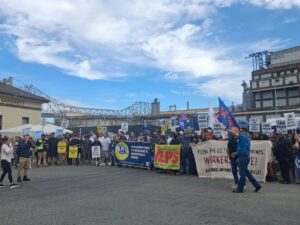
President Ferdinand Marcos Jr and the Philippine National Police (PNP) officials issued consecutive statements that they are monitoring and preparing for a possible outbreak of violence in the nationwide protests against corruption set for November 30. Marcos floated the idea that there are certainly “instigators” who must be watched and claimed that his government knows who they are.
Marcos also declared that he finds no logic in bringing or using molotov cocktails in protest actions except for the purpose of causing disorder. He cunningly pretended that he does not oppose the holding of rallies but will keep an eye on the “instigators.”
Acting PNP Chief Lt. Gen. Jose Melencio Nartatez Jr. made a similar statement. He said the police are preparing for “violence” and are already gathering data on how many will join the rally, who these protesters are, and which “threat” groups must be monitored and prepared for.
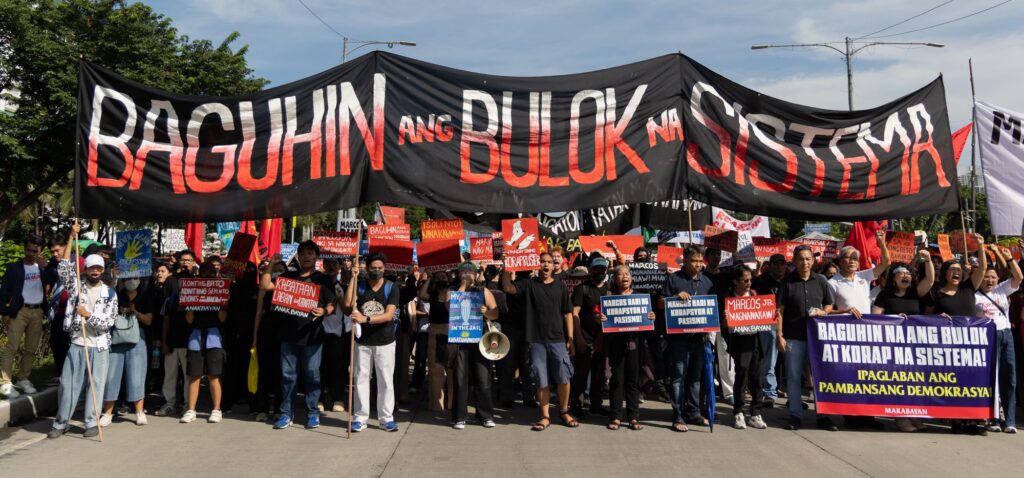
The Bagong Alyansang Makabayan (Bayan) condemned Marcos and his police for these statements. According to the group, the regime exploits the threat of violence to deflect public attention from the real issues and the roots of the protests: rampant corruption in the government, cover-ups of crimes, and the absence of accountability.
“This deflects attention to how the anti-corruption protests should be conducted,” Bayan said. The group added that Marcos must stop dictating people how to express outrage over the regime’s continuing large-scale corruption.
In reality, the group said, real violence comes from the Marcos regime itself, which aims to suppress the people’s resistance and weaponize laws and regulations to target critics and activists. The participants in the September 21 mass action at Luneta and Mendiola in Manila had the same ordeal.
The Manila Police District arrested and detained at least 270 people, including 90 minors, during those protests. They experienced brutality and torture at the hands of the police. The PNP shot and killed one person.
The PNP-Criminal Investigation and Detection Group (PNP-CIDG) also subpoenaed four student leaders for “investigation.” Meanwhile, on November 3, the PNP-CIDG announced that it had filed cases with the Department of Justice against 97 unnamed individuals in connection with the clashes and protests. The charges include conspiracy or plan to launch rebellion or insurrection, sedition, and incitement to sedition.
As in September 21, the National Capital Region Police Office (NCRPO) has already announced that it will deploy 15,000 police officers against the nationwide protest on November 30. This number may increase if police units from Region III, Region IV-A, and other neighboring regions send additional forces.
“The excessive deployment of police reflects the government’s paranoia and its intention to block protesters and undermine the people’s right to free expression,” Bayan said.
Amid these threats and the fascism of the Marcos regime, Bayan called for larger and bolder protests on November 30 and in future occasions. “We must carry on the demand to pursue accountability and the struggle to dismantle bureaucrat capitalism in society,” Bayan declared.
Bayan is part of the network Kilusang Bayan Kontra Kurakot (KBKK or People’s Movement Against Corruption), which emerged from the massive people’s protest in Luneta on September 21. KBKK will lead the nationwide anti-corruption protest on November 30.