Mayon Volcano's ashfall impacts thousands of farmers
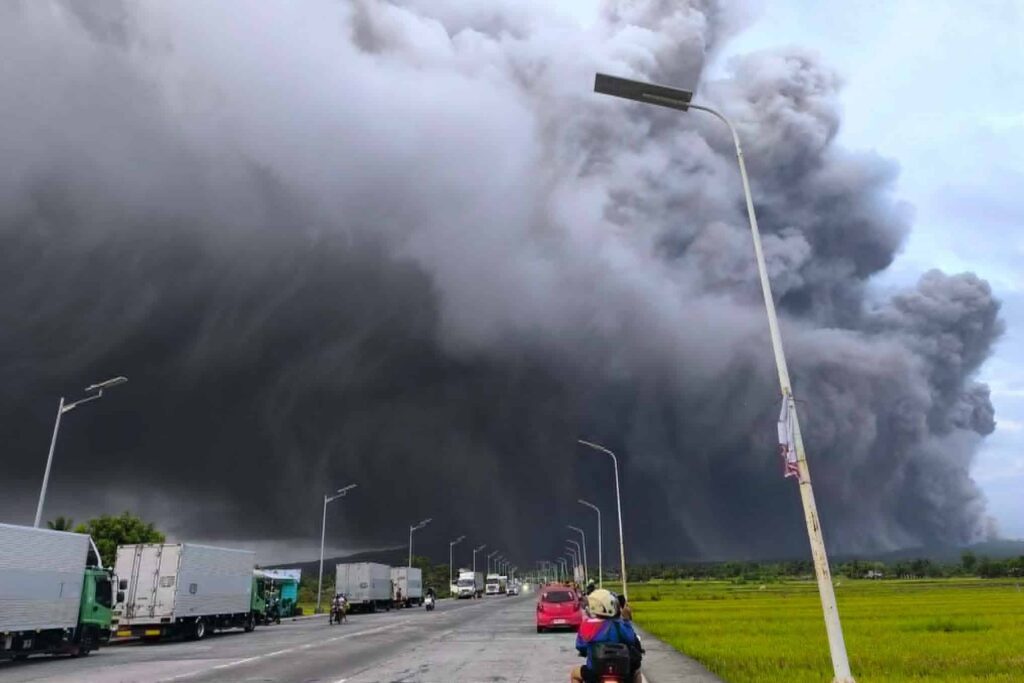
Thousands of farmers are adversely affected from the successive spewed ash or pyroclastic density material from Mayon Volcano since May 2. Ashfall impacted over 91,000 people including families dependent on agriculture. The disaster directly damaged at least 52 barangays, as reported by the National Disaster Risk Reduction and Management Council (NDRRMC).
Residents continue to experience thick ash, worsened by hot weather and strong winds. Many suffer from sore throats, breathing difficulties, and physical weakness.
Ash up to 2-3 inches thick covered roads and farmlands. It submerged thousands of hectares of rice, corn, vegetables, and other high-value crops, and killed livestock in Guinobatan, Camalig, Ligao, and nearby Albay towns.
The Kilusang Magbubukid ng Pilipinas (KMP) projects a plunge in agricultural production in damaged areas due to crop destruction and soil contamination.
“Farmers’ lives and livelihoods sink in ash. In an instant, months of hard work vanish,” KMP secretary general Ronnie Manalo explains.
Beyond damages, farmers face heavy rehabilitation costs, ash cleanup, replanting, and buying seeds and fertilizer. Rising oil and fertilizer prices worsen this, raising production, irrigation, and transport costs.
KMP asserts the government fixates on short-term relief like food, masks, and limited aid. Successive disasters from calamities to oil crisis further expose the deep agricultural and rural livelihood crisis.
“We need relief but also rehabilitation. We demand compensation for destroyed crops, production subsidies, and immediate aid to resume farming. Without these, local food production will keep plummeting,” Manalo emphasizes.