NEDA admits lowered tariffs on rice imports inutile in lowering market prices
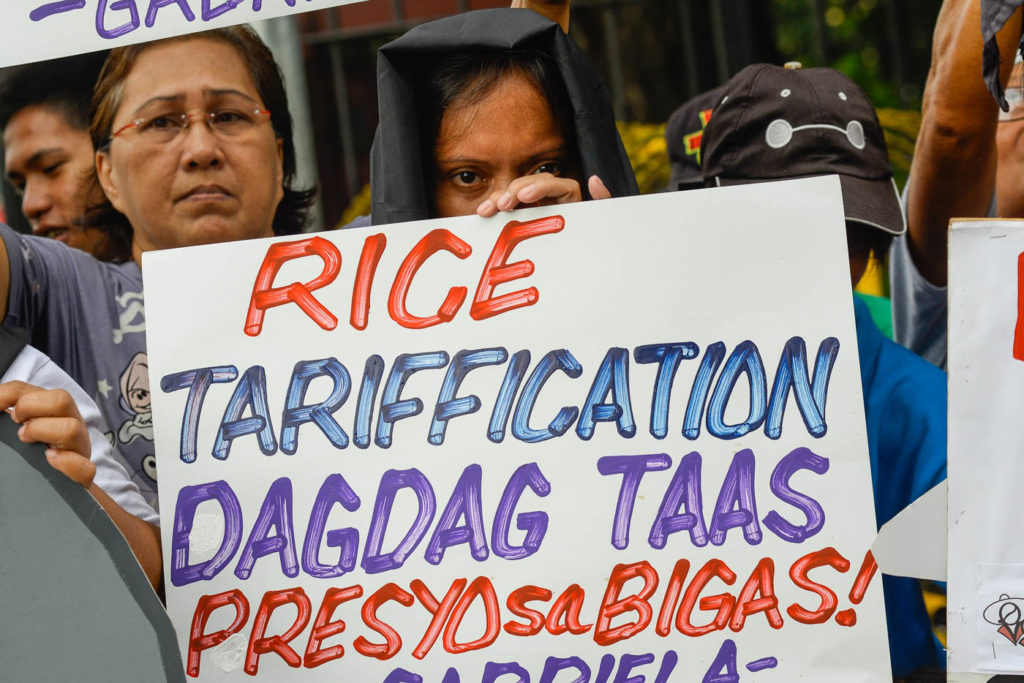
During a congressional hearing on December 10, National Economic and Development Authority (NEDA) officials admitted that reducing tariffs on imported rice failed to lower its market price but instead forced down farmgate prices of local palay.
NEDA officials reported that the price of rice imported from Vietnam dropped by 17.8% from June to October this year. However, they acknowledged that local market rice prices decreased very insignificantly, —only 1.7%, or less than ₱2. Worse, the farmgate price of palay from farmers plummeted by 16.8%.
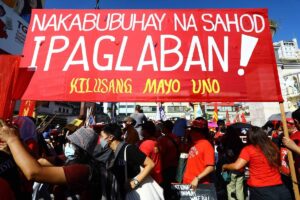
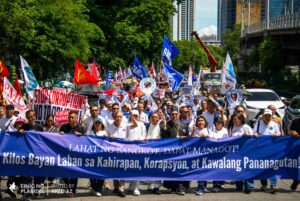
From the outset, the Kilusang Magbubukid ng Pilipinas (KMP) has already maintained that increased imports would not lower rice prices, since the Duterte administration first enacted the Rice Liberalization Act in 2019. This situation worsened when Ferdinand Marcos Jr in June issued Executive Order (EO) No. 62 reducing the tariff on imported rice from 35% to 15%, claiming then that this would reduce market rice prices by ₱5-₱6. The appreciation of the peso against the dollar should have decreased this further.
Conversely, the palay farmgate price has continuously declined since the harvest season began in September. According to KMP, it dropped to ₱13-₱19 at the start of the harvest season in Cagayan, Albay, Isabela, and Laguna. It further decreased during peak harvest time. In Laguna in October, the buying price for palay fell to only ₱15 per kilo. Typhoon Kristine damaged and flooded their crops causing prices to plummet further to just ₱10 per kilo.
A congressional investigation also revealed an oversupply of rice in the Philippines due to high import volumes. A group of importers came under scrutiny but denied hoarding supplies to prevent market prices from dropping. Nevertheless, it was twice reported that millions of tons of rice stored at ports in Luzon have been deliberately withheld during the harvest season.
According to Bantay Bigas, the Rice Liberalization Law and EO 62 extensively allowed large traders and importers to amass large profits at the expense of farmers, local palay production, and food security.