Peasant women denounce rampant corruption and landlessness
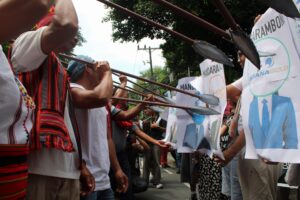
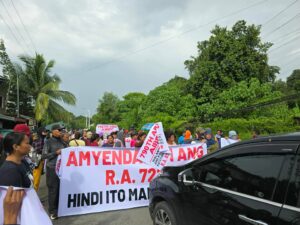
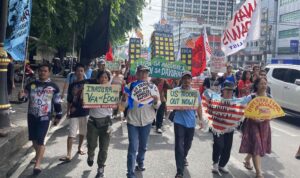
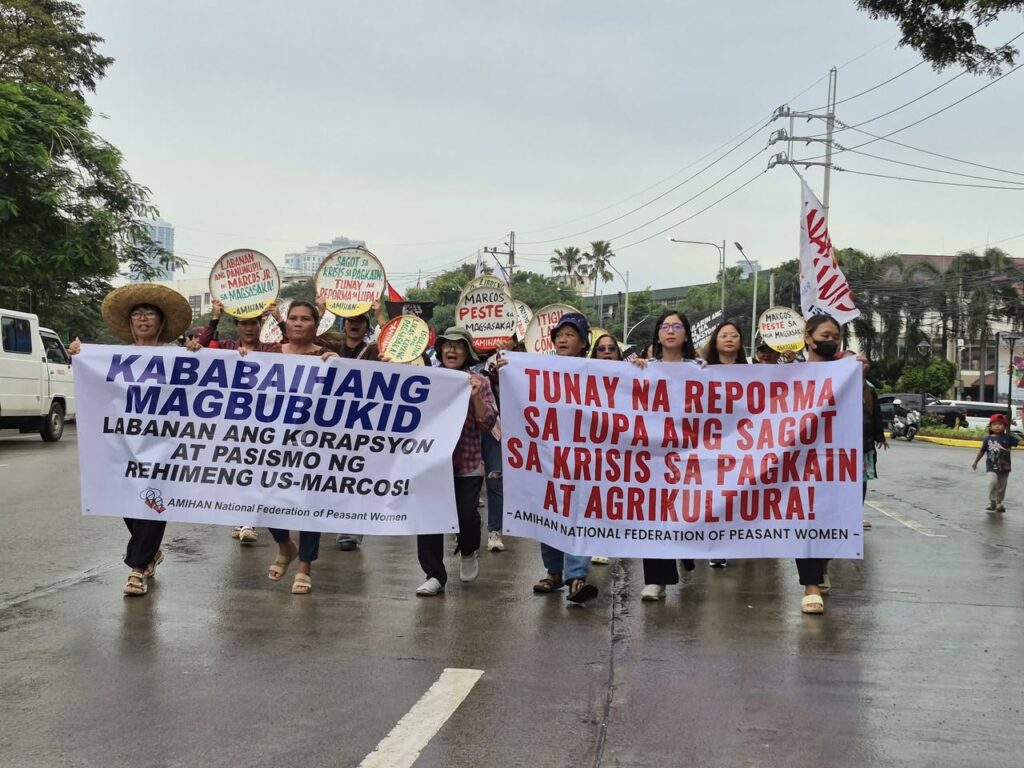
Peasant women and various organizations, led by Amihan National Federation of Peasant Women, protested before the Department of Agriculture in Quezon City on October 15. They denounced the worsening corruption under the US-Marcos regime and landlessness faced by poor farmers in the countryside. After a short program, they marched toward the Department of Agrarian Reform to continue their protest activities.
The activity was part of marking the International Day of Rural Women and the peasant camp-out protest, which runs from October 15 to 21.
Farmers, fishers, agricultural workers, and urban poor residents from Laguna, Bulacan, Tarlac, Rizal, and Cavite joined the protest, which also included organizations such as Gabriela, Gabriela Women’s Party, Pambansang Lakas ng Kilusang Mamamalakaya ng Pilipinas (PAMALAKAYA), Asian Peoples’ Movement on Debt and Development (APMDD), Kilusang Magbubukid ng Pilipinas (KMP), Anakpawis, and Bagong Alyansang Makabayan (Bayan).
Amihan secretary general Cathy Estavillo said they condemn the Marcos regime for its systematic corruption, including the funds for unprogrammed appropriations and the presidential pork barrel. Instead of supporting peasant families, public funds end up in corruption through substandard or ghost flood control projects, overpriced farm-to-market roads (FMRs), and irrigation projects, she said.
Rather than addressing the crisis brought by the influx of imported rice and the very low palay farmgate price, Marcos and the Department of Agriculture have transformed the FMRs into “farm-to-subdivision and roads-to-mall,” benefiting big businessmen, bureaucrat-capitalists, and politicians. The problem is that many FMR, flood control, and irrigation projects reported as completed are either invisible or unusable to rural communities.
No one has been held accountable for the stolen agricultural funds, even under past regimes that saw major corruption cases such as the fertilizer scam and the theatrical distribution of farm tools and seeds.
Peasant women who assert their right to land suffer harassment and eviction from their farms. They fall victim to militarization, red-tagging, illegal arrest and detention, extrajudicial killings, and other forms of abuse. Remarkable are the cases in Lupang Ramos in Cavite, Hacienda Luisita and Tinang in Tarlac, and farmlands in Isabela, Cagayan, Bohol, Bulacan, Bicol, and other provinces, Amihan national chairperson Zen Soriano explained.
“Peasant women will continue to lambast and fight US-Marcos regime for being a “Hari ng korapsyon” and number #1 promoter of land grabbing and land-use use conversions and for surrendering the Philippine land and agriculture to the foreign investors,” Soriano declared.
Along with the week-long protest activities, farmers, agricultural workers, fishers, and other sectors set up a temporary camp in front of the Department of Agrarian Reform Central Office on October 14 in Quezon City. Delegates included around 40 sugarcane farmworkers from Kabankalan, Cadiz, Murcia, Silay, Escalante, Pontevedra, and Candoni in Negros Occidental.
On October 16, farmers from Negros and the groups Amihan, KMP, and PAMALAKAYA protested at the Department of Agriculture to mark what they called World Hunger Day. The groups called for genuine agrarian reform, fair compensation for disaster victims, adequate support for farmers, and just prices for palay.