Thousands protest in New Zealand against attempt to alter treaty protecting Maori rights
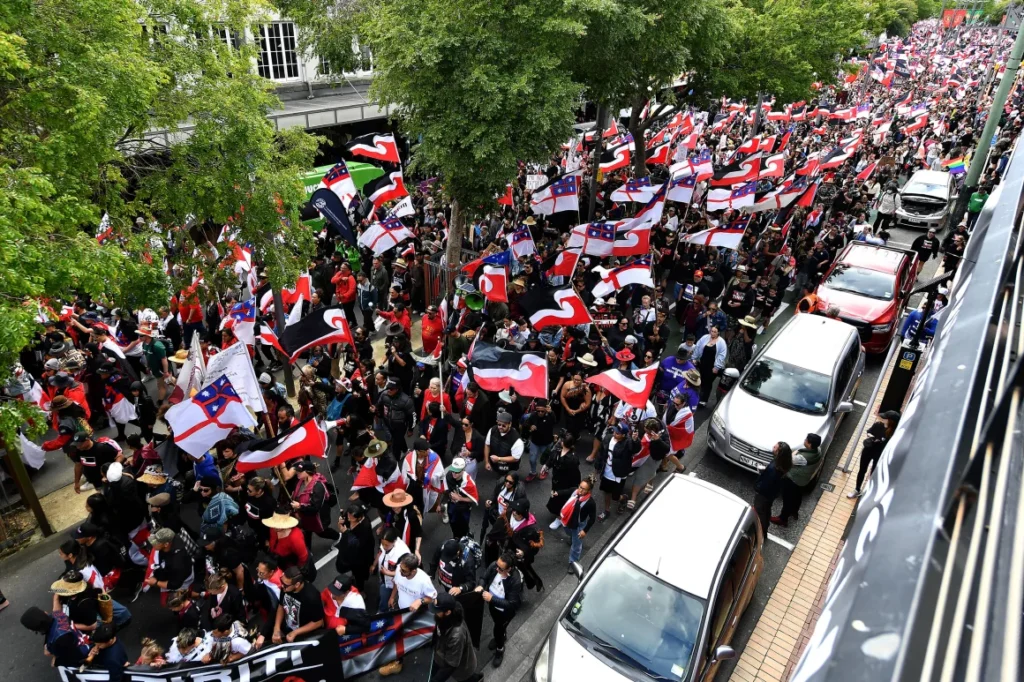
Tens of thousands rallied before the New Zealand Parliament in Wellington on November 19 to protest a proposed bill that they assert would trample on the indigenous Maori people’s rights. An estimated 42,000 people protested against the Treaty Principles Bill, introduced by the ACT New Zealand Party, the current ruling party in Parliament. The protest was the culmination of a march (“hikoi” in Maori) that began in northern New Zealand and lasted nine days. Thousands joined this march, with some traveling by vehicle and others on foot.
The Treaty Principles Bill aims to amend the 187-year-old Treaty of Waitangi, a foundational document that guides New Zealand’s policies. The treaty stipulated then colonial Britain’s “granting” of extensive Maori rights to their land in exchange for their submission to British governance. It is considered a foundational document of the country, similar to a constitution, and its interpretation is overseen by the courts and the Waitangi Tribunal.
The proposed bill seeks to transfer the authority over the treaty’s interpretion to Parliament and the lawmakers who proposed it. They also seek to change the definitions in the treaty to remove what they view as “special rights” of the Maori. In reality, they aim to undermine the rights of the Maori, including their right to self-determination, which is at the core of the treaty.
The Maori population is nearly one million, or 19% of New Zealand’s total population. They became a minority in their own country since British colonization in the 18th century. Maori leaders entered into the Treaty of Waitangi in 1840, assuming that they were agreeing to British governance, not surrendering their sovereignty.
The British extensively evicted the Maori from their lands to establish large settlements for their own British citizens. Between 1843 and 1872, the New Zealand Wars raged, during which the British brutally and violently seized significant portions of Maori land. Currently, the majority of Maori live in the northern part of the country, while the British occupy much of the rest.
The proposal already lost in its first hearing where a Maori lawmaker tore a copy of the bill and led a traditional “haka” dance in front of the lawmakers who proposed it.