Youth oppose anti-people and fake Davao Bus Project
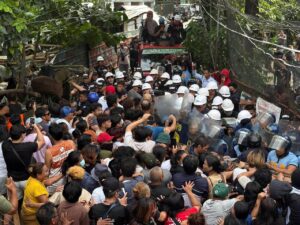
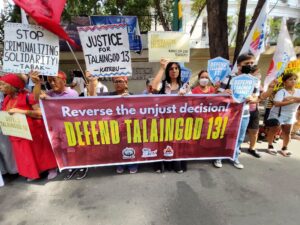
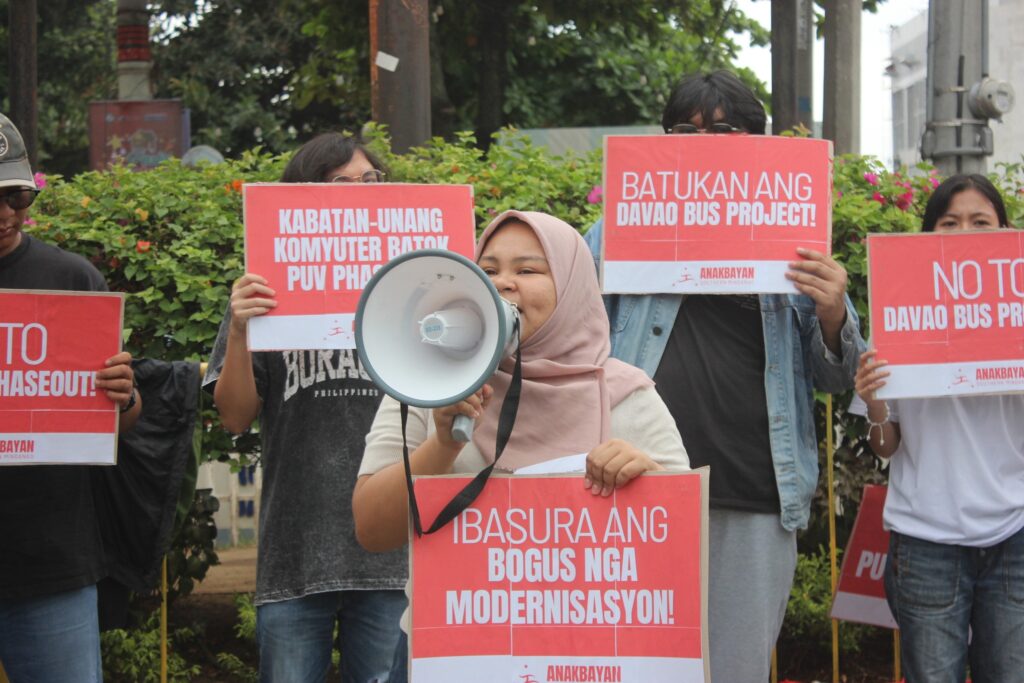
Anakbayan-Southern Mindanao Region (SMR) called the Davao Bus Project (DBP) of the Davao City local council a “fake modernization” and “anti-people” scheme. Its members protested at Freedom Park, Davao City, on November 24 to demand its repeal.
The Davao Bus Project, also known as the Bus Rapid Transit (BRT) system, is being imposed on the city by the Asian Development Bank, in collusion with the Duterte family. The project aims to dismantle Davao’s existing transportation network, which includes modern and traditional jeepneys, tricycles, and buses, and replace it with buses approved by the Asian Development Bank. The ADB will fund it with a ₱54-billion loan.
Referred to as the Davao Public Transport Modernization Project, the project was developed by the ADB as early as 2015. Alongside the stockpiling of surplus old and new buses in Japan and its allied countries, the city will also become a dumping ground for other decorative extras attached to these buses. The BRT-Davao involves refurbishing city roads, laying out new ones, constructing bus sheds, depots, and terminals, improving intersections, building a school for drivers, and implementing various remedial measures needed before the system operates. Japan and the ADB also plan several other infrastructure projects in the city that harm the people’s livelihoods but enrich the corrupt Dutertes and their cronies in Davao.
In October, ten China-made buses arrived in the city for the program’s “test run.” These will be promoted as “free rides” to train commuters to use them.
“This is a major inconvenience and burden to the people,” Anakbayan-SMR chairperson Fauzhea Guiani said. The project includes the jeepney phase-out, dispossesing around 7,000 jeepney drivers of their livelihood. The minimum fare will also increase from ₱13 to ₱35 per trip.
Guiani also denounced the so-called DBP trial run. She called it “mind conditioning” to force Davaoeños to accept the project. Each bus costs ₱10 million, funds that could have been better used to meet the city residents’ basic needs.
The DBP is not a solution to the transport crisis, she said. Severe traffic in the city is not caused by the public utility vehicles and jeepneys but by the local government’s failure to regulate the growing number of private vehicles. Instead of the DBP, Guiani urged support for the drivers’ call to reinstate the franchises of traditional jeepneys and allow them to operate again.