Statement of the Christians for National Liberation-Negros on the passing of Comrade Luis “Ka Louie” Jalandoni
With deep mourning and greater resolve, the Christians for National Liberation-Negros (CNL-Negros) joins the Filipino people and the revolutionary movement in paying the highest tribute to Comrade Luis “Ka Louie” Jalandoni, a true servant of the people, a revolutionary internationalist, and a living testament to the liberative mission of the Church in the struggle for national and social liberation.
Ka Louie was born into a privileged landed family in Silay, Negros Occidental, educated in elite institutions, and ordained as a priest in the Catholic Church. And yet, he chose the path of solidarity with the poor, turning his back on his class privileges to serve the toiling masses. Like St. Francis of Assisi, who renounced his wealth to live among and serve the poor, Ka Louie heard the Gospel’s call not as one of passive charity but of active commitment to revolutionary change.
His life is a shining witness that the Christian faith is not in contradiction with the revolutionary struggle. As Pope Paul VI declared, “If you want peace, work for justice.” Ka Louie understood that the message of Christ—to liberate the oppressed, to break the chains of injustice, and to proclaim the good news to the poor—is inseparable from the cause of genuine liberation. His service with the National Democratic Front of the Philippines (NDFP), especially as its long-time chief international representative and peace negotiator, reflects a profound and living theology of liberation grounded in Christ’s example.
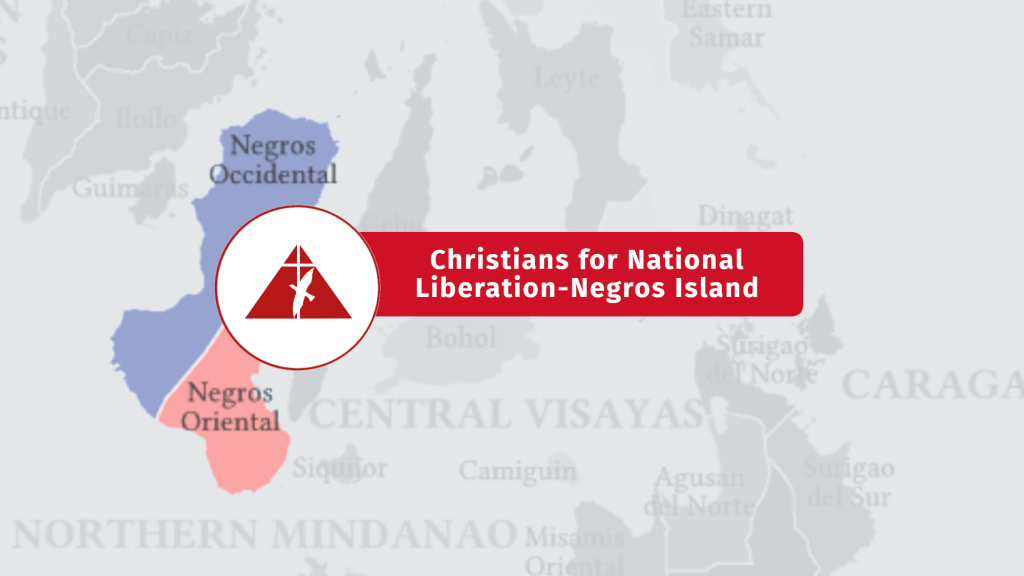
In Negros, Ka Louie’s commitment to the oppressed took root and bore fruit in the land of vast haciendas and deep feudal exploitation. He played a pivotal role in the founding and strengthening of the National Federation of Sugar Workers (NFSW), giving voice and organized strength to sacadas, farm workers, and rural poor who have long suffered under the yoke of semi-feudalism. In the face of brutal repression, militarization, and massacre from Escalante to Sagay, the legacy of Ka Louie reminds us that the Church must not turn a blind eye to the cries of the peasant majority but must stand with them in their struggle for land, decent work, and human dignity.
To this day, the semifeudal structure of Negros Island remains intact, and the call for genuine agrarian reform and social justice continues to echo from the haciendas to the hills. Ka Louie’s life compels us as Christians to reject complicity and indifference. The Church must walk with the struggling masses of Negros, not merely to offer charity, but to stand in active solidarity with their resistance and aspirations for meaningful change. Faith without action, as Scripture tells us, is dead.
We also highlight Ka Louie’s enduring role in the peace process and the Church’s moral imperative to support it. For decades, he stood firm in calling for peace based on justice, where land is given to the tillers, jobs and living wages to workers, and genuine sovereignty to the nation. He engaged the peace talks with utmost seriousness, knowing that true peace cannot be achieved without addressing the roots of armed conflict: poverty, inequality, and imperialist domination.
As members of the Church and as Christians committed to the national democratic struggle, we echo Ka Louie’s legacy: the Church must be a Church of the poor, not a church for the status quo. It must stand with the oppressed and exploited, not merely as moral observers but as active participants in their struggle for liberation. The call for peace must never be divorced from the cry for justice—it must never serve to pacify righteous resistance but must instead affirm the just cause of the oppressed to rise against their oppressors.
Ka Louie’s death is an immense loss, but his life remains a sharp challenge to all of us: to confront the brutal realities of a system that cannot be reformed, only overthrown. As he once chose the path of revolutionary struggle—guided by both his faith and his political clarity—so too must Christians and church people recognize the justness of armed resistance as a last and necessary resort of the oppressed in the face of unrelenting exploitation, landlessness, and state violence.
To the clergy, religious, and lay faithful: may Ka Louie’s example compel us to walk alongside the poor not only in their suffering, but in their struggle. To the youth and the masses of Negros and beyond: let this be a reminder that revolution is not only possible, it is necessary, and it is just.
Ka Louie lives in every mass strike, every occupied land, every guerrilla front that dares to challenge tyranny. He lives in every prayer turned into action, every sermon turned into resistance, every faith that becomes flesh among the poor.