Accountability and justice for Duterte's victims
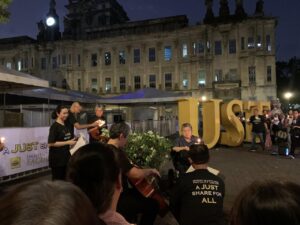
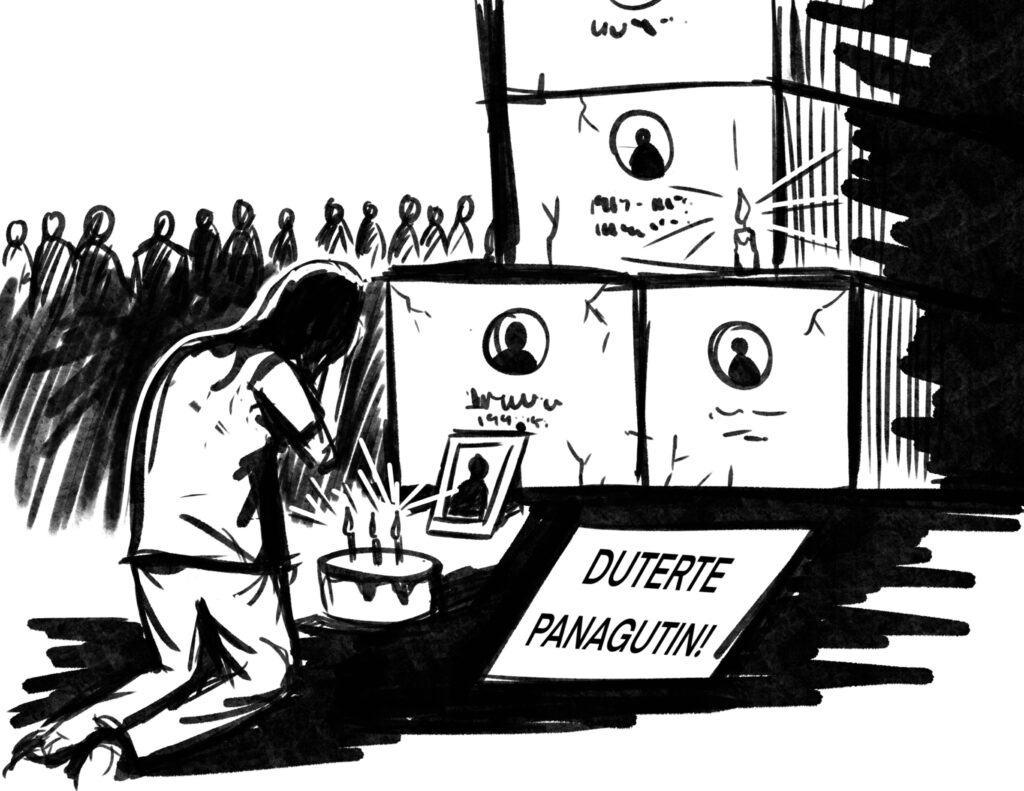
Members of progressive groups gathered at Liwasang Bonifacio on March 28 to light candles—not to mark Rodrigo Duterte’s 80th birthday, but to demand accountability and justice for the victims of his gravest crimes against the Filipino people. They called for his conviction for crimes against humanity for murder, in the trial to be conducted by the International Criminal Court (ICC).
They seek the arrest of Duterte’s co-perpetrators in these crimes, especially Ronald “Bato” dela Rosa and other brutal police chiefs. They also held the Marcos administration accountable for ongoing human rights violations and the poverty it continues to inflict on the people.
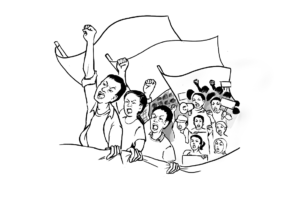
Foremost among the attendees to the protest were families of victims of extrajudicial killings, farmers from Central Luzon, students, teachers and others. Bagong Alyansang Makabayan (Bayan) led the action. Groups in Tarlac, Quezon, and Iloilo City also staged protests that day.
Overseas, Bayan-Europe launched the Duterte Panagutin Campaign Network in The Hague, The Netherlands, also on March 28. Protests were held in Australia, Hong Kong, Japan, Belgium, France, Switzerland, United Kingdom, Canada, and the United States.
Meanwhile, migrant workers questioned the Duterte camp’s “Zero Remittance Week” call for OFWs to withhold remittances to their families in the Philippines as a form of support for Duterte. Instead, they called for support for OFW rights and welfare—not for a murderer.
Progress at the ICC
The case against Duterte at the ICC continues to move forward ahead of his next appearance before Pre-Trial Chamber (PTC) 1 in September.
On March 21, the PTC 1 instructed the ICC’s Victims Participation and Reparations Section (VPRS) to propose a process for victim application and registration. This is ICC’s procedure to enable victims to participate throughout the process—from the start of investigations to reparations after conviction.
The VPRS is tasked with: 1) informing victims about their rights and assisting them in participating in ICC processes; 2) supporting and guiding victims in obtaining reparations or indemnification and ensuring access to reparation processes that may take the form of monetary compensation, restitution, property restoration, rehabilitation, or symbolic acts; and 3) coordinating with the Trust Fund for Victims to provide comprehensive support to victims throughout judicial pro- ceedings.
On March 24, the Office of the Prosecution presented 181 items of evidence to Duterte’s camp for their review. Duterte’s lead attorney is British-Israeli lawyer Nicholas Kaufman. This evidence sharing aligns with the “disclosure” process that ensures evidence is made known to the accused. Prosecutors said the submitted documents include materials and reports cited in the arrest warrant issued against him.
Meanwhile, two veteran human rights lawyers criticized Vice President Sara Duterte for her misleading claim that her father is not liable for charges with crimes against humanity since the arrest warrant cited only 43 cases. Atty.Kristina Conti said Duterte’s statement was “simplistic”—it might convince some but not a court. Conti explained that the 43 cases presented by prosecutors when they requested an arrest warrant are only representative of the widespread attacks, just to issue an arrest warrant. In fact, additional cases may still be filed against Duterte when he faces court again in September.
In two hearings held on March 20 and April 3, Sen.Imee Marcos made repeated dramatic flairs regarding the ICC’s arrest and detention of Duterte. The senator sought to portray Duterte’s arrest as wrong, a violation of sovereignty, and unjust.