The severity of assumption of jurisdiction against Filipino workers
The use of assumption of jurisdiction or AJ against workers’ struggles was again put to the spotlight when it was used to suppress the impending strike at Nexperia Philippines last February. This was one of three AJs the DOLE secretary issued in the first quarter of 2025.
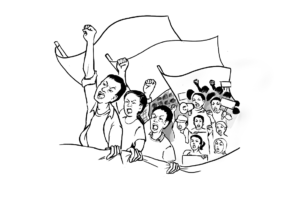
The AJ empowers DOLE to issue a “return to work order” (RTWO) to force workers to return to work, under threat of dismissal. In spite of this, the Nexperia union workers bravely defied the order and launched a strike that lasted for three days (March 5−8). The union achieved victories in the strike which cost the company an estimated ₱1.26 billion.
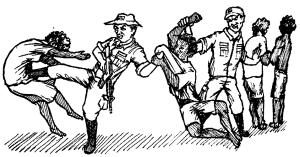
The AJ is an anti-worker policy crafted to take away the capacity workers of using strikes strike as weapon for defending their rights. The DOLE Secretary issues this order to prevent strikes, on the justification that the affected industry is “vital to national interest”. Article 263 of the Herrera Law (Labor Code) stipulates that DOLE has the power to use police and soldiers to suppress workers who defy the order.
The AJ is among the various provisions of the Herrera Law that violates the right to strike. In the past 12 years (2013-2024), DOLE used it 38 times. The majority, or 36, were issued just after workers filed a notice of strike, while two were issued during an actual strike. In the same period, a total of 2,241 notices of strike were filed, but only 103 or 4.59% resulted in actual strikes by workers. This is the result of layers of bureaucracy, legality, and outright repression that unions and workers face before they can launch a strike and fight for their welfare.
Notable AJ cases
Under the Estrada regime, DOLE issued an AJ on December 23, 1997 against the striking pilots of the Airline Pilots Association of the Philippines (ALPAP) of Philippine Airlines due to unfair labor practices. Despite this, ALPAP launched the strike on June 5, 1998 and DOLE issued a return to work order for the pilots two days later. Due to defiance and the “illegal strike,” more than 600 pilots were dismissed. DOLE favored PAL, owned by Lucio Tan. This coincided with mass layoffs of other workers at PAL.
During the Arroyo regime, the two AJs issued by the DOLE were brutally and bloodily enforced against the strike of United Luisita Workers’ Union and Central Azucarera de Tarlac Labor Union at Hacienda Luisita in Tarlac in 2004. State violence against the strike culminated at police and soldiers firing on farm workers and their supporters who were holding a program at Hacienda Luisita on November 16, 2004. Seven strikers and supporters were killed while many were injured.
The Benigno Aquino regime enforced AJ in August 2010 against the Filipinas Palm Oil Industries, Inc (FPII) workers who planned a strike due to delays in their collective bargaining agreement (CBA). The FPII, formerly NDC-Guthrie, is a joint venture of a Malaysian company and Filipino billionaire Dennis Villareal. At the time, the company had the largest plantation and capacity to produce palm oil. It covered an 8,000-hectare plantation in Agusan del Sur.
The Duterte regime used AJ to suppress the strike of Nagkahiusang Mamumuo sa Suyapa Farms in Davao de Oro in October 2018. Nine hundred workers of Sumifru declared a strike on the issues of regularization, low wages, contract- ualization, and refusal to negotiate for a CBA. DOLE issued an AJ when the company incurred an estimated ₱38 million losses a few days after the strike began.
Amid blatantly pro-capitalist laws, defending their right to strike, including the use of the AJ policy, is a major challenge for workers. Defeating this can strengthen the entire workers’ movement.
With AJ attacks, the declining number of unionized workers nationwide also has had grave effects. According to the Integrated Survey on Labor and Employment 2021-2022 released by the Philippine Statistics Authority, only 4.5% or 1,626 out of a total of 36,342 enterprises with 20 or more workers in August 2022 had a union. Of these, only 6.5% or about 350,000 out of a total of 5.35 million workers were members of a union. Among enterprises with unions, only 1,444 or 4% had a CBA, covering only 8.4% of workers.