Correspondence Women farmers buried in debt in Cagayan Valley
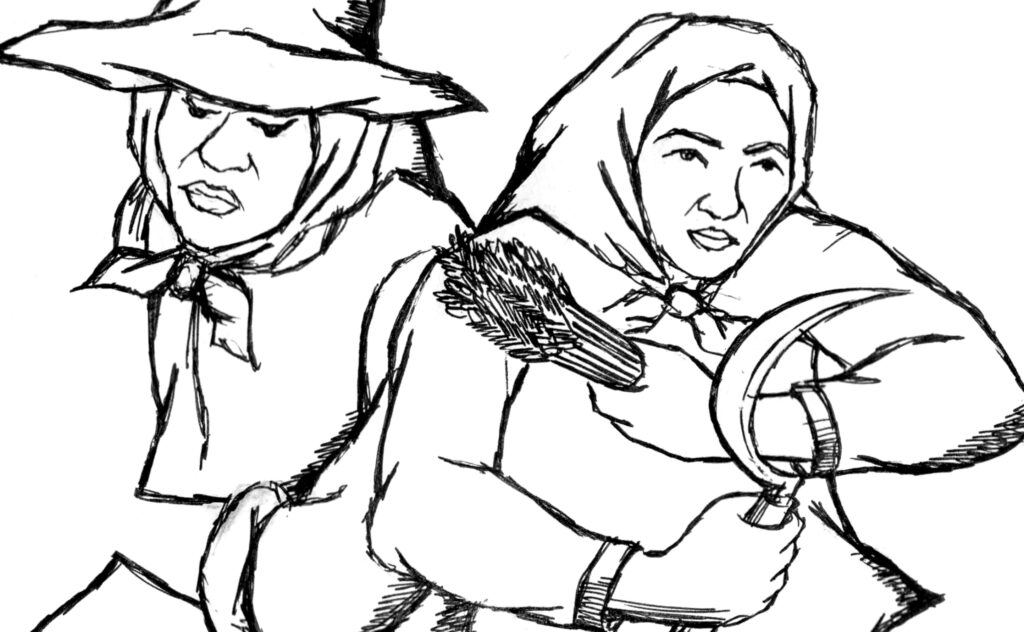
The Cagayan Valley region, particularly the province of Isabela, is dubbed the corn capital because of its large share in corn production nationwide. It also ranks second in rice production. Despite this abundance, the broad masses of farmers in the region are mired in poverty. Aside from the main problems of lack and insufficiency of land to till, very expensive farm inputs, lack of subsidy, and the underpricing of their products, they are deep in debt and cannot escape from its enormous weight.
One such farmer is Jinky, from Isabela, who has a debt of ₱55,000 from three microlending institutions. She pays ₱3,300 weekly.
“As long as our children are in school, we need to borrow. Our daily income is not enough to meet our family’s basic needs,” she says. Her family’s monthly expenses reach ₱25,000. This covers expenses for education, electricity, food, health, and hygiene. This stands in stark contrast to her family’s ₱8,000 monthly income. To cope, she first borrowed from a bank to use as capital for a small convenience store. But it went bankrupt due to the onslaught of El Niño, as the farmers in her area also had no capacity to buy and pay at her small store.
“Because of the short budget for our needs, not even including debt payments, I have to borrow again to pay for previous debts and for daily expenses,” she adds.
This is also the experience of Alice, a corn farmer from Alcala in Cagayan. Her family tills less than one hectare, so their income is sorely lacking. She owes a total debt of ₱80,800 from a trader, educational assistance for her child who is studying, and two microlending institutions. Her family’s monthly expenses reach ₱23,000. Alice is deeply anxious about paying this with a meager ₱6,000 monthly income.
Niña, from Amulung, is also buried in debt even though she only owes one lender. Her debt is only ₱6,800, but she cannot stretch her ₱11,000 monthly income to pay it. This is far from enough for her family’s monthly expenses, which reach ₱25,000.
Hundreds of farmers borrow to meet their daily needs. They may borrow from up to four agencies at the same time just to pay off their previous debts. Cagayan Valley has six large micro-finance and lending institutions: ASA Foundation, Center for Agriculture and Rural Development (CARD) Inc., KMBI-KASAPI Micro-finance, Kaagapay, Life Bank Micro-finance, and ASKI. In addition to these are many small lenders scattered throughout the provinces. For example, in Isabela, there are 32 microlending institutions. The usual interest charged by these is 15%-22%, payable within 20-23 weeks.
Microlending institutions are part of the usury infrastructure in the countryside. These operate alongside traditional usury run by landlords and traders. They exploit farmers through high interest rates and deceptive loan conditions. This often leads to the foreclosure of their land or property when they miss payments.
According to state data in 2022, microlending institutions operated in 4,265 barangays nationwide. Although their coverage is relatively narrower, they still cause widespread losses and damage. Traditional usurers remain the main lenders in the countryside. They operate in 47.6% or 20,020 out of 42,020 barangays nationwide.
Microlending is part of the broader microfinance program declared as a “major program to fight poverty” in 2000. This was mainly pushed by imperialist institutions such as the World Bank and Asian Development Bank, which poured millions of dollars in loans through their “development partners.” CARD Inc., for example, received ₱4 billion in funds from the ADB in 2022 to further “expand” the loan program for poor farmers.
In 2018, more than $3.5 billion was lent through microlending by banks, cooperatives, and institutions to 5.7 million borrowers. Ninety percent of the borrowers are women, two-thirds of whom are in rural areas. By 2022, this usury industry was already worth $7.3 billion. Microlending is expected to further spread with the proliferation of digital (or internet-based) lending methods.
Microlending ultimately serves as an added burden that keeps the majority of farmers locked in a permanent cycle of loss and poverty. It spreads due to the fascist government’s lack of subsidy and services for agriculture and its deliberate feeding of farmers to greedy usurers and imperialist institutions.