Agreement for critical minerals New level of US imperialist plunder in the Philippines
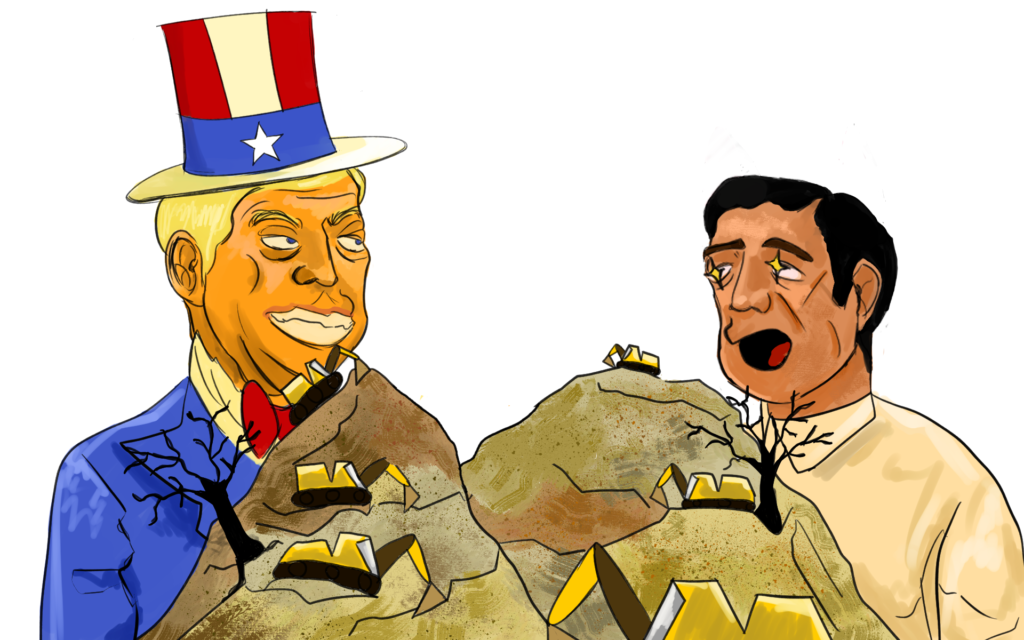
The Philippine government and the US signed an agreement on February 4 for the “development of cooperation” in mining critical minerals and rare earths in the country. The government formed the agreement while attending the 2026 Critical Mineral Ministerial held in Washington. Besides the Philippines, the US signed similar bilateral agreements with 10 other countries. The agreement supposedly aims to carry out the “processing” in the country of such exported minerals, particularly nickel, cobalt, and graphite, in line with the accelerating pace of production of goods that require them.
Critical minerals and rare earth elements are key components for manufacturing electric vehicles, renewable energy, electronics, and advanced technology. China currently controls 70% of the world’s rare earth minerals and processes 90% of the global supply of critical minerals.
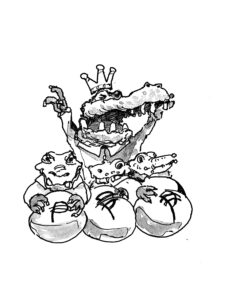
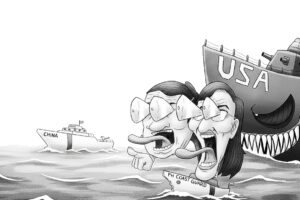
The bilateral agreements are part of the US government’s Critical Mineral Security Program, which aims to develop US capacity in production and processing of critical minerals while building a new geopolitical alliance with resource-rich countries. The imperialist US strategically aims to maintain its dominant worldwide position against China. The US has become increasingly aggressive to ensure control and access to vital resources across the globe. The US treats critical minerals as a matter of national security and handles them as equivalent to oil in the previous century.
The agreement is also a component of the Marcos regime’s program that aims to accelerate the increase of large-scale mining in the country by enticing foreign investors and packaging mining as a “transition to clean energy.” The regime sped up and simplified the processing of mining applications, which also aligns with the US agenda.
Luzon Economic Corridor
The Philippine government first entered an agreement for critical mineral mining on April 2024 under the Luzon Economic Corridor (LEC), an economic program between the US, Japan, and Philippines. The LEC aims to accelerate coordination on investments in large projects such as railways, modernization of ports, “clean energy,” and supply chains for semiconductors and agriculture. This is US imperialism’s answer to China’s Belt and Road Initiative and Maritime Silk Road.
The LEC also enables US companies to freely mine, process, and export critical minerals. It also safeguards the US supply chain from incursions of China and other countries by expanding its supply sources and routes.
Beyond the economic aspect, LEC will also augment EDCA. The LEC is part of the US plan to turn Luzon into a hub for its military operations, violating the country’s sovereignty.
Impact on the people
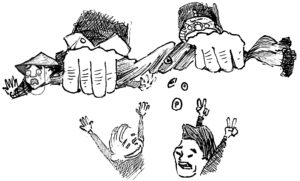
The newly signed agreement signals a new wave of imperialist plunder of the country’s natural resources at the expense of national industrialization, the environment, and the rights of local communities.
The Philippines ranks as the second largest nickel producer, the main critical mineral the country exports. The country holds deposits of 4.8 million metric tons valued at $170 billion. It mainly comes from Zambales, Surigao del Norte and Sur, Dinagat, and Palawan.
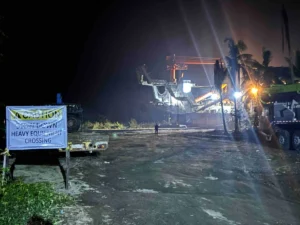
The common method of nickel mining is open-pit, one of the most destructive forms of mining. This mining process causes landslides and poisons the air, soil, rivers, seas, and sources of drinking water.
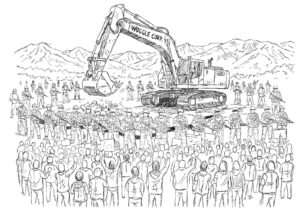
Once implemented, the agreement is bound to increase destructive mining operations in the country. This will result in greater environmental destruction, toxic waste propagation, agricultural lands conversion and eviction, intensified militarization, a rise in killing of peasants and indigenous people, and more human rights violations, all for the imperialist US’ economic, military, and geopolitical interests.