Two decades of 12% VAT cause suffering to Filipino masses
The Filipino masses have shouldered the 12% value-added tax (VAT) for two decades since the reactionary government began imposing it in February 2006. The government raised the VAT from 10% to 12% and extended it to nearly 90% of products and services. This marks the highest VAT rate across Southeast Asia.
The government collects VAT every time ordinary Filipinos buy food products (processed meat, canned fish, cooking oil, milk, coffee, sugar, noodles, etc.), clothing and shoes, medicine, household appliances, construction materials, and services like electricity, water, and telecommunications in the country. The tax is collected by the Bureau of Internal Revenue (BIR). The Bureau of Customs (BOC) also imposes VAT on imported products and collects it.
History of VAT
The International Monetary Fund (IMF) first pushed tax reform implementation in the Philippines in 1984. Four years later, the US-Aquino I regime imposed the 10% VAT through Executive Order No. 273. The tax covered many domestic products except goods marked for export.
The VAT coverage was expanded for the first time in May 1994 with the congress under the US-Ramos regime enacting Republic Act (RA) No. 7716 or Expanded VAT (EVAT). The IMF set EVAT as one condition for the government to borrow $650 million in June 1994. It extended VAT to additional products and services, including pesticides and telecommunications and air and sea travel services. Legal challenges delayed its implementation by two years.
The US-Arroyo regime officially raised the 10% VAT to 12% VAT in February 2006 following Congress’ passage of RA 9337 or Reformed VAT in May 2005. Later amendments raised VAT to the exorbitant 12% rate and expanded it under the Tax Reform for Acceleration and Inclusion (TRAIN) Law (2018) and Digital VAT (2024).
Where does VAT go?
BIR data shows VAT as the agency’s second largest annual collected tax (25% of total collections). The BIR collected ₱7.15 billion when the 10% VAT launched in 1988. Collections grew to ₱40.93 billion in 1996 from ₱29.57 billion in 1995 after expansion. Following the VAT increase to 12% hike in 2006, the government collected ₱140.93 billion from ₱87.86 billion in 2005.
The government earned ₱487 billion from VAT from January to August 2025 while BIR recorded one of its highest collections in 2024 at ₱643.85 billion. BIR total VAT collections is estimated at ₱7.29 trillion since 1988. This excludes BOC collections from VAT on imported products.
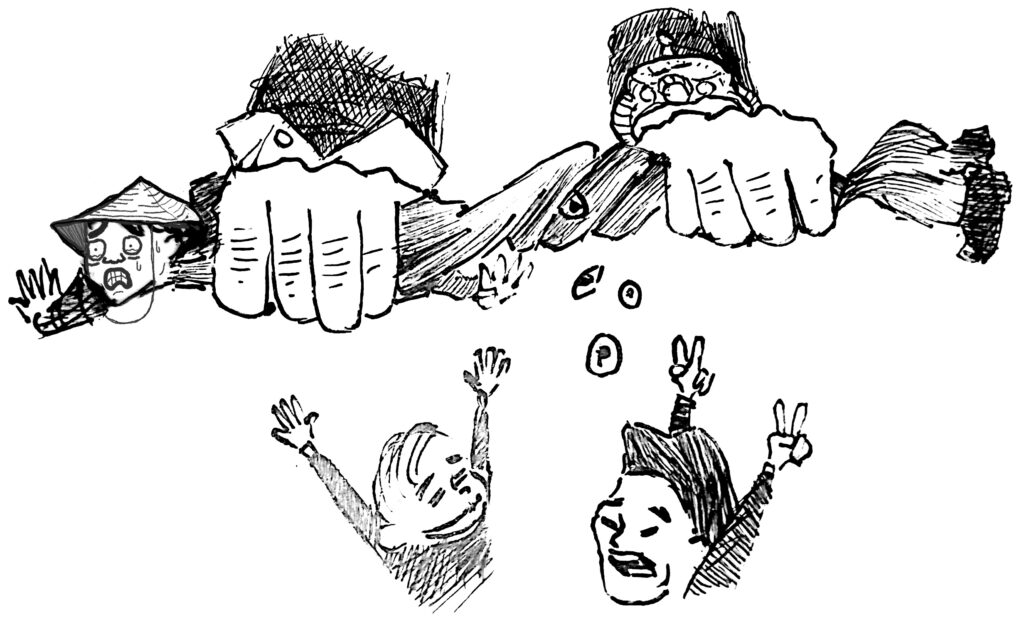
Like other taxes, VAT funds the reactionary government’s operations. It pays the ballooning foreign debt, military and defense misprioritization, infrastructure projects, and for kickbacks and corruption for bureaucrat-capitalists.
Straight to their pockets
The recently exposed Marcos regime’s systemic corruption doubles the VAT burden. Anna, a 43-year-old mother of three in Pasig City, endures this suffering. In her January bills for electricity (₱4,994.47), water (₱1,095.8), and internet (₱2,400), the state pockets an estimated ₱1,000 VAT. The tax also piles on top of their food, LPG, school, and rent expenses.
“All they collect goes straight into their pockets and serves their personal interests, so Filipinos continue suffering no matter how hard they toil,” Anna said. She joins the broad call to hold accountable all involved and return the people’s money.
Members of Gabriela protested at Commonwealth Market on February 13 and 20 in Quezon City to demand: “Scrap VAT, penalize corruption!” This launches their campaign to junk VAT, their group’s central fight until International Working Women’s Day. The Makabayan Bloc is also pushing the Presyo Ibaba Bill in congress to eliminate the 12% VAT.