Students' voice and stand against tuition and other fees increases
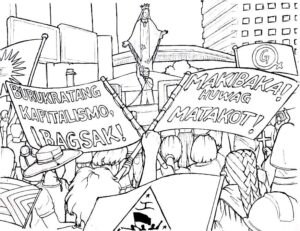
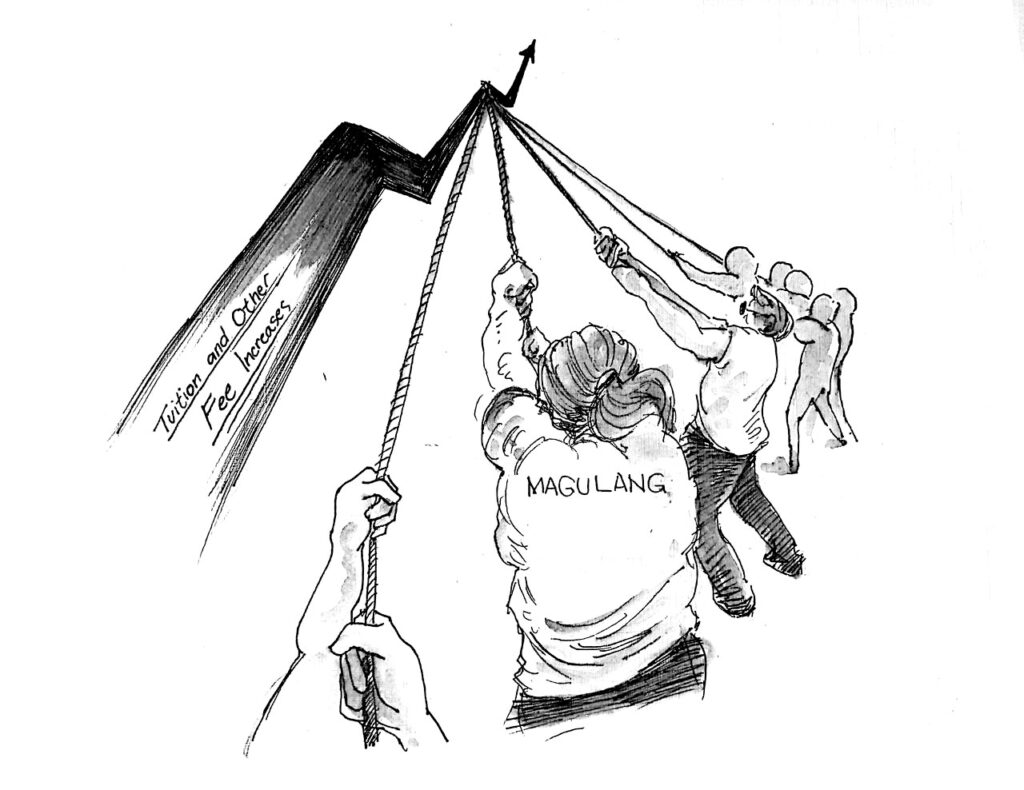
Student councils from private universities across the country are actively expressing opposition to the proposed tuition and other fees increases (TOFI) for academic year 2026-2027. They launched surveys, research, petitions, dialogues, protests, and collective actions together with students inside the campuses.
The National Union of Students of the Philippines (NUSP) led a nationwide anti-TOFI campaign. The group laid out the 5-point demand in January: 0% TOFI, implementation of a moratorium on TOFI, junking of other fees, transparency or opening of university finances, and higher budget for public education.
The NUSP denounced the universities’ repeated justifications for TOFI, including rising education costs, facility improvements, and higher salaries for teachers and staff. According to the group, students have not enjoyed better campus services, and teachers’ and staff’s salaries have not increased either in the history of successive tuition hikes.
Students and student councils in Cordillera stood up against the proposed TOFI at Saint Louis University (SLU), University of Baguio (UB), and University of the Cordilleras. Students of SLU protested on February 27 forcing the administration to lower the initial proposed 6.5% increase in other fees to 5.5% increase without a proposal for tuition. Their manifesto also gathered signatures and support from 46 organizations and over 1,200 students.
Students of UB took action on the same day against the administration’s proposed 10% TOFI. They gathered support for the anti-TOFI petition from 11 organizations and 273 students in the university. Student councils from SLU and UB also dialogued with CHED-Cordillera Administrative Region on February 26.
In Metro Manila, students of De La Salle University (DLSU) and University of the East won the anti-TOFI struggle. Both universities announced they will not implement TOFI. This victory came from the relentless campaign and actions of students, student councils, and progressive groups since 2025.
In Cavite, DLSU-Dasmariñas students pushed the administration not to propose a tuition increase, pending a new consultation for possible increase in the university’s other fees.
In Cebu, students of University of San Carlos and Cebu Institute of Technology-University (CIT-U) opposed the planned TOFI. The USC community launched a march on February 25 inside the Talamban campus against the 6.7% TOFI. Instead of listening and holding a dialogue, the administration harassed and tried to stop the protest. Meanwhile at CIT-U, students who led and signed the anti-TOFI manifesto were summoned and threatened with suspension.
Every February, the Commission on Higher Education (CHED) receives proposals for TOFI. This “right” to increase fees aligns with CHED Memorandum Order No. 03 Series of 2012. The “consultation” component of the fees hike process officially concluded on February 28. The CHED now has the applications and the decision whether to allow TOFI—which it has blindly approved in the past.
Many universities do not comply with the “legal requirements” for “consultation.” In connection with this, NUSP calls on councils and students to expose the consultation process—fraud, bullying, restricted attendance, or outright disregard of it. The group also urges them to send petitions to CHED to appeal against TOFI as part of the next phase of the process.
Amid further rising prices of basic goods, students and their parents are fully justified in fighting the additional tuition and other fees. Sending a student to college currently requires an average of ₱130,000 annually. Finishing a 4-year college course in major universities in the country requires some to spend up to ₱2 million.