ASEAN 2026: puppet of US imperialist interests
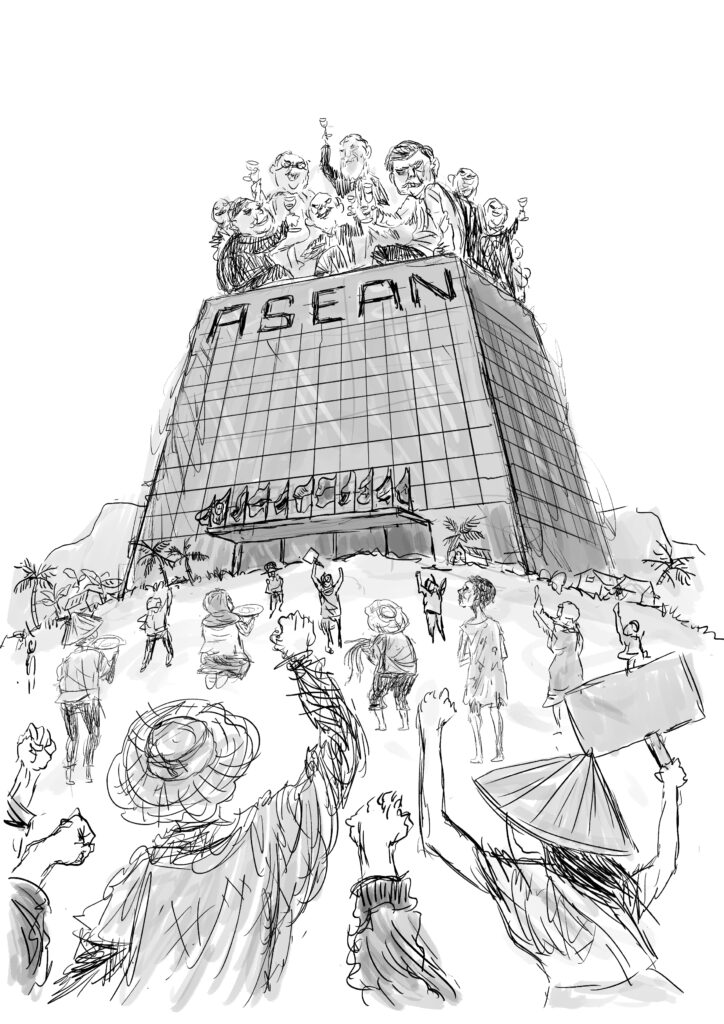
The Philippines hosted the 48th ASEAN Summit on May 6–8 in Lapu-Lapu City, Cebu, with the theme “Navigating our Future, Together.” The declared aim of the meeting was to advance cooperation, economic resilience, and national food and energy security amid rising global tensions. The summit focused on the impact of the war in the Middle East, which destabilized energy prices, delayed supplies, and raised food and transport costs burdening ASEAN countries.
ASEAN is a political and economic bloc founded in 1967 during the Vietnam War as an anti-communist front and instrument of neocolonialism. Ever since, the US strongly influences it as a “comprehensive strategic partner” in the region. The US maintains a stranglehold using military alliances and economic ties, even as China is the main trading partner of many of its member states.
Delegates produced no concrete program to address the region’s crisis after several days of meetings. They agreed on several measures to lessen the impact of US aggression in Iran, but admitted these would take long to implement.
One proposal was a “Regional Fuel Sharing Framework” that contained no mechanism for implementation, distribution priorities, or use for rapid response to the current crisis.
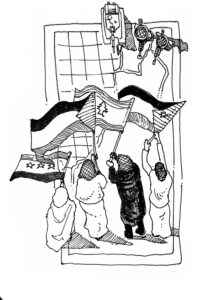
The leaders generally focused on coordinating during emergencies, oil prices, food security, and maritime operations. The framework of discussion stayed narrow and management-focused. The plenary recognized US aggression in the Middle East as a major blow but did not condemn it. The ASEAN issued no unified statement against the genocide of Israel and the US in Palestine, despite several member states openly supporting the Palestinian struggle.
Amid failure to address the economic crises, Marcos agreed to long-term rice imports from Vietnam, disregarding the damage imports cause to local palay production and the further impoverishment of peasants.
Militarization in ASEAN
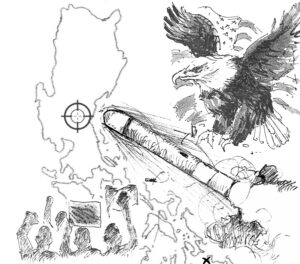
Prior to the ASEAN Summit, the Philippines hosted the largest Balikatan war exercises in its history. The drills featured US and Japanese missile flights and detonations on May 5 and 6. These operations sharpened contradictions between regional states and the Philippines. While ASEAN proclaims goals of peace and diplomacy, the Philippine puppet state opened the country as a playground and “unsinkable” US military base.
To allegedly prevent the South China Sea from becoming another Strait of Hormuz and to ensure freedom of navigation there, the US-Marcos regime pushed to strengthen the Declaration on Maritime Cooperation. A key component of this proposal is establishing an ASEAN Maritime Center in the Philippines, which they claim will be the main council for maritime issues to be applied to ASEAN member states. These measures will further inflame conflict in the South China Sea instead of calming tensions.
Fascism and covering up poverty
Progressive groups held the forum “Imperialist Crisis and War: A People’s Alternative to the ASEAN Summit” on May 6 and staged protests against the summit at the University of the Philippines–Cebu. About 200 police inside and outside the campus were visibly carrying out surveillance during activities.
Greenpeace Philippines members protested outside the summit that same day to demand action on plastic pollution, to denounce excessive reliance on oil, and to highlight the climate crisis in the region. Four of its members were arrested even before the protest began.
To hide Cebu’s poor from the delegates, the local government moved 66 families living behind the Mactan Expo, where the summit opened, to a resort in the neighboring town of Cordova. They remained there from April 27 to May 9. Large tarpaulins covered their shanties.