Austin confirms US direct involvement in Ayungin Shoal conflict
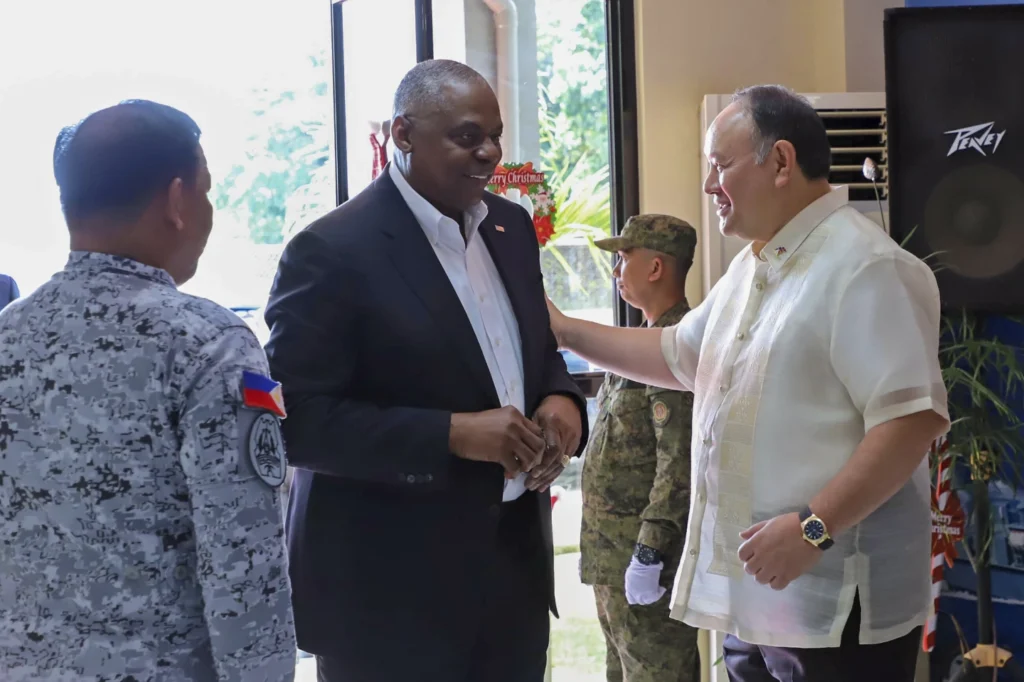
Lloyd Austin III, the US Secretary of Defense, visited Palawan on November 20 and confirmed US direct intervention in the Ayungin Shoal conflict between Philippines and China. He also confirmed the existence of an unofficial military facility (EDCA site) within the Western Command (Wescom) of the Armed Forces of the Philippines (AFP) in Puerto Princesa City.
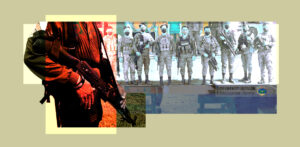
In a social media statement, Austin thanked the “US Task Force Ayungin Shoal,” composed of American soldiers based within the Wescom. From the “Command and Control Fusion Center” inside the camp, the US military directs the actions of Philippine armed forces at Ayungin Shoal, which is part of the country’s exclusive economic zone and the broader South China Sea. Presumably, this “task force” is not new, but was only recently disclosed by the US, with the AFP hiding it from the Filipino public.
Ayungin Shoal has been the center of several standoffs between the coast guards of China and the Philippines this year. The Philippines maintains the shipwrecked BRP Sierra Madre as a military outpost there. China illegally claims the shoal and the surrounding waters, contrary to international maritime laws. The AFP and the US have used these standoffs to justify US military intervention (through the Mutual Defense Treaty) and to rationalize the growing presence not only of the US but also of Japan, Australia, and NATO allies in the South China Sea.
Meanwhile, Palawan is home to several US military bases and facilities (EDCA sites), both official and unofficial. The two official sites are the Antonio Bautista Airbase in Puerto Princesa City and a naval and air base on Balabac Island.
The presence and intervention of American soldiers in internal military operations are indicators of the lack of independence in the Philippines’ foreign relations and the US dragging of the Philippines in its brazen provocations with China. The US and the reactionary Philippine state do not disclose how many more secret US “task forces” are in the country, how many American soldiers are stationed here, and what they are doing.
This November is Austin’s third visit to the Philippines. His main agenda this time is to sign the General Security of Military Information Agreement (GSOMIA), a pact for “intelligence sharing” or the exchange of intelligence data between the two countries.
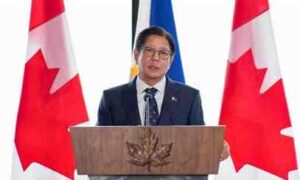
The agreement was first proposed in 2021 under the Duterte regime. It was formalized when Ferdinand Marcos Jr met with Joseph Biden in the US in May 2023. Even before this agreement, the sharing of sensitive internal data by the Philippines with the US has been a regular part of joint military exercises and other military activities.
Along with the formal signing, Austin also visited the “Combined Coordination Center,” a US military facility within the AFP headquarters Camp Aguinaldo in Quezon City.