Continued rice liberalization an insult, not a "Christmas gift"
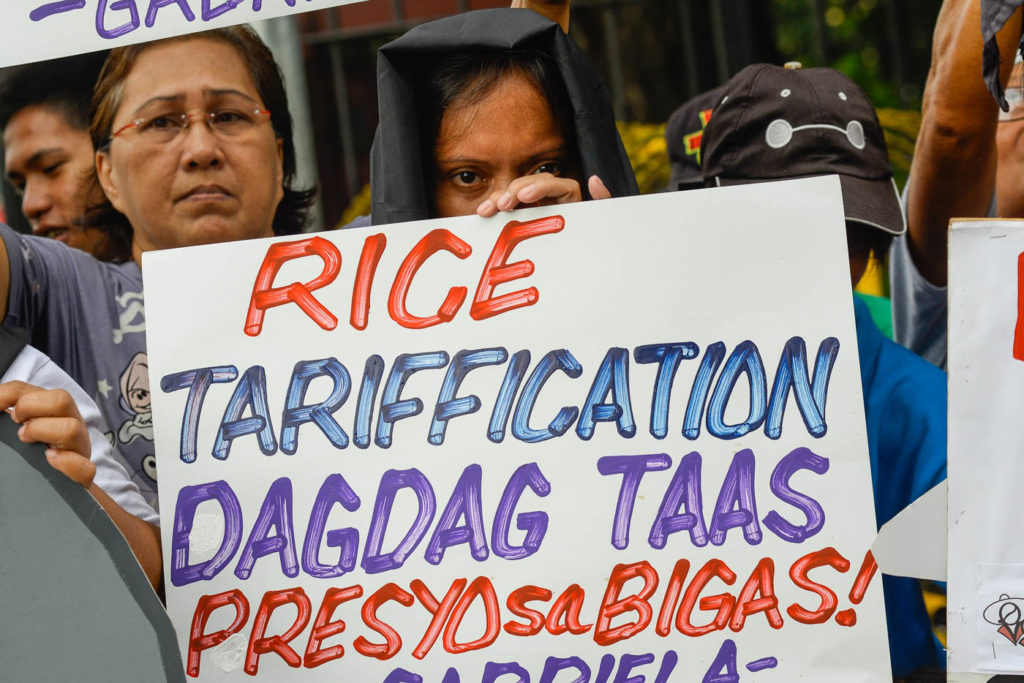
Farmers rejected the Marcos regime and the Department of Agriculture’s “Christmas gift” of an additional ₱20 billion to the Rice Competitive Enhancement Fund (RCEF), or the fund collected from flooding the country with imported rice. The regime tripled the fund from ₱10 billion to ₱30 billion by amending the Rice Tariffication Law (RTL) which took effect on December 25, 2024. The RCEF is a paltry compensation for farmers who have lost income and their livelihood due to liberalization.
The Kilusang Magbubukid ng Pilipinas (KMP) called the additional fund a smokescreen for the state’s continued failure to address the farmers’s woes: the state’s lack of support for local rice production and its relentless importation. It says the RCEF failed to uplift the local industry in the past five years. Instead, it only benefited the big business and machinery suppliers.
The KMP castigated the DA to stop its “obsession” with rice importation.
“The government’s reliance on importation remains evident in the revised RTL,” the KMP said. “This contradicts claims of strengthening the Philippine rice industry, as it undermines local farmers by flooding the market with imported rice, further driving down palay farmgate prices, and perpetuating landlessness and indebtedness.”
The RCEF itself is not aimed at empowering farmers but is allocated for “training and infrastructure” (₱15 billion) and mechanization (₱9 billion). It allocated the least for seeds (₱6 billion). The regime allocated zero funds for direct subsidies such as fertilizer, fuel (gasoline), debt payments, and fair farm gate pricing. The funds allocated for failed and useless programs are more often pocketed by corrupt officials.
Farmers also denounced the further crippling of the National Food Authority, whose rice supply reserves were reduced from three months to just two.
“This not only jeopardizes food security but also sidelines the NFA’s critical function of stabilizing rice prices and ensuring a steady market for farmers’ produce,” the group said.
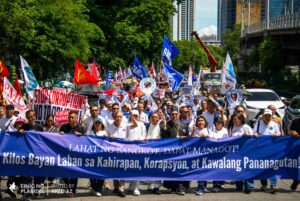
The group renewed calls to scrap the RTL and the implementation of genuine agrarian reform. They also demanded production subsidies and compensation for farmers affected by calamities.
“Filipino rice farmers are more than capable of feeding the nation if provided with adequate support, fair prices, and protection from unfair trade practices,” they said.