Filipinos and Japanese condemn Japanese Diet for ratifying RAA
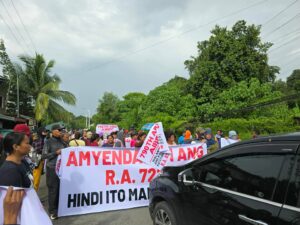
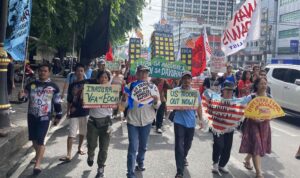
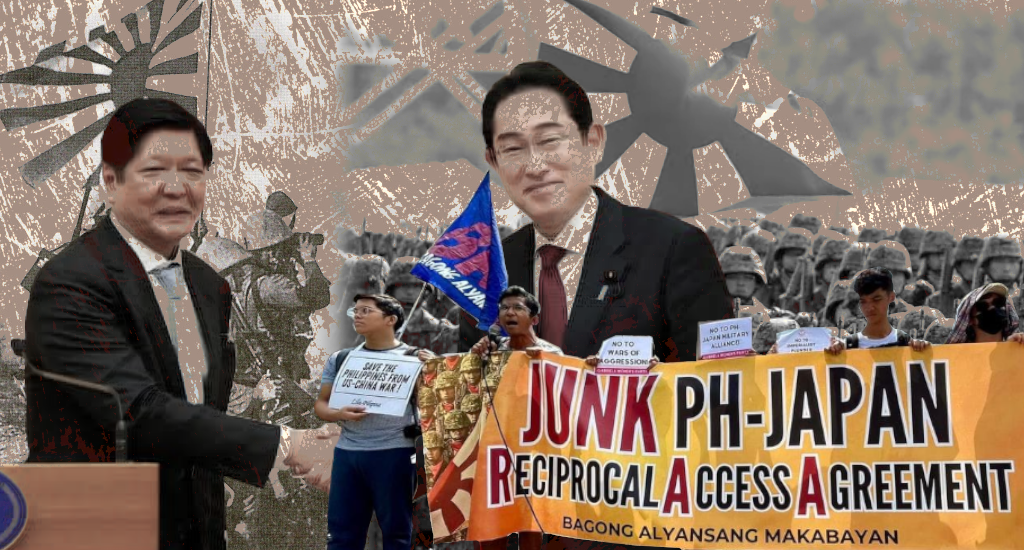
Filipino migrants in Japan and Japanese peace advocates condemned the Japanese Diet (legislature of Japan) for ratifying the Japan-Philippines Reciprocal Access Agreement (RAA) on June 6. They called called the military agreement “dangerous” and does not serve the interests of either Filipinos or Japanese, but only the geopolitical ambitions of imperialists.
“Far from strengthening peace and security, this agreement escalates tensions in the Asia-Pacific region and drags our nations into the war-driven agenda of the United States and its allies,” according to a joint statement by Bagong Alyansang Makabayan (Bayan)-Japan, Japan Campaign for Human Rights in the Philippines (JCHRP), Migrante Japan, and Asia-Wide Campaign (AWC).
Intensification of tensions
Like a dog barking at the behest of its master, the Armed Forces of the Philippines (AFP) applauded the Japanese Diet for ratifying the RAA. AFP Chief of Staff Gen. Romeo Brawner expressed excessive gratitude to Japan, which once occupied the Philippines and left a legacy of violence among Filipinos.
“Brawner is weaving a grandiose illusion of ‘regional stability’ the RAA supposedly brings,” Communist Party of the Philippines (CPP) chief information officer Marco Valbuena, said. “Contrary to Brawner’s claim, the RAA will further intensify military tensions in the Asia region. This is part of US maneuvers to provoke China’s anger in line with the US strategic plan to instigate war.”
Instead of stability, it will intensify tensions not only in the Philippines but also in the entire region. “Japan and the US puppets in the Philippines are not only provoking China. They are also agitating our neighboring Southeast Asian countries, which are peacefully engaging with China despite having similar or even greater maritime disputes,” Valbuena said.
Lopsided agreement
Japanese and Philippine representatives signed The RAA on July 8, 2024. The Philippine Senate ratified it following the process set by the country’s constitution, in December 2024. Nineteen senators voted in favor, including Akbayan Party-list prime leader Sen. Risa Hontiveros.
The agreement allows an indefinite number of Japanese Self-Defense Forces (JSDF) troops entry and unlimited stay in Philippine territory. While in the country, they have immunity from Philippine authority, as Japan will manage and control all their activities.
Visiting Japanese troops and civilian contractors, as well as their families, are not required to obtain a visa or register as “foreign visitors” with Philippine state agencies. Troops carrying a Japan issued “defense service identity card” do not even need to present a passport.
According to the groups, they are deeply concerned that the Philippines is once again becoming a military playground for foreign powers. “We know too well the horrors of war and displacement,” they said.
“To our Japanese comrades: we see how this agreement also threatens Japan’s pacifist constitution and the peace cherished by generations who remember the devastation of war,” the groups stated. They believe that the RAA is another attempt to reverse Japan’s postwar commitments and accelerate its ongoing remilitarization, alongside US-led military plans in the Asia-Pacific and against rival imperialist China.
The groups stressed that this agreement was signed and passed without meaningful public consultation. “It disregards the voices of Filipino communities, civil society, peace advocates, and progressive forces who have repeatedly called for demilitarization and sovereignty,” they said.
In light of the ratification of the agreement, they called on all Filipino migrants, Japanese, and people across the Asia-Pacific to reject the RAA. “Let us resist all forms of military intervention, neocolonial aggression, and imperialist war-mongering,” they urged.