Kalinga peoples stand firm anew against mining
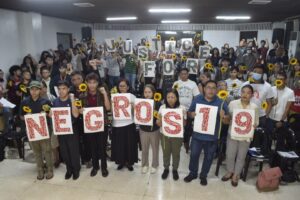
More than 100 citizens signed a unity statement against the looming mining operation of Makilala Mining Company Incorporated (MMCI) in a forum in Tabuk City on April 12. They expressed their grave concern over the threat posed by MMCI to the Pasil and Chico rivers that flow through their province.
MMCI will cover three areas in Pasil, Kalinga–the Maalinao, Caigutan, and Biyogs–within the ancestral domain of the Balatoc tribe and parts of Guinaang. Recently, the Marcos regime granted MMCI funding from the Maharlika Fund to resume its destructive projects.
In 2023, MMCI was granted a mineral production sharing agreement (MPSA) and received a certification precondition (CP) from the National Commission on Indigenous Peoples (NCIP). This agreement was formally executed through a memorandum of agreement between MMCI and pro-mining members of the Balatoc Indigenous Cultural Community (BICC). The Provincial Environment and Natural Resources Office (PENRO) reported that the mine will destroy approximately 4,700 trees in the designated mining area in the first quarter of 2025. This highlighted the experiences of Kalinga residents during the operation of Batong Buhay Gold Mines Incorporated (BBGMI) in the 1980s, where its disposal of mining tailings severely polluted the Pasil and Chico rivers.
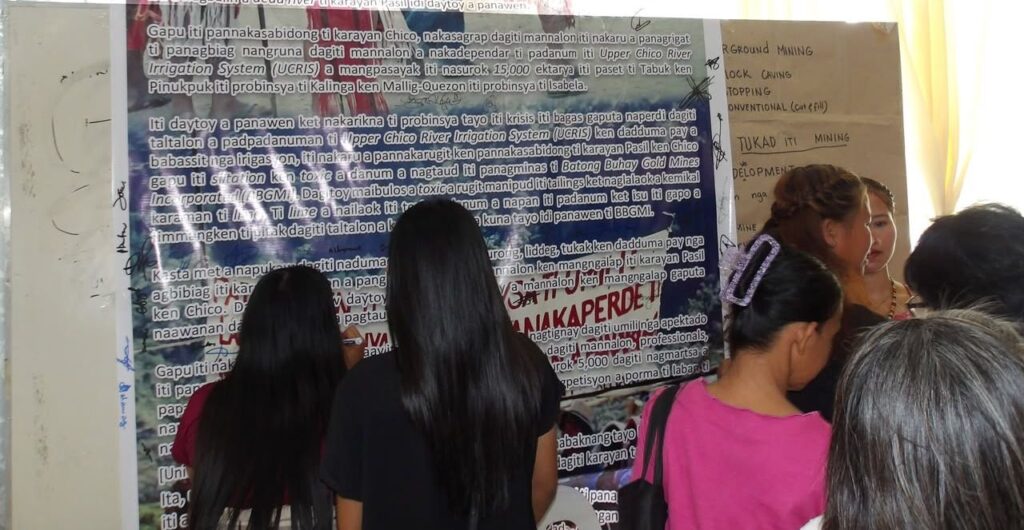
In the statement signed by Concerned People Against Large-Scale Mining, the people of Kalinga said they still vividly remember the suffering caused by the operations of Batong Buhay Gold Mines Incorporated (BBGMI) in the 1980s. The disposal of mine tailings heavily silted the Pasil and Chico rivers resulting in the death of the Pasil River at that time and contamination of the Chico River.
“The contamination of the Chico River severely devastated local farmers, especially those relying on the Upper Chico River Irrigation System (UCRIS), which irrigates more than 15,000 hectares of farmland in Tabuk and Pinukpuk in Kalinga, as well as Mallig-Quezon in Isabela,” according to the alarmed citizens. “At that time, BBGMI operations’ siltation and polluting of the water that devastated farmlands resulted in a rice production crisis in the province.”
“This was a great loss for the affected farmers and fishermen, who lost their source of income,” according to the unity statement.
The impact of mining on Kalinga ecology goes beyond agriculture. Various species of fish and other aquatic organisms vital to the livelihoods of local fisherfolk and farmers disappeared.
To fight the damage caused by the company, affected residents–including farmers, professionals, church people, and students–united in a massive protest, with more than 5,000 joining the march against mining operations. Their resistance was able to stop the operations of BBGMI.
“Now, another mining company has come to extract our wealth and destroy our environment and livelihood, siltating our rivers, destroying our forests, and disrupting the order of our community,” the Pasil people said. “We will not allow our place to be ruined by mining and our wealth to be taken away by greedy companies.”
Their call: Kalinga unite! Fight large-scale and destructive mining. Cancel the MPSA of MMCI!