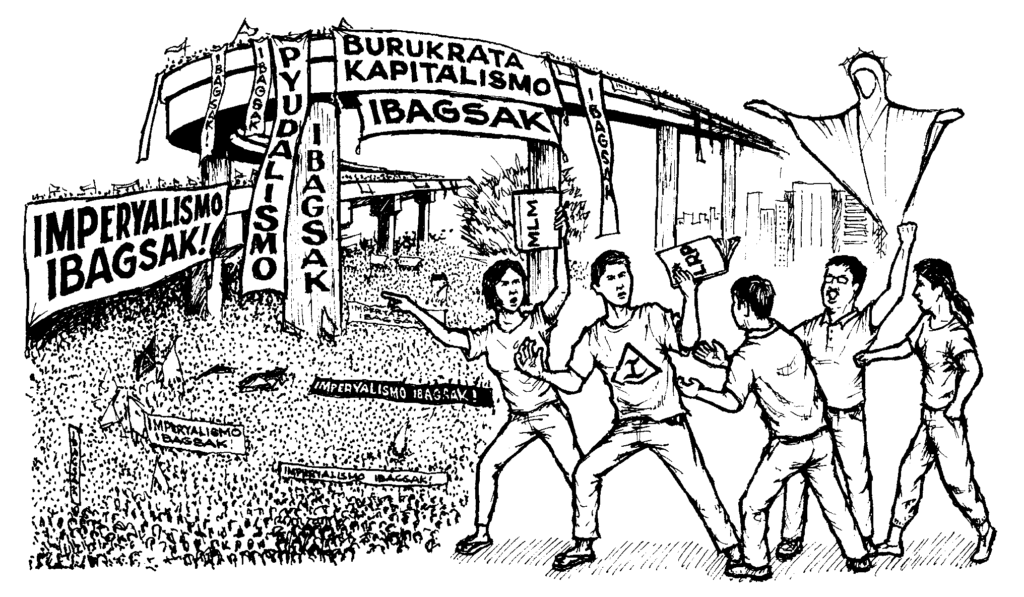
Uphold the lessons of the EDSA uprising
On the occasion of the EDSA uprising’s 39th anniversary, the National Democratic Front of the Philippines reminded the people of its crucial lessons and the need to advance its gains through the promotion of the national-democratic revolution.
NDFP secretary general Elias Dipasupil recognized the unique role of the EDSA uprising in the history of the Filipino people. It united various groups, from the sincere to those with their personal agendas, to oust a dictator. The breadth and diversity of the forces gave it strength, but it also made the outcome of the uprising vulnerable to distortion and cooptation.
After nearly four decades, the country remains mired in poverty, ruled by bureaucratic capitalists and their imperialist masters. The Marcos family has returned to Malacañang and is swaggering in power. In the past two years alone, nine cases related to their stolen wealth were dismissed by the Sandiganbayan. They have accumulated even greater wealth from public funds through intelligence and confidential funds, unprogrammed funds, the Maharlika Investment Fund, and many other channels of corruption.
Nevertheless, the EDSA uprising and its lessons remain significant in the fight against tyranny. The uprising serves as an important reminder of the need for vigorous and relentless education and organizing. The dictator was not ousted in just three days in 1986. In the 14 years prior, underground organizations were built in urban areas until the people were able to mount bigger mass actions to break the reign of terror. In the countryside, the New People’s Army launched armed resistance to counter intense militarization, alongside peasant struggles to advance their demand for genuine land reform.
Above all, a crucial lesson is the need to complete the experience of the EDSA uprising against tyranny until revolutionary change is achieved and a truly democratic government of the people, as demanded by the masses, is established.
Living the spirit of EDSA
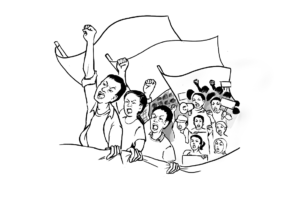
On February 25, the anniversary of the EDSA uprising itself, 10,000 people gathered at the foot of the Our Lady of EDSA shrine in Mandaluyong City, Metro Manila. Joining forces in this gathering were the Tama Na Alliance, Bagong Alyansang Makabayan, One Taft Alliance, Duterte Panagutin Network, students, workers, church people, and many others.
They came together to strongly convey to the Marcos regime their calls against corruption and impunity. They also called for the immediate ouster of Sara Duterte, Ferdinand Marcos Jr’s vice president.
Similar protests were held in the cities of Baguio, Tuguegarao, Naga, Bacolod, Iloilo, Roxas, Capiz, Cebu, and Davao, with the participation of members of local organizations under Bayan and progressive parties such as Bayan Muna and Kabataan Partylist.
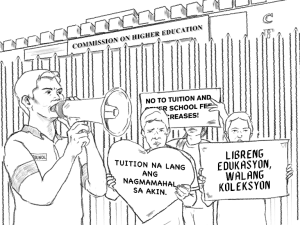
More than 70 schools suspended classes to give students, teachers, and academics the opportunity to participate in various activities marking the uprising.
In Metro Manila, hundreds of students walked out of their classes, including students from the Polytechnic University of the Philippines.
Students of UP-Los Baños and Cavite State University also walked out, while gatherings were held inside Southern Luzon State University in Lucban, Quezon, and Bulacan State University. In the Visayas, walk-outs occurred at UP-Tacloban and actions were held at the University of Eastern Philippines in Catarman, Samar.
In Mindanao, gatherings were held in the campuses of Ateneo de Davao University, Ateneo de Zamboanga University, and Xavier University in Cagayan de Oro City.