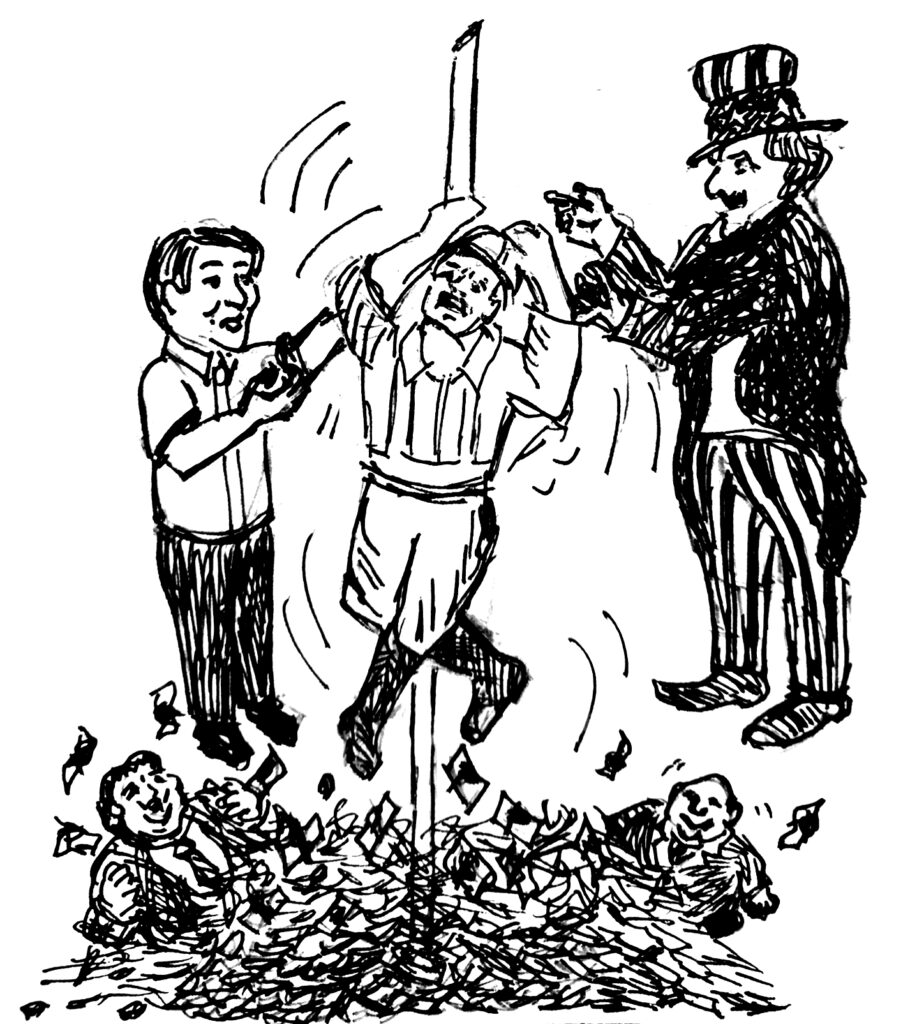
More taxes on the people, less on foreign capitalists
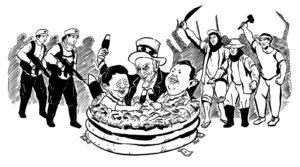
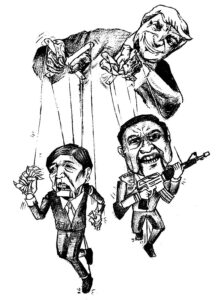
Over the past decades, the burden of multilayered taxes imposed on the Filipino people has intensified, pushing them deeper into the quagmire of poverty. On the other hand, taxes on biggest comprador bourgeoisie and foreign and local companies have become reduced, allowing them to amass even greater profits.
The people have endured decades of the Value Added Tax (VAT) on the most basic food products and services, which started at 10% but later increased to 12%. In 2016, VAT collections reached ₱622 billion and continued to grow in the following years. In 2013, it comprises an estimated 18.9% of total government revenue, up from a low of 7.9% in 1989. The burden on the people worsened when the TRAIN Law imposed additional excise taxes on petroleum products, cigarettes, alcohol, sweetened beverages, and others.
In June, Marcos further burdened the people by enacting the Digital Services Tax, which imposed a 12% VAT on internet-based services. The new law covers online shopping platforms such as Shopee and Lazada, websites for freelance work seekers such as Fiver and Upwork, and streaming platforms such as Netflix and Spotify. Ordinary content creators, online sellers, freelancers, and consumers will shoulder the tax. The US-Marcos regime will amass an estimated ₱105 billion from this over the next five years.
Before this, online shopping platform sellers were required to register with the Bureau of Internal Revenue (BIR) and pay a 1% tax on their total income. The Marcos regime also plans next to impose taxes on single-use plastics and motorcycle usage.
On the other hand, profits of large local and foreign companies have grown even more because of lower taxes collected under the CREATE MORE Law. Three more laws that further reduced taxes for the comprador bourgeoisie and large local and foreign companies were passed in 2024. These are the Ease of Paying Taxes Act, Real Property Valuation and Assessment Reform Act, and Capital Markets Efficiency Promotion Act, all part of the Comprehensive Tax Reform Program, which the Duterte regime implemented and the US-Marcos regime perpetuates.
These laws favor business owners by simplifying the tax payment system, reducing income taxes, lowering penalties for late payments, reducing taxes on the purchase and sale of shares, and granting incentives such as tax holidays, free or low electricity charges, small land taxes, tax payment amnesty, and others.
The CREATE MORE Law alone will reduce the reactionary state’s tax collection by ₱5.9 billion over three years. Under the previous CREATE Law, tax cuts for large businesses reached ₱476.8 billion in just five years.
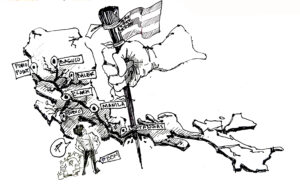
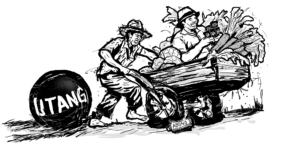
The system of imposing high taxes such as VAT and excise taxes on products and services purchased or used by the people is called regressive or backward. These taxes were first imposed at the dictate of the World Bank (WB) on backward countries such as the Philippines to ensure that the country collected enough revenue and could pay its foreign debts. In the 1980s, this was part of the loan conditions of the WB and International Monetary Fund (IMF). According to the WB itself, taxes such as VAT are the easiest source of state revenue because they are difficult to evade and sellers also become tax collectors. In fact, the WB believes that VAT in the Philippines is still insufficient and “there is room” to increase VAT revenue.
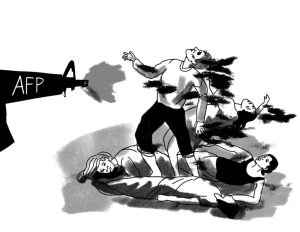
Despite the taxes collected from the toiling masses and the petty bourgeoisie, only a small percentage goes to social services such as education and health or funds for agriculture. About 20% of the government’s total annual funds go to corruption or directly into the pockets of bureaucrat-capitalists. Worse, taxes are also used for state fascism to purchase weapons, fund the NTF-Elcac and its fascist campaigns.