Second Part Expansion of commercial plantations threatens the country's natural resources
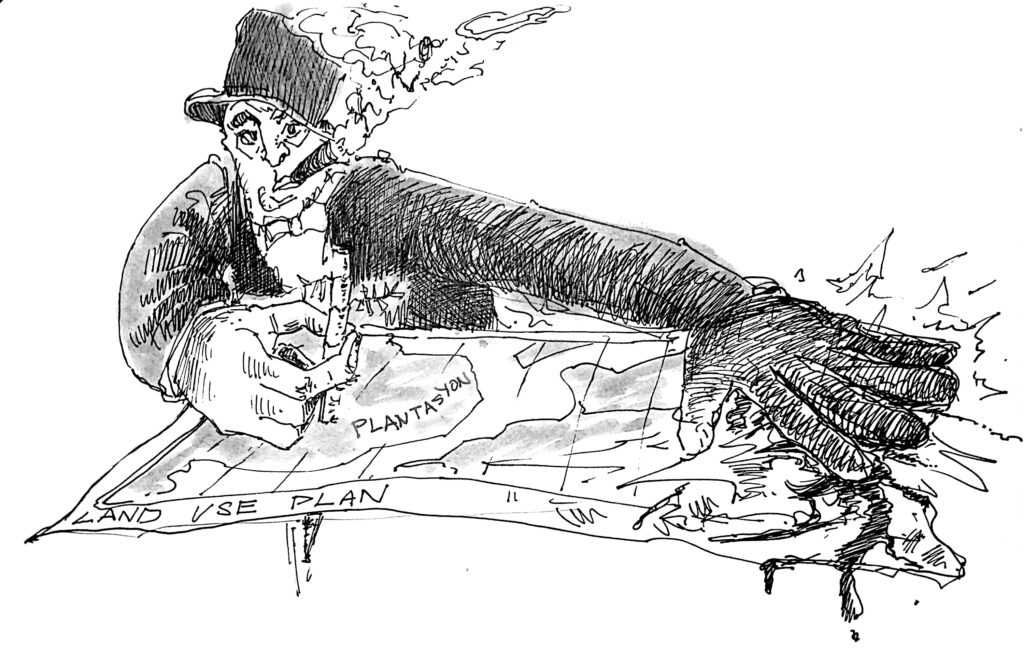
Ferdinand Marcos Jr boasts that the climate crisis is one of the main issues that his regime addresses. Masquerading as pro-environment, his regime implemented various fake reforestation projects through the Department of Environment and Natural Resources (DENR). These projects include the Expanded National Greening Program, “PagbaBAGo: A Million Learners and Trees,” Green Samar Reforestation Project, and “Forests for Life: 5M Trees by 2028,” which was launched on March 21. These reforestation projects actually aim to open the remaining forests and frontiers for the “legal” entry of huge foreign businesses to seize and convert vast forests into plantations.
Forests are being extensively destroyed to prepare the land for tree plantations. Falcata and bamboo are typically planted in plantations and reforestation projects for their rapid growth. Although naturally found in the Philippines, falcata and bamboo damage the biodiversity and the ecosystem when planted in areas where they are not endemic. The establishment of plantations displaces and kills many plants, animals, and insects. The soil quality also weakens, making it prone to erosion. Springs and streams dry up. Planted in numbers and “foreign” to the area, the trees compete with other plants and trees for mineral nutrients.
Expansion of tree plantations
In 2021, the DENR encouraged the establishment of bamboo plantations to develop its industry in the country. The Southern Philippines Development Authority granted American company EcoPlanet Bamboo an initial 8,369 hectares in Lanao del Sur to set up bamboo plantations for export. The company CS First Green-Agri-Industrial Corp. manages 30,000 hectares of bamboo plantations in Pangasinan. Kilambay Plantation Corp. also plans to expand its plantations to 25,000 hectares in Mindanao, in addition to 3,000 hectares of plantations it owns in Carmen, Cotabato. The Department of Agriculture also targets expanding bamboo plantations to 42,000 hectares by 2030.
Meanwhile, falcata is the country’s most exported wood type, mostly going to China, Japan, and the US. It is mainly used in making paper, plywood, pulpwood, veneer, and furniture. Exporters favor falcata for its rapid growth. It is ready for harvest after 3 to 10 years, depending on the wood quality desired. The largest plantation of falcata is in Davao Oriental, covering an area of 1,200 hectares. Most plantations, however, are in the CARAGA region, totaling 20,404 hectares. In July, Misamis University and the DENR announced a plan to establish a three-hectare falcata plantation in Barangay Capucao, Ozamis City. The plantation intends to grow 2,400 high-quality falcata trees and propagate their seeds for farms and plantations in Region 10 and other provinces in Mindanao. A 10-year-old falcata tree costs more than ₱12,000.
Behind the guise of “reforestation,” the US-Marcos regime deceives the people into thinking that commercial plantations such as for bamboo are eco-friendly and respond to the country’s climate crisis. In reality, instead of restoring and nourishing the natural forest ecosystem, the establishment of plantations further destroys the environment. Enormous profits, not environmental protection, are the true goal of these tree plantations.
Marcos uses the military and police forces to serve as capitalists’ guards and defenders. Countless indigenous people and farmers have been displaced, had their lands seized, were harassed, abducted, charged with fabricated cases, and willfully killed by butchers in the name of capitalist interests and massive profits.