Resist the fascism of the corrupt Marcos regime!
The protest movement against corruption and bureaucratic capitalism under the US-Marcos regime surges forward. Across the country, walkouts, rallies, and marches continue in schools, communities, factories, and offices. Suffering and burdened by hardships, people are firmly expressing their outrage at the massive thievery of billions of pesos of public funds by corrupt officers reactionary government.
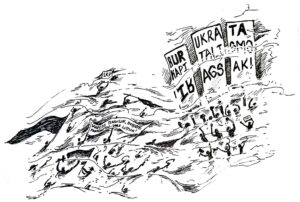
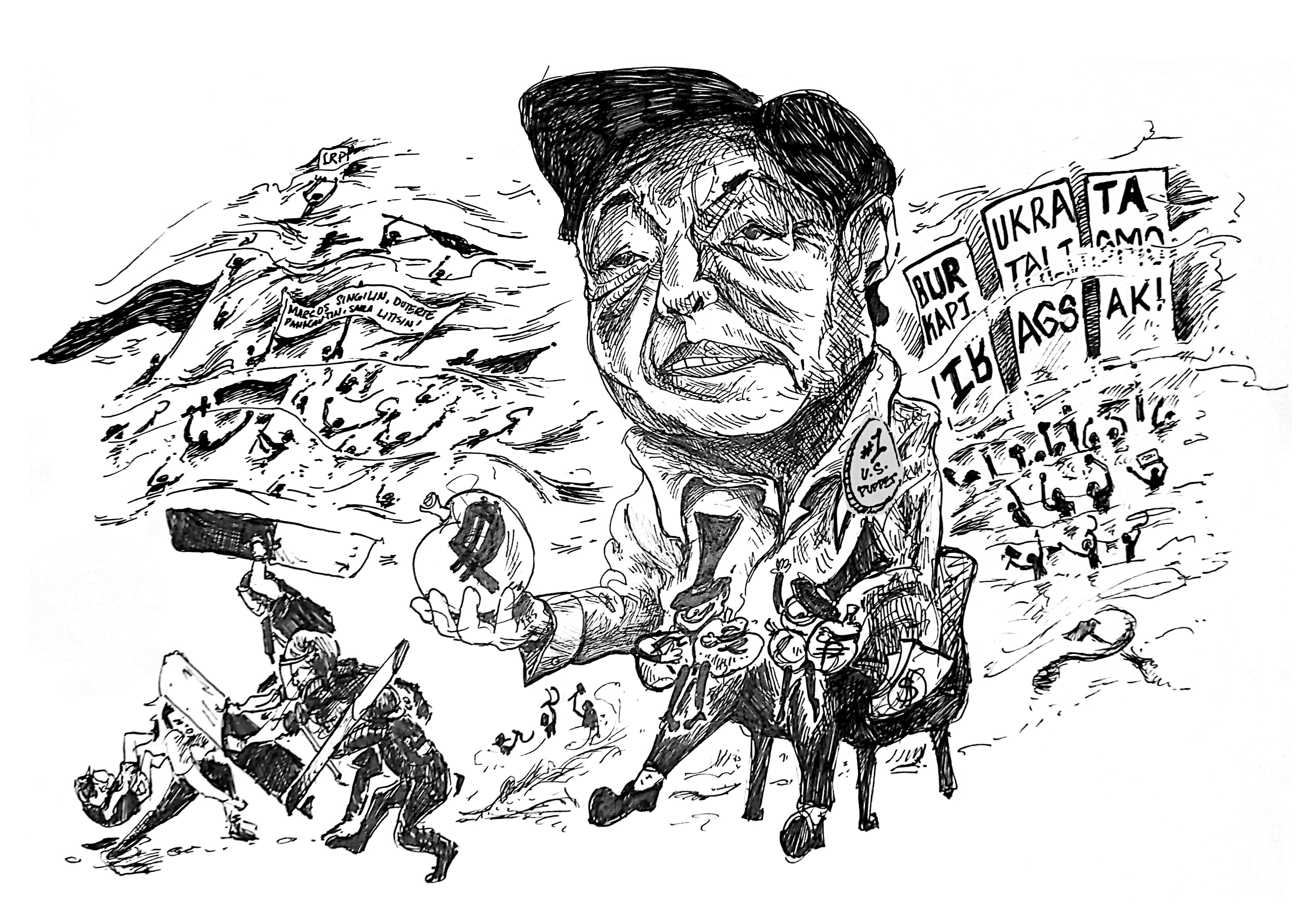
Marking the 53rd anniversary of the Marcos dictatorship’s martial law declaration on September 21, a hundred thousand people flooded the streets of Manila and other cities. Condeming Marcos as the mastermind behind corruption and the anomalous flood-control projects, tens of thousands marched toward Mendiola. Their voices echoed all the way to Malacañang. The nation’s pent-up anger, especially among the youth, erupted. They were met with brutal repression by the police.
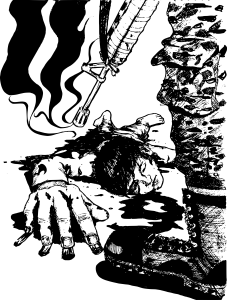
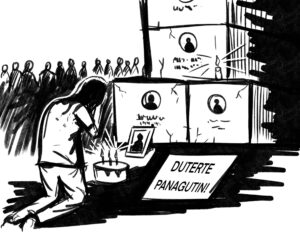
On Marcos’ direct orders to suppress the youth and people who voiced grievances and displayed their anger, police with truncheons and guns, attacked with fury. Gunshots and grenade explosions rang out. Left and right, rallyists and anyone on sight were blasted with water cannons and accosted. A worker was shot dead on the street by police gunfire. At least 277 people, including ten minors, were taken to various police stations, illegally detained, abused, tortured, and charged with a barrage of offenses.
Marcos displayed his fascist fangs in an attempt to intimidate the people and stifle the growth of their street protest actions. Seeking to divide the people, Malacañang claimed the “chaos” in Mendiola was caused by “a few agitators.” Contrary to Marcos’s aims, the people grew more united. The cry for the release of the 277 arrested Mendiola rallyists brought together different sectors—students, urban poor, workers, lawyers, church people, cultural workers, and others.
Instead of being cowed, the people’s burning anger toward the corruption and anomalies of the Marcos regime grew even stronger. In the following days and weeks, more and more students staged campus walkouts to join rallies both inside and outside their schools—from the north of Luzon to Mindanao. Almost no day in the past weeks went by without a protest action expressing the people’s demand for justice and clamor to change the rotten system.
Facing the continuing wave of protests, the Marcos regime is working double time to calm the people’s fury with hollow shows of “investigation.” However, the non-public hearings of the so-called “independent commission” only strengthens the people’s belief that this is a mere cover-up to conceal the full extent and mastermind of the corruption—Marcos himself and his closest officials. People smell the stench of conspiracy among the corrupt to evade and escape the punishment demanded by the people.
The thunderous voice of the people is shaking the entire ruling system. The putrid scent of corruption reeks throughout the country. More and more anomalies are being exposed—from flood-control projects to bridges and farm-to-market roads, classrooms, as well as military-camp buildings and beautification, billions in intelligence funds, the “balik-baril” program, and more. Allied and rival politicians are pointing at one another. The strife between the Marcos and Duterte factions continue to heighten. The Senate and the House of Representatives are neck-deep in the filth of corruption. Even those who claim to be clean have mud on their faces.
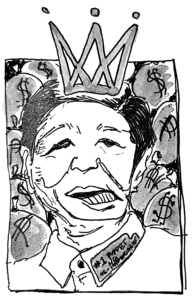
Bureaucratic capitalism and its rotten system currently governed by Marcos—king of corruption and number-one fascist terrorist—are being fully exposed. The people’s voices grow louder and wider, calling for the ouster and punishishment of every corrupt official who has stolen public funds, led by Marcos and fellow thief Vice President Sara Duterte, and for an end to the entire rotten system that burdens the people.
As their cries and resistance continue to grow, the people must further strengthen their ranks to condemn, fight, and thwart the attacks of the fascist state. The police’s violent crackdown in Mendiola is only a reflection of the broader and systematic abuse by the armed forces of the reactionary state against the rights of the people, both in the cities and countryside. To preserve the ruling system, Marcos is now deploying the full power of the fascist state. In several hundred barangays in the rural areas under military control, cases of extrajudicial killings, illegal arrests, torture, and other serious human-rights violations occur left and right.
The Marcos regime will inevitably fail to stop the ongoing surge of the protest movement against corruption. The social upheaval of students and youth expands and gains strength. They bring vigor and determination into the people’s protest movement. Their enthusiasm and resolve will only increase when they surge not only into the streets but also through the alleys of communities, the roads leading to factories, and to the remotest parts of the country.
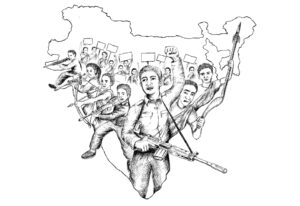
The challenge to young people is to merge their ranks with millions of workers and the vast masses of semi-proletariat or urban unemployed, as well as with the peasant masses in the countryside. In the coming weeks and months, the ruling system will be shaken further by the protest movement against corruption and bureaucratic capitalism as it spreads nationwide and draws an even-broader segment of the population from both the urban and rural sectors.
Organized national-democratic forc-es must remain at the core and forefront of the democratic protest movement to ensure it remains determined, militant, and steadily advancing. They must assiduously raise the people’s consciousness by linking the struggle against corruption to the revolutionary struggle to overthrow the three plagues of imperialism, feudalism, and bureaucratic capitalism. This can be achieved through protracted people’s war and armed struggle to end the semicolonial and semifeudal system, and establish a truly democratic government and a free and progressive society.