Plunder of environment and public funds is the real culprit behind Cebu disaster
Successive typhoons Tino and Uwan struck the country in November, severely damaging agriculture, infrastructure, homes, and schools. These claimed many lives and displaced hundreds of residents from their communities.
No less than 6,000 homes in Cebu were destroyed, while 2,812 were partially damaged when typhoon Tino hit on November 4. Forty barangays suffered from severe flooding and landslides. Floodwaters reached rooftops in several subdivisions, sweeping away dozens of vehicles. Entire houses were swept away in Mandaue City, Danao City, Talisay City, and Liloan, as well as in Consolacion and Asturias.
A total of 232 individuals died and 112 went missing. Among them, 158 of the fatalities and 58 of the missing were from Cebu.
Typhoon Uwan struck the island a few days later, caused landslides in Naga City and damaged infrastructure in San Remigio, Medellin, and Caubian Island in Lapu-Lapu City.
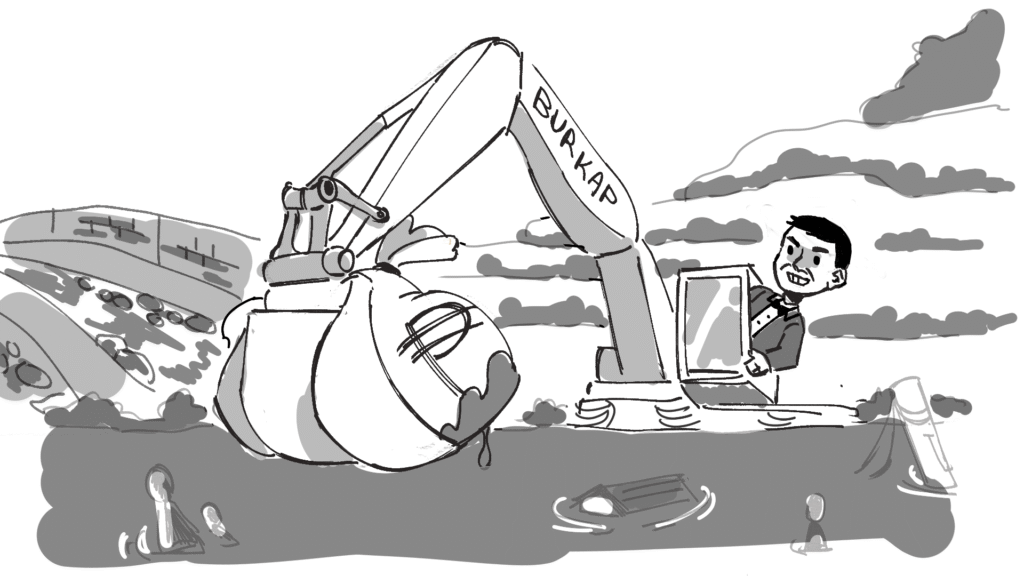
These successive tragedies are a result not only of climate change but also of environmental and public funds plunder by the ruling classes in Cebu and the entire country.
Unrestrained destruction of mountains and seas
Over two decades of quarrying in the province’s highlands worsened flooding and landslides. At least 15 companies are currently conducting large-scale quarrying on the island. The most commonly mined materials in the province are limestone, sand, gravel, and dolomite, which are sold to cement companies. These are also used for reclamation projects in Cebu and Manila Bay.
At least 12 reclamation projects are in Cebu City and Lapu-Lapu City. One of the largest is the 235-hectare Cebu City Waterfront Reclamation Project. In 2024, an additional six major reclamation projects covering a total of 765 hectares were approved. These projects destroyed mangroves that used to protect coastal communities from strong storms, waves, and floods. They also blocked natural waterways.
The unrestrained construction of real estate and tourism projects in the elevated parts of Metro Cebu further worsened flooding. One example is The Rise in Monterrazas de Cebu, a luxury housing development carved into the mountainside of Cebu City. Monterrazas had previously been ordered to stop the project after floods and landslides occurred in villages below the mountainside.
Corruption in flood control projects
Faulty flood control projects in the low-lying areas of the island aggravated flooding and landslides that come from the highlands of Cebu.
Government data recorded up to 343 flood control projects in Cebu from 2016 to 2022, and 168 more from 2023 to 2025. The province allocated ₱26.7 billion for 414 flood control projects for 2022 to 2025. The local government admitted that all flood control structures built since 2019 were defective or substandard.
The companies that obtained the most contracts in Cebu were the Quirante family’s QM Builders and Quirante Construction Corp.; the Discaya family’s Alpha & Omega and St. Timothy Construction; Lawrence Lubiano’s Centerways Construction & Devt. Inc.; Alex Abelido’s Legacy Construction; and WTG Construction & Development Corp. of Senator Bong Go’s family.
The Cebuano’s outrage
Together with members of Bagong Alyansang Makabayan–Central Visayas, typhoon Tino victims from Barangay Paknaan and Mandaue City protested on November 15 along Gorordo Avenue. They condemned corruption in the province and demanded compensation for the victims. They also lit candles and rang church bells to honor those who lost their lives in the storm.
On November 18, democratic groups and sectors officially formed the Kalihukang Sugboanon Kontra Korapsyon (KASUKKO*), an alliance against corruption in Cebu. The alliance called on the public to join the nationwide protest on November 30 at Fuente Osmeña, Cebu City.
*Kasuko is also Cebuano word for outrage.