The Party deepens its roots in Negros Island
Guided by the rectification movement, the Negros Island Regional Committee of the Communist Party of the Philippines continues to deepen and expand its roots among the Negrosanon masses. In 2025, the committee reported relative progress in overcoming pinpointed weaknesses. Consequently, the Party successfully led the struggles of the working masses and democratic sectors in the cities, towns, and countryside, and strengthened New People’s Army (NPA) units across five guerrilla fronts on the island.
Forging ideological strength
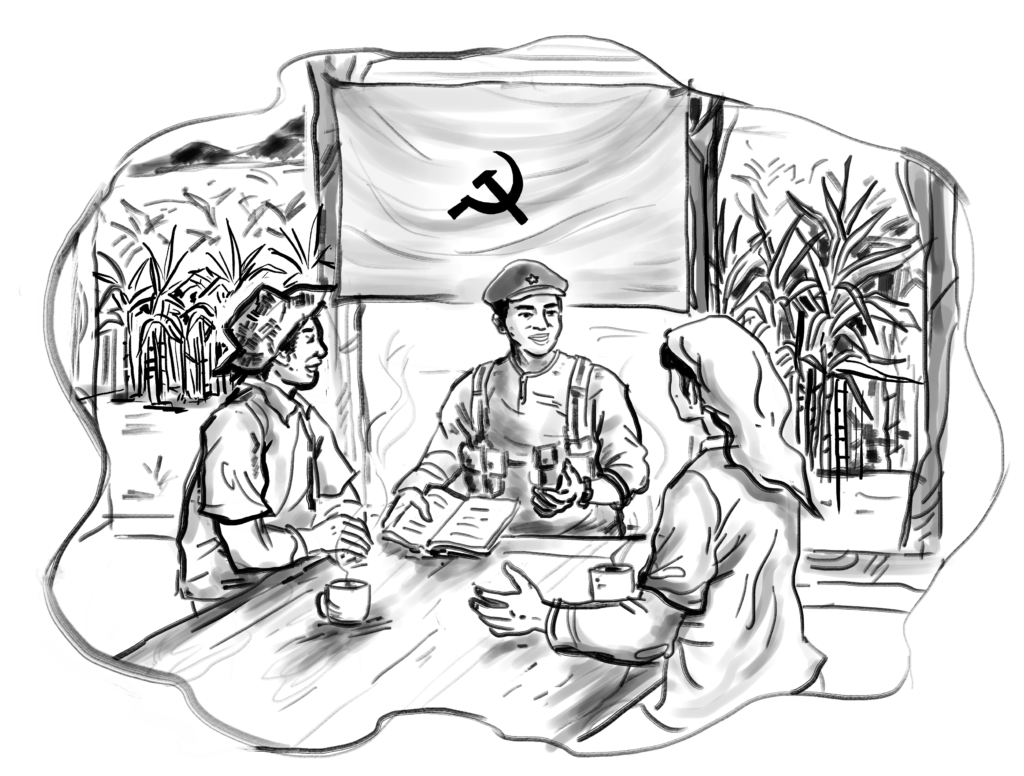
To consolidate Party members, the committee decisively implemented simple methods of teaching that preserves the substance of education courses. It launched studies on the Basic and Intermediate Party Courses. Campaigns to study the Party Orientation Course and Party Constitution also continued.
Party members collectively studied memoranda and advisories from higher and regional organs that clarify the direction and implementation of plans based on the concrete conditions of the people’s war in the island and nationwide.
They read and collectively discuss revolutionary publications, journals, and folios at national, regional, and front levels such as Ang Bayan, Rebolusyon, Ang Paghimakas, Ispading, Ang Budyong, and Ngurob. These helped broaden the ideological understanding of Party members within the army and local mass organizations.
One major achievement over the past year was the summing-up documents written by guerrilla fronts and other Party units and organs. For instance, the Central Negros Front Committee summed up its experiences from 2008 to 2023. This now serves as a guide for leading cadres in drawing up plans.
Guerrilla fronts also completed their respective SICA (Social Investigation and Class Analysis), which became the foundation for mass education, organization, and mobilization. “This is the concrete form of efforts to overcome the weakness of ideological subjectivism in the form of empiricism,” the regional committee said.
The committee reported regular assessments and the development of detailed plans to ensure the consolidation of Party units in both rural and urban areas. Alongside these, criticism and self-criticism were earnestly undertaken to further strengthen Party unity.
Political work
Conducting political studies raised the masses’ political awareness and readiness to struggle. The Party implemented simplified and easy to grasp study courses covering the National Democratic School (Padepa) curriculum, written articles, social investigations, and documents of summed-up revolutionary experience.
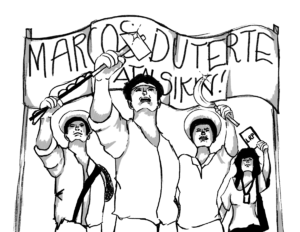
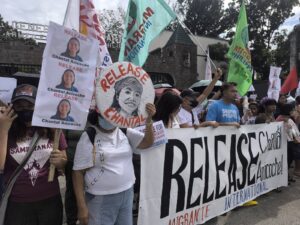
The masses in both cities and countryside demonstrated strong unity in 2025. They propelled collective struggles in the countryside for land reform, just wages, and benefits for farmworkers and poor peasants. They led protests in urban areas against the jeepney phaseout, privatization of water services, and the strong anti-corruption movement.
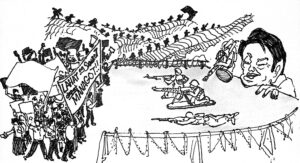
The masses also invigorated their anti-fascist struggle against the US-Marcos regime. Units on the island issued timely statements exposing the lies, psywar, and black propaganda of the Marcos regime and its agents. These were released over radio, newspapers, the internet, and social media.
In armed struggle, five guerrilla fronts under the Regional Operational Command of the NPA (Apolinario Gatmaitan Command) actively maintained operations. The people’s militias were continuously expanded as reserve forces for the people’s war among the mass base.
The Party and the NPA freely and consistently carried out revolutionary tasks through diligent, vigorous, and incisive analysis of the military situation. The NPA expanded and increased its area of operation by 33%. Organized mass strength grew by 20%. Organs of political power were clandestinely established in the island’s countryside.
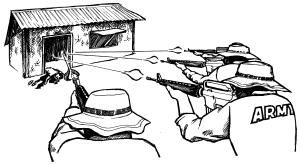
The people’s army launched 44 tactical offensives of various types. Some of these took place in town centers and areas near provincial capitols. These actions killed at least 58 and wounded 21 enemy troops composed of military, police, counterrevolutionary forces, and criminal elements. Five defensive battles on the side of the people’s army were recorded, in which 10 comrades were martyred.
The continued implementation of these tasks facilitated the recruitment of nearly 70% of new Party members across the island. They accept their duties and responsibilities without hesitation, committed to leading the revolutionary movement on the island.