The people and youth must confront brazen corruption and repression
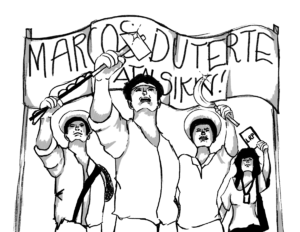
The US-Marcos regime is targeting, intimidating, and threatening the people, especially the youth, in the face of growing disillusionment over brazen corruption and repression. Their grievances are being suppressed in the face of extremely slow measures of the reactionary government to hold accountable all those involved in corruption.
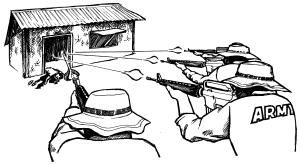
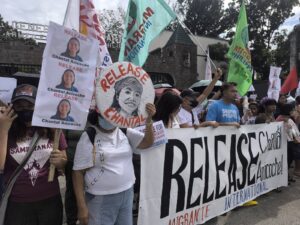
Employing its armed minions and security agencies, the regime charged several mass leaders, including student youth leaders who were at the forefront of the widespread anti-corruption actions last year, with “sedition” and “inciting to rebellion”. This is clearly aimed at sowing fear among the people, silencing them, weakening their determination to fight for justice, and derailing their plans to continue protest actions.
On social media, the NTF-Elcac and the Armed Forces of the Philippines are waging a campaign using paid trolls, including tens of thousands of AFP soldiers, to drown out anyone with critical comments or criticisms of the Marcos regime, especially against military and police abuses. This is being done under the framework of “counterinsurgency,” as they view criticism of corruption and repression as part of the propaganda of the revolutionary movement.
Surveillance and repression are intensifying on campuses, either directly carried out by military agents or in collusion with some school administrations. This is a brazen threat to the freedom of academic institutions. Marcos and NTF-Elcac are stifling critical, progressive, and patriotic thinking, historical studies and social investigation, especially among the youth, by branding them as “terror grooming”.
Marcos has not learned from history, thinking that he can silence the Filipino people, especially the student youth, through deception and intimidation, in their fight against corruption and abuse by those in power, and in their participation in the struggle to change the semicolonial and semifeudal system.
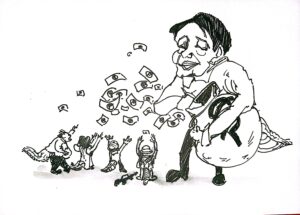
The protests that erupted in September-November last year, particularly in scores of campuses across the country, reflect the deep-seated hatred of the people towards the ruling system. The youth students’ protests were a manifestation of the widespread grievances and anger of the broad masses of the people against corruption and the bureaucrat capitalist system, that lines the pockets of a few, and impoverishes the people.
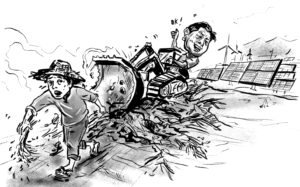
They gave voice to the millions of Filipinos who are victims of corruption, of floods caused by flawed and graft-tainted flood control projects, of substandard farm-to-market roads and other infrastructure, of decaying social services that are deprived of necessary funds, and many other sufferings brought about by bureaucratic capitalism. Together with the people, they are learning how US imperialism imposed this rotten system on the Philippines, through US-trained politicians and administrators of the reactionary bureaucracy.
The youth and the masses are determined to continue the protest movement against corruption and the rotten government. They know that every moment they remain silent and protests subside is taken advantage of by Marcos and his ilk of thieves to plunder and enrich themselves.
Marcos and his corrupt officials are acting deaf to the widespread protests. “Business as usual,” they seem to declare, as they approve the 2026 budget laden with pork barrel funds and new infrastructure projects, such as school buildings. The Department of Public Works and Highways (DPWH) is conspicuously rushing to pour billions of pesos for “repairs” on EDSA and other highways and bridges, while the public looks the other way.
The Independent Commission for Infrastructure formed by Marcos is already set to wrap-up its work, despite having yet to achieve anything meaningful, except to create the illusion that Marcos is doing something, and to cover up Malacañang’s accountability. Marcos is now using the Ombudsman to silence his political rivals or make sacrificial lambs of some allies who he can no longer defend having been exposed in plunder. Officials closest to Marcos involved in corruption (such as Bersamin, Pangandaman, and others) have been shielded by Marcos from investigations and accountability.
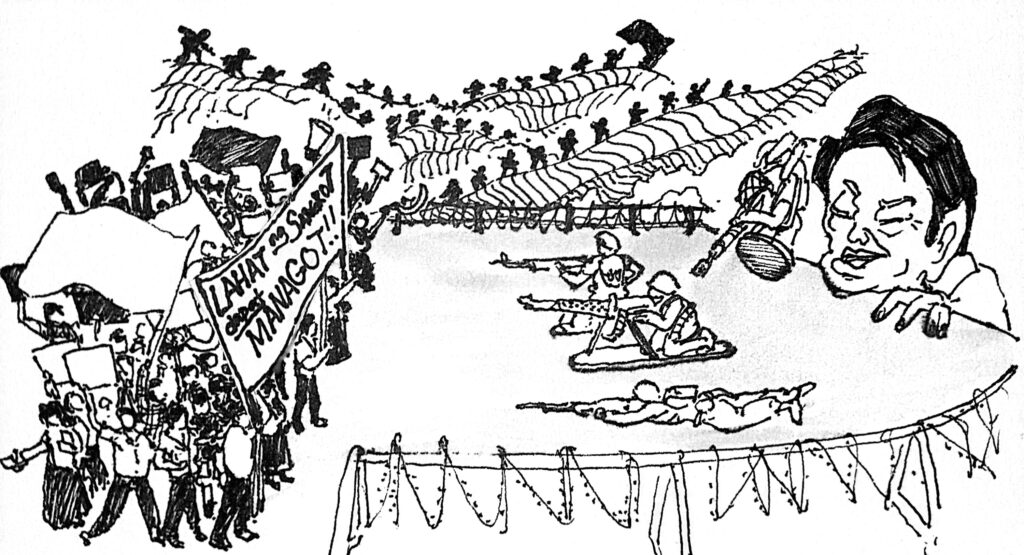
The people are being roused to act and resist by widespread corruption and brazen aggrandizement of a few in the reactionary government, their abuse of power, and the suppression of the democratic rights of the people. The scheduled rallies in the coming weeks are auspicious, including those to mark the widespread rebellion of Filipino youth during the First Quarter Storm of 1970, and the 40th anniversary of the historic EDSA uprising that toppled the corrupt and abusive dictatorship of Marcos Sr. This is a good opportunity for the people to unite and amplify the call: “hold to account all involved.”
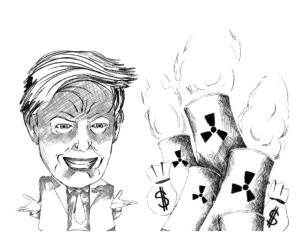
The people should not tire of exposing all forms of corruption, anomalous government contracts, plundering of the nation’s wealth, squandering of public funds, and other means of wealth accumulation by bureaucratic capitalists. They should also expose their accomplices, the big comprador bourgeoisie and foreign capitalists, in the plundering and grabbing of the country’s wealth.
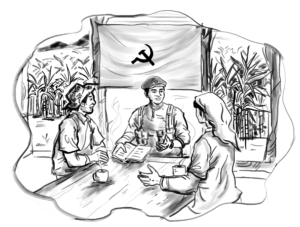
In particular, the student youth are challenged to continue heightening the expression of the people’s grievances against corruption and the rottenness of the entire ruling system. They should go to where the masses are—in factories, farms, and communities in cities and rural areas—to learn concretely about the harsh impact of corruption and bureaucratic capitalism on the lives of the masses. They should strengthen their commitment and conviction for the broad masses of the people, and dedicate their time to achieving a just and bright future.
The aim of ending the corruption of the reactionary government can only be achieved by fighting to end imperialism, feudalism, and bureaucratic capitalism, the three scourges that afflict the people. This can be done by advancing a democratic people’s revolution through a protracted people’s war. The reactionary state shall be overthrown, and a democratic people’s government will be established, composed of workers, peasants, and other democratic sectors, and representing their aspirations for national liberation and social justice.