US military use of civilian facilities in the Philippines is extremely dangerous
US imperialism shamelessly exploits and endangers civilian facilities and areas in its operations in the Philippines. With the puppet Armed Forces of the Philippines (AFP) in tow, US officials boasted of the “first-ever” use of civilian ships in prepositioning of military equipment in Mindanao and the transfer of these to Luzon. This comes with the multiple war games being conducted since January that will culminate in the so-called largest Balikatan this April.
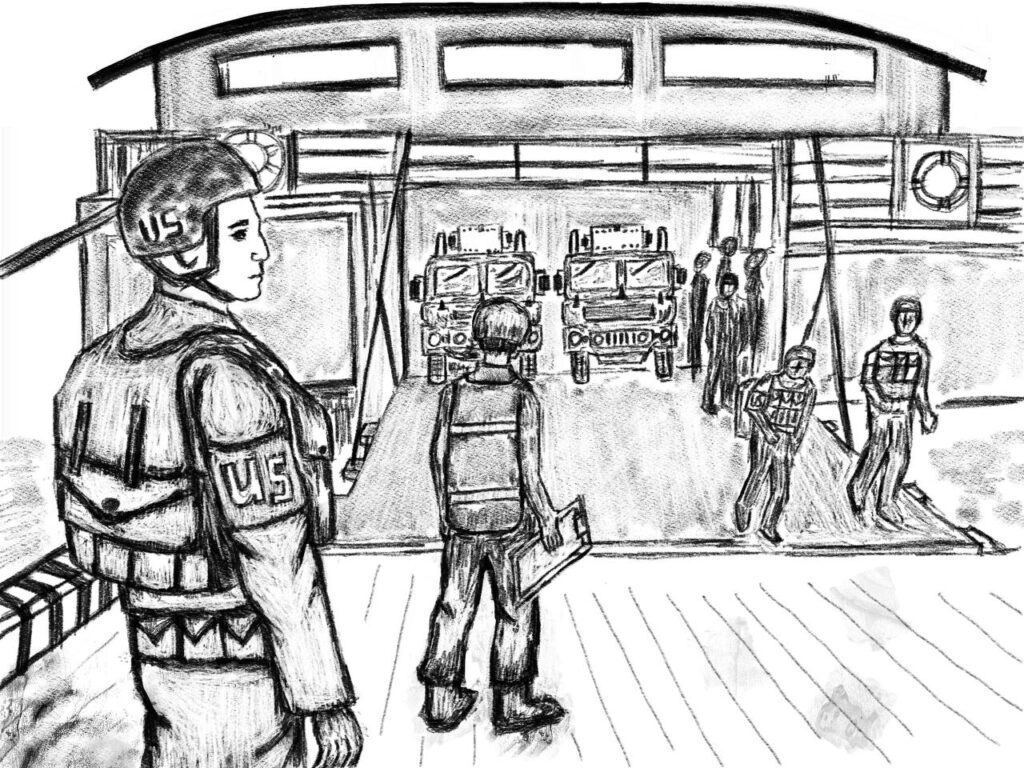
The US positioned combat vehicles at the civilian port of Cagayan de Oro City on March 12–15 and transferred these to Subic Freeport using commercial ro-ro (roll on-roll off) vessels. In collusion with the 4th ID, it secretly carried out what it called a “rehearsal” for the rapid transfer and dispersal of war matériel across the archipelago. This was a slap on the face of Cagayan residents, as the positioning of equipment at the port was done without their knowledge after they had already expressed alarm over the US presence in their city.
The US also used Cebu South Port in what it called the Wartime Repair and Maintenance Exercise or SWARMEX on March 25. The war games involved the USS Ashland (LSD-48), an island-class landing ship, which docked at the pier supposedly to conduct “wartime repair” of war-related damages. The US targets Cebu in its planned “unsinkable repair network” for its warships in Asia.
Cagayan de Oro Port and Cebu South Port are both civilian facilities. They are centers of commerce and transport of goods and passengers in the Visayas and Mindanao. If the country were to get dragged in a US war, local economies are bound to suffer. The US is already using these two cities’ airports as “EDCA sites.”
The US opened bidding for the construction of an oil depot this April in Davao Gulf. It announced the plan to build the oil depot as early as August 2025 as strategic fuel storage for US forces’ faster maneuvering in a “high intensity missile environment.” This means that an intense armed conflict between the US and its adversaries may erupt any time, using missiles and other weapons already aimed at its bases in the Asia Pacific.
The US chose Cagayan de Oro, Cebu, and Davao for their relative distance from the western part of the country, where major American military bases are located. By the US’ own assessment, these locations are useful because its adversaries will surely first target Subic, Clark, and its other military bases in Luzon.
Dispersal of war matériel
US war games in Cagayan de Oro and Cebu, as well as the planned oil depot in Davao, are framed under the concept of “distributed maritime operations” (DMO). This allows the US to spread equipment, fuel, troops, and weapons across islands to “deny targets” to its adversaries. These “rehearsals” aim to train rapid transport of military assets (vehicles, missiles, cannons, and others) using “host-nation infrastructure,” or Philippine facilities, both military and civilian.
The US use of civilian assets and services in its military operations is not new. Called “21st Century Foraging,” the US actively seeks civilian facilities, resources, and services instead of “relying on traditional military supply lines.” It builds what it calls a “hybrid military-civilian” supply line.
In the Philippines, such a “hybrid” supply line is already in place in Clark Air Base and Subic Freeport, former military bases now run by civilian agencies. The US is expanding this by building factories and warehouses in export processing zones in Aurora and Cagayan.
US enemy’s targets
The US deliberately endangers the Philippines by using civilian infrastructure and communities for military purposes. It blurs the line between civilian and military, turning civilian lives, communities, and property into targets. Even when claiming that the war games in Cagayan de Oro and Cebu are merely “rehearsals,” the US is clearly testing the capability of ports and seas in preparation for the imperialist war it is stoking in Asia.
International humanitarian law strictly prohibits targeting civilian property in wartime. However, they become legitimate military targets when used for military purposes. Because the US military uses civilian barges or ro-ro vessels, as well as ports and airports, to transport tanks, missiles, and other war equipment, these may be targeted by US adversaries if war breaks out, risking even the workers who operate them. The US military itself used this excuse when it bombed civilian infrastructure in Iran on the grounds that these served the country’s military purposes.