Agricultural workers call for living wage on Labor Day
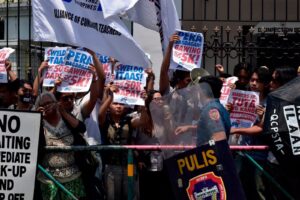
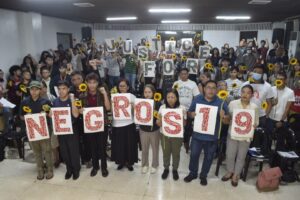
On Labor Day, agricultural workers under the Union of Agricultural Workers (UMA) joined the nationwide call for a living wage. It stated that despite the crucial role of agricultural workers in food production, their wages are severely insufficient, to the point where they cannot even feed their families.
UMA chairperson Ariel “Ka Ayik” Casilao said agricultural workers are treated like “third-class citizens.” While workers’ wages are generally low, those of agricultural workers are even lower.
In Eastern Visayas, for example, agricultural workers earn only ₱390, which is just 32.5% of the ₱1,200 living wage. In some areas, they are paid as low as ₱15 per day for tasks like weeding.
UMA calls to remove “wage rationalization” in regions and end wage discrimination in rural areas. In addition to meager wages, they also face inhumane and hazardous working conditions. They are frequently exposed to dangerous chemicals, extreme heat, and other health-damaging situations.
They also demand to end militarization in rural areas and the suppression of their unions, as well as to scrap Executive Order 70 and the Terror Law, which legitimize red-tagging and union busting. Under Ferdinand Marcos Jr, nearly 100 farmers have been killed. Of the 761 political prisoners, 90% are farmers.
“International Labor Day is not just an occasion to remind us that all the world’s wealth comes from the labor of the working class,” Ka Ayik said. “It is also a time to renew the great alliance of peasants and workers.”
Farmers under the Kilusang Magbubukid ng Pilipinas (KMP) support the workers’ call for a ₱1,200 living wage this Labor Day.
Kilusang Magbubukid ng Pilipinas (KMP) chairperson and Makabayan senatorial candidate Danilo Ramos said agricultural workers also demand a living wage meet their basic needs.
Agricultural workers toil heavily to produce food but are repaid with slave-like wages, Ramos said. “The ₱1,200 daily wage is not only just, it is urgently necessary.”
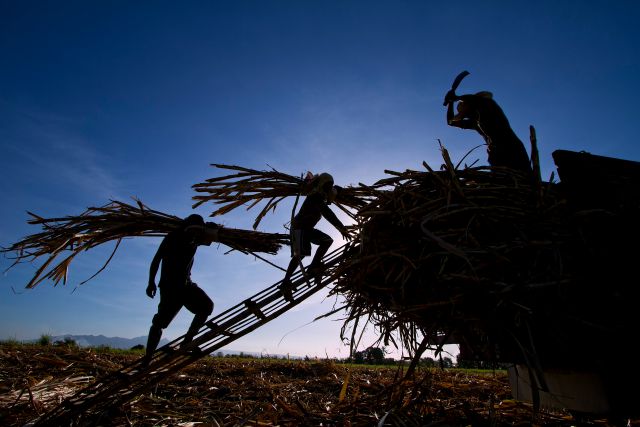
Ramos shared that in Negros, where large haciendas are located, thousands of agricultural workers are trapped in exploitative piece-rate systems.
“For example, sugarcane workers are paid only ₱1,800 for weeding one hectare of land, which takes ten workers three days to complete,” he said. This translates to a daily wage of ₱60 per worker.
“Agricultural workers deserve wages that can sustain their families, send their children to school, and allow them to live decently,” said Ramos. “They should not be shackled to poverty and hopelessness.”