Vote buying, ASR, red-tagging, and machine malfunctions escalate as election day nears
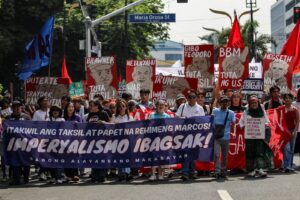
As election day nears, signs increasingly show that the upcoming election will be one of the dirtiest and bloodiest in recent history. Vote buying, red-tagging, violence, pre-shading of ballots, malfunctioning automated counting machines, and other violations of election rules have been on the prevalent.
The Commission on Elections itself reported an increase in complaints related to vote buying and abuse of state resources (ASR) by politicians for their own campaigns. By the start of May, the Committee on Kontra Bigay had received 309 reports. The agency expects this number to rise as election day approaches. The most common forms of ASR are the distribution of money, goods, membership cards, and even aid, especially by incumbent candidates. The highest number of reports came from Calabarzon, Central Luzon, and Metro Manila, particularly in Laguna, Marikina, Rizal, Bulacan, and Pampanga.
Comelec issued at least 84 candidates a show cause order to explain reports related to vote buying. The most prominent among them are Manny Villar’s daughter Camille, Santiago City mayor Sheena Tan-Dy, Marikina congresswoman Stella Quimbo, and rival candidates in Manila Isko Moreno and Honey Lacuna. Numerous photos and videos circulating on social media platforms further prove the extent of bribery, not only by politicians but also by their party-list groups.
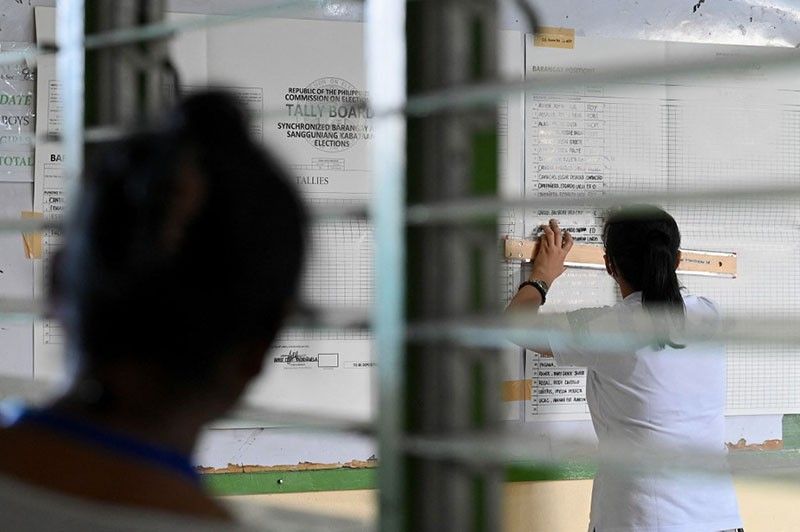
Concerns are also growing over the use of ACMs (Automated Counting Machines), alongside the new Comelec policy setting the ballot shading threshold at 15%. This means that shading only 15% of the ballot will be counted as a vote.
A test run of ACMs in Davao City revealed inconsistencies, such as improper counting of votes marked with checks, Xs, or dots. The machines validated those ballots with votes for 13 senators. Some machines accepted ballots with only a small shade, while others considered them invalid.
Comelec denies releasing any pre-shaded ballots, but reports of their existence still surfaced, as residents in Plaridel, Misamis Occidental complained.
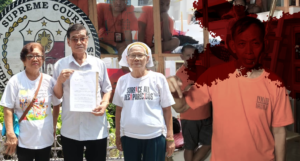
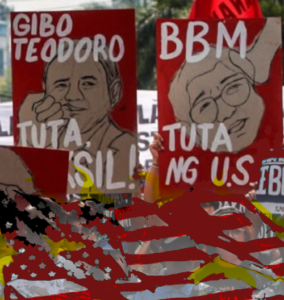
Red-tagging also emerged as one of the most serious violations of election rules. Despite a Supreme Court decision stating that it endangers the life, security, and liberty of an individual, red-tagging against nationalist and progressive candidates continues unabated. The NTF-Elcac, the military, the police, and the main supporters of Rodrigo Duterte are all behind this.
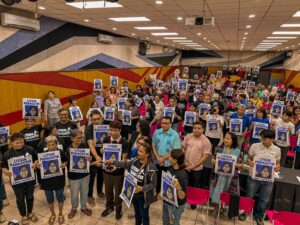
In April, the Makabayan Coalition filed a case against NTF-Elcac executive director Ernesto Torres Jr for his repeated red-tagging and vilification of the coalition and its candidates. According to Makabayan, Torres spreads baseless accusations with the aim of intimidating and silencing its candidates who are clear and strong critics of the anti-people and fascist actions of the Marcos regime and the AFP.
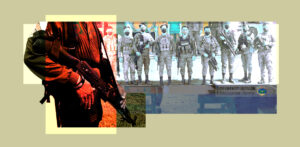
Recorded incidents of election-related violence are also growing. In May alone, police recorded 26 such violent incidents, resulting in 19 deaths. Many of these incidents occurred in Mindanao and the Cordillera. These include ambushes, shootings, and attacks on candidates, their supporters, and civilians.
Across the country, the number of areas considered “hot spots” or with a high potential for violence remains high. This is due to the continued existence of private armies of politicians, as well as the alliances of groups within the military and police loyal to their respective political cliques.