Gear up for next phase of protest movement against corruption and fascism of the Marcos regime
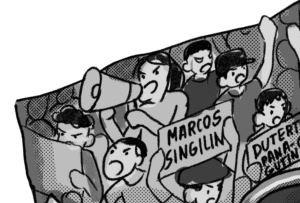
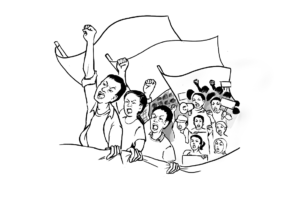
The first phase of the anticorruption and antibureaucraticcapitalist protest movement lasted roughly three months. It erupted in September and culminated in a nationwide coordinated demonstration on November 30. Each week in between saw walkouts and demonstrations by students at universities from northern Luzon to cities in the Visayas and Mindanao. In various communities, towns, factories, offices, and churches, different sectors rallied and marched, united by a common outrage against corruption and the rotten system.
It began with the scandal of billions of pesos siphoned from anomalous floodcontrol projects. Soon, similar blatant forms of government corruption were exposed. The anomalous “farmtomarket road” projects and various other infrastructure works were revealed. Hundreds of billions of pesos in “allocables” in the national budget were uncovered, as well as Marcos’s illegal use of PhilHealth funds.
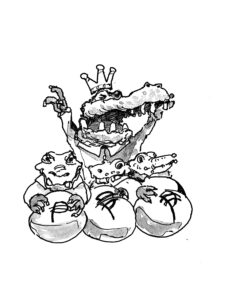
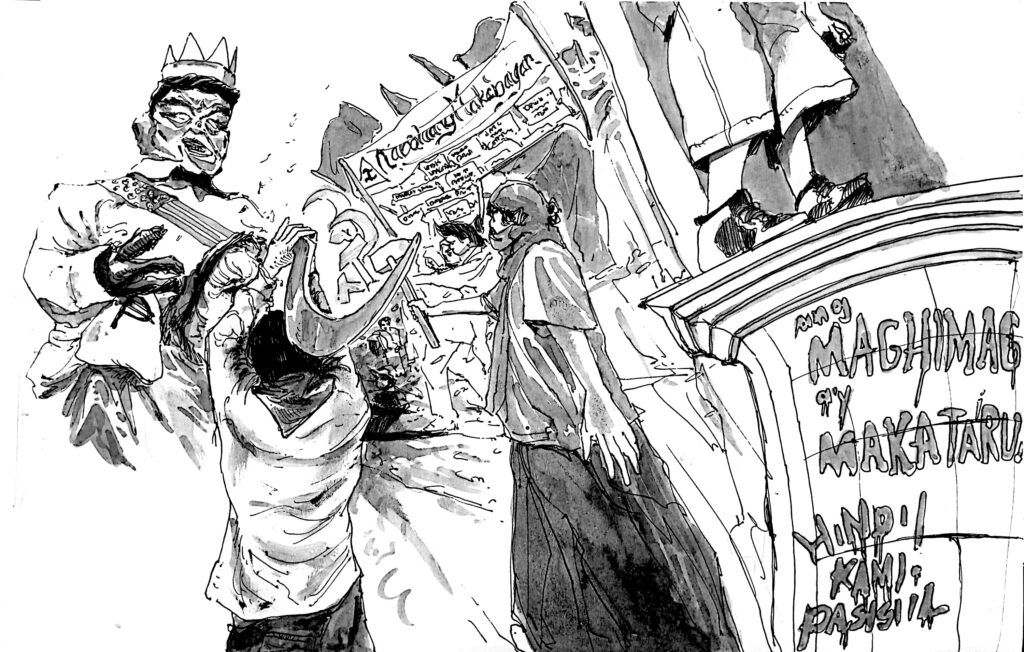
The movement started with the demand “all those involved must be held accountable” and denunciation of officials from the Department of Public Works and Highways (DPWH) and accomplice contractors, congressmen, and senators. Soon the youth and other sectors clamored, “Oust Marcos and Duterte!” after it was revealed that Marcos himself is the “King of Plunder” sitting atop a mountain of stolen wealth, and Sara Duterte is the “Queen of Corruption” who squandered hundreds of millions of people’s money. There is now public discourse on establishing a national transitional council as means to assert the interests of democratic sectors in the event of a new government.
The flood of protests that began in September can be compared to historic waves of protest in the country. In past decades, powerful popular movements have surged forward several times, twice toppling incumbent presidents (Marcos in 1986 and Estrada in 2001). Added to these are the patriotic youth uprisings of the First Quarter Storm in the 1970s, the “people’s strikes” of 19891990, rallies against the corrupt and authoritarian Arroyo regime, and the massive demonstrations against porkbarrel in 20132014.
The outbreak of the protest movement reflects the broad and deep anger of the people. Its rapid flareup shows the boiling fury of the people over the relentless increases in prices, wage stagnation, and the overall erosion of their standard of living—from the Duterte regime, and even more so since Marcos assumed power. The public’s anger intensified in the face of widespread devastation from Cebu to Palawan caused by storms and rotten floodcontrol projects. The embezzlement of billions of pesos from the nation has only deepened the people’s unending hatred of the Marcos family of thieves.
The Marcos regime has been plunged into a deep political crisis by the surge of protest actions. The situation worsened when it was revealed that Marcos himself received at least ₱25 billion in kickbacks or “SOP” in exchange for the infrastructure projects he ordered to be inserted into the budget. To shield himself, he sacrificed and ordered the dismissal of several highranking officials, including the head of the cabinet identified as being involved in the anomalies.
Marcos created an “independent commission” supposedly to investigate the anomalies, but its real purpose was to obscure Malacañang’s role in the corruption scheme. To project himself, pacify, and divert public anger, Marcos is now pushing to prosecute and arrest a few large contractors and wellknown politicians.
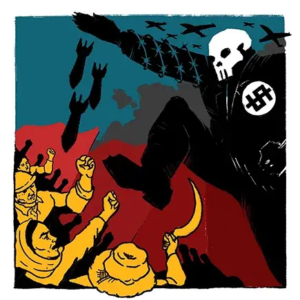
Marcos pretends be anticorruption, following the advice of his imperialist bosses, in order to take away the momentum of the anticorruption protest movement. He has allies in some Akbayan leaders who are working hard to divert the anticorruption drive away from holding Marcos accountable and drown resignation calls. Acting on US counsel, Marcos ordered a new raise in soldiers and police salaries to consolidate his control over the AFP and PNP, and use them more aggressively in a brutal, totalwar campaign against peasants in the countryside, and to suppress the looming expansion of popular protests in the coming period.
After continuously advancing since September, the protest movement against corruption and bureaucrat capitalism is now in a consolidation phase—strengthening and preparing for a renewed offensive. It challenges the nationaldemocratic forces at the forefront of the movement to sum-up and learn lessons from the past three months, to solidify and expand their organizations, broaden their alliances, and reinforce their resolve and determination to fight the USMarcos regime’s corruption.
They are urged to continue preparations for the next phase by reaching out to and organizing more factories, impoverished communities, schools, and other population centers nationwide, and to hold more mass protest actions in their localities. It calls for deepening understanding of bureaucrat capitalism in its various forms and of the root causes of the people’s suffering. The anticorruption alliance must be broadened several times, and its unity strengthened against the Marcos and Duterte rule. It also demands exposing fake progressive leaders and ultraconservatives who deceive and mislead the anticorruption masses onto the wrong path of submitting to the king of corruption.
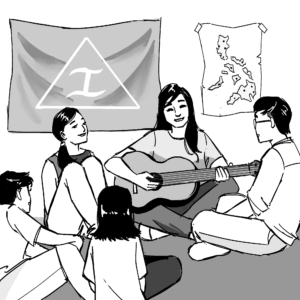
The Party and revolutionary forces must also strengthen themselves amid the ongoing broad anticorruption movement of the people and the fight against the USMarcos regime’s fascism. They must further expand underground mass organizations to awaken and galvanize the broad masses to advance the democratic people’s revolution as the true solution to the crisis. In the face of the people’s intense hatred toward the rotten reactionary state, the situation is very favorable for recruiting to New People’s Army, and for advancing the people’s war in the countryside.