Collective farming, response of the masses and people's army to crisis and hunger
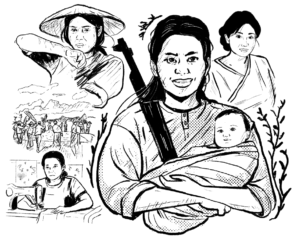
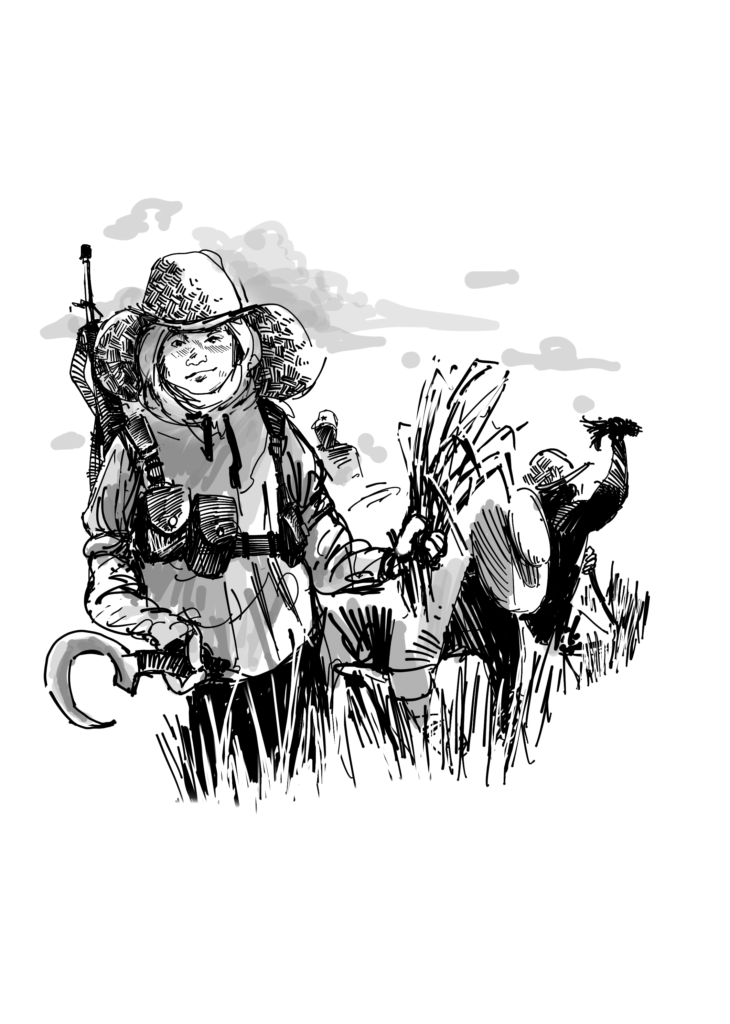
Peasants in a guerrilla zone in Eastern Visayas, Marilyn’s family is busy planting upland rice with the arrival of another rainy season. In the past, only her family bore the heavy work of land preparation up to planting rice so they would have something to eat. But this year, an entire unit of the New People’s Army (NPA) will work alongside them.
Upland rice production takes longer and is meticulous. Swidden clearing must begin in March or April, long before seeds can be planted. Forest trees must be cut several times then burned. Only after the plot of land is cleared of regrown grass can actual planting proceed. The five-month planting cycle will allow Marilyn’s family to harvest in September or October. Due to its dependence on rain, planting cycles are limited to two per year.
None of these hard work would be necessary had Marilyn’s family owned their farm. The local landlord’s monopoly over land forces people like them to frontier areas which necessitate practicing swidden just to have land to till. If they choose to become tenants to the landlord, they would suffer losses due to high production costs.
“Feudalism is truly oppressive because production is backward. Rice is manually harvested piecemeal and is time consuming,” Ka Lean, one of the Red fighters who joined the planting, explained. Meanwhile, the landlord profits, harvest or not.
Cooperative farming is most effective in this entire process. The region calls this araglayon or tiklos. It aims to expedite the meticulous process of rice production.
This monsoon season, Ka Lean’s unit plans to assist the production of six poor peasant families to demonstrate the effectiveness of collective labor. This will also encourage them to form an association that will manage various forms of cooperation and division of labor and harvest.
“The army is not constantly present. We also need to be deployed to other areas. The association will perpetuate their cooperation,” Ka Lean explained.
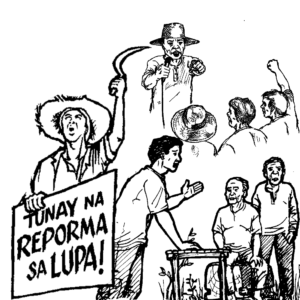
But he emphasized that forming the association has a more important aim. The peasant masses’ must directly challenge the landlord’s power through anti-feudal struggle. This arena allows them to assert lower land rent, higher wages for farm workers, the elimination of usury, higher prices for agricultural products, and more. Doing so gives them crucial experience and skills in confronting the class enemy, asserting their rights, exposing the enemy, and pressing their demands.
The peasant masses must also participate in armed struggle, the principal form of the people’s democratic revolution. Only through this can the army and the masses defend the gains of the anti-feudal struggle. Above all, the landlord’s monopoly over land and power in the countryside can only be dismantled if armed masses fight.
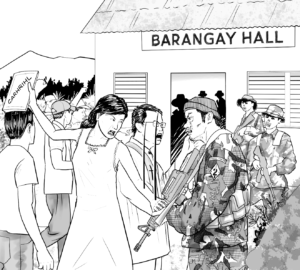
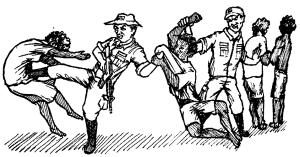
As a mercenary army of the ruling class, the reactionary state’s fascist military and police forces are extremely repressive against peasant organizations. In fact, militarization has severely affected production in Marilyn’s village. This further limited farmers’ working hours in the fields, and they are afraid to go there during operations. This adds to their burden amid the oil crisis, while the fascists in the village merely enjoy themselves gambling and drinking, yet receive high salaries.
“They are paid by the people, but they only threaten and burden us,” Marilyn said. “The NPA is the one helping us develop our production.”
Her family is overjoyed to have the people’s army as a partner in boosting production and strengthening the peasant organization in their village.