Christians for National Liberation challenge Forge social conscience and unity for justice and truth
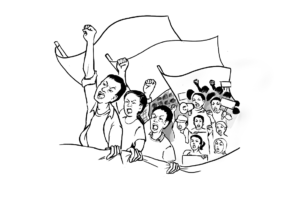
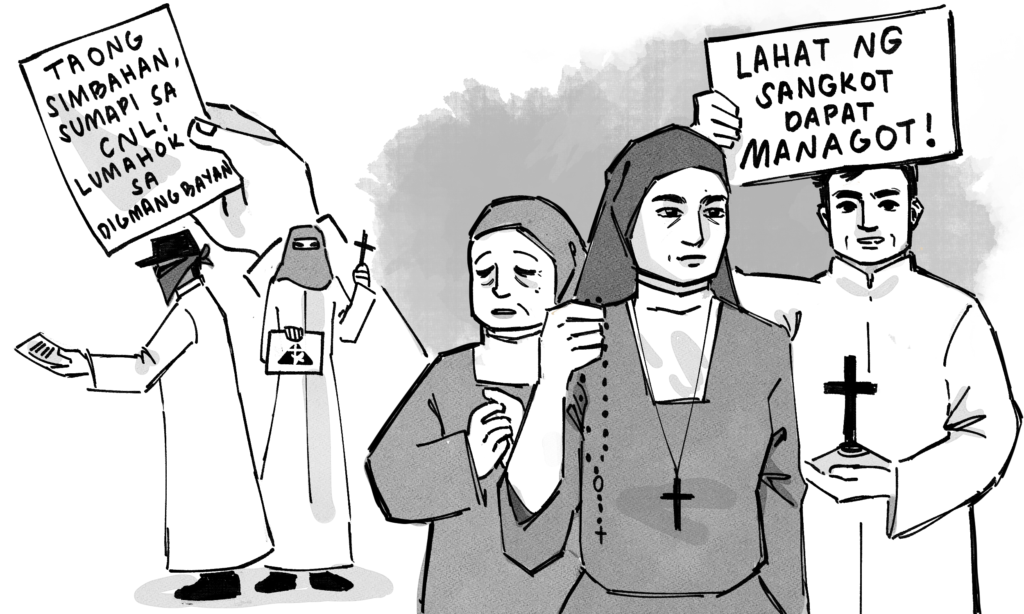
The broad participation and involvement of church people, religious leaders, and laity in demonstrations against the Marcos regime’s rampant corruption gained prominence in recent months. Despite remaining conservative, the Church’s voice and stance have been among the most compelling forces that drew thousands to join the people’s movement against corruption.
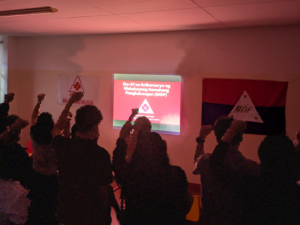
At its core is the revolutionary struggle of members of the Christians for National Liberation (CNL), the backbone of the Christian people’s struggle. Newly elected CNL officials Ka Lila and Ka Mingol imparted this in an interview with Ang Bayan.
Ka Mingol said the Church and other religious groups have great influence in a predominantly Catholic country like the Philippines.
“They are regarded as advocates of justice and truth,” he said. The participation of church institutions and religious people in protest actions motivates families and communities, as they serve as standards of moral legitimacy in the eyes of many.
Ka Lila meanwhile said church people and the faithful are taught compassion for others, sincerity in helping each other, and to act for truth and honesty, especially amid grave poverty and calamities. “The systematic theft of resources meant for the most needy is unacceptable,” she said.
However, the different stances of the Church toward the people’s call became evident on November 30. This was seen in the actions of the Iglesia ni Cristo and leaders of the Catholic Bishop’s Conference of the Philippines. During those instances, the CNL called for an uncompromising stand and action based on justice, truth, and integrity, and for breaking away from the squabbles between the ruling classes and families benefiting from bureaucrat capitalism.
“The corruption issue in flood control projects is only a small part of the reactionary government’s rampant and systematic corruption,” Ka Lila said. “This is not only about conflicts among a few but about bureaucrat capitalism or exploitation, where government is run as a business, and the powerful willfully accumulate wealth.”
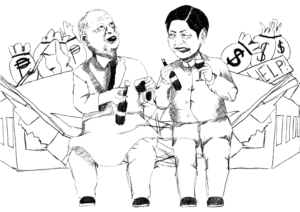
“The CNL rejects the narrative that our choice of allegiance is only between two rival camps, because both Marcos Jr and Sara Duterte, and other involved parties, must be held accountable,” Ka Mingol added.
Church leaders vary in their statements about corruption but the CNL clearly sees the widespread outrage of the religious against it, Ka Lila said.
“Church leaders are challenged to be models of humility and dialogue,” Ka Mingol continued. He also called on lower-level leaders—bishops, priests, pastors, ministers, and local leaders—not to be mere followers of the official line, especially when it goes against what they have learned about justice. “They are protectors of the flock, not defenders of the powerful or of silence amid evil. They must shape the conscience of members to participate with conviction, not only as part of a bloc but as responsible individuals of society.”
As in the past, the church plays a huge role in organizing and enlightening the people for justice and social change, Ka Mingol said. It is important to relentlessly strengthen the ranks for the people’s democratic revolution. He said that CNL is determined to overcome and triumph over the strong challenges of conservatism, self-preservation (for personal interests), and Red-tagging to achieve new vitality in expanding the ranks of revolutionaries among religious people.
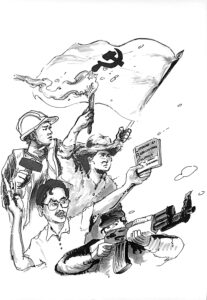
The CNL clarifies that revolutionary action is necessary to eliminate bureaucrat capitalism. This is what awakens and unites fervor, especially among the broad ranks of religious youth. They show enthusiasm in joining protest movements up to armed struggle in the countryside. The CNL campaigns among church people for the revolutionary program of the National Democratic Front, showing that an alternative system of governance exists—one that serves the democratic interests of the masses.