India's undefeatable revolutionary movement
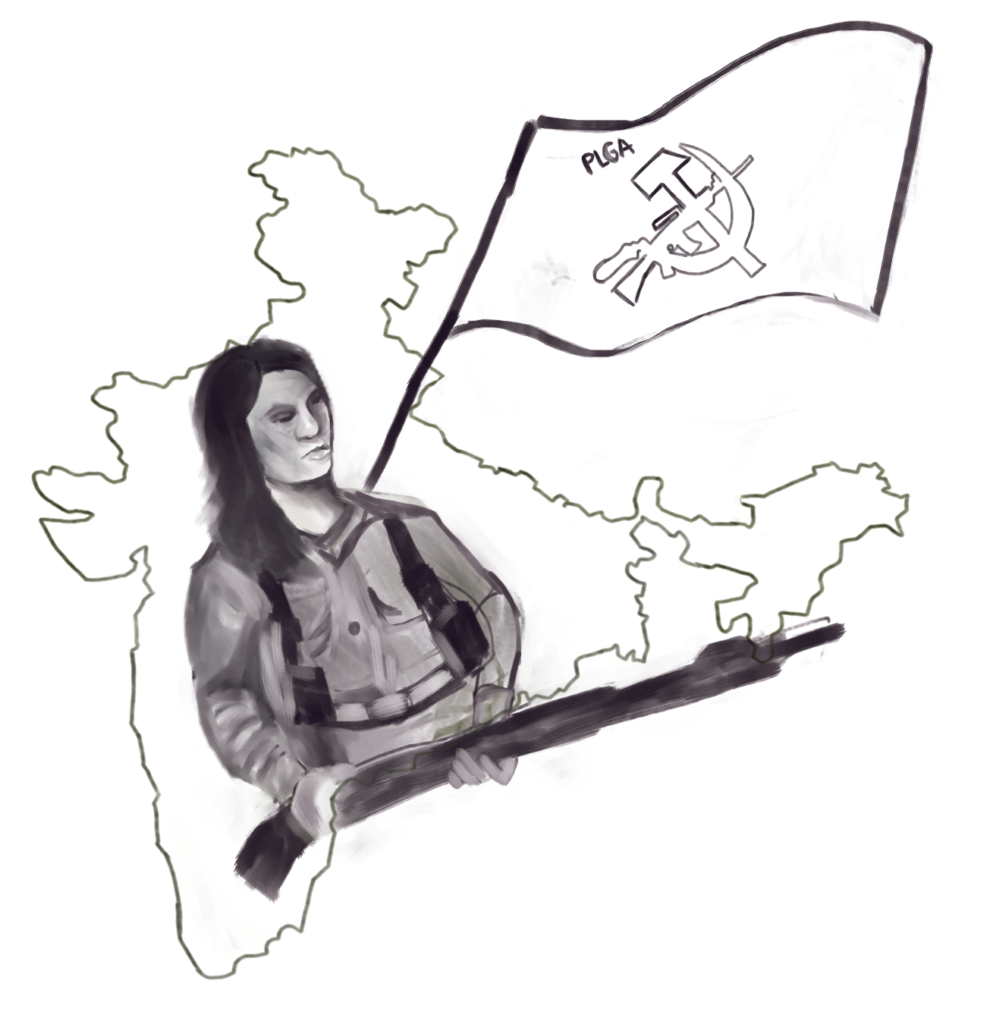
Operation Kagar, the Indian reactionary state’s fascist attack against the masses and the revolutionary Indian movement, has been unparalleled in the past nearly two years. In response, the Communist Party of India (Maoist), the People’s Liberation Guerrilla Army (PLGA), and India’s entire revolutionary movement persist in frustrating Kagar’s declared goal to end and crush the people’s resistance by March 2026.
The PLGA has valiantly resisted Operation Kagar since its launching in January 2024. The guerrilla army has carried out armed actions defying the massive offensive and extermination forces of the Modi regime, the emergence of military camps, and liquidation campaigns against Party leadership.
PLGA armed actions in the past year killed 116 police and military forces and wounded 208. It also targeted active police and military informers and notorious leaders of the ruling Bharatiya Janata Party in India. The army mainly used explosives in its operations, and indigenous weapons such as spike traps in some instances.
Nonetheless, the CPI (Maoist) candidly reported that it suffered severe losses during the past year. It said that these defeats stemmed from internal weaknesses, failures to implement the Central Committee’s plans, and the intensified state attacks.
From December 2024 to November this year, 320 revolutionaries were martyred, 117 of whom were women. At least 237 of them were Party members. Eight were Central Committee level, including Party secretary general Comrade Basavaraju; 15 were state committee level; 25 were district level; and 73 were area committee level. Thirteen came from the PLGA and 33 were cadres and activists of mass organizations.
To recover strength, the CPI (Maoist) called for intensifying the struggle against Operation Kagar nationwide. The Party pushed to identify and correct the mistakes of the past 22 months to prevent further losses. It also emphasized studying and analyzing the objective conditions and subjective forces in each area to revitalize the Party, consolidate the PLGA, and strengthen the mass organizations.
One of the mistakes the Party identified earlier, particularly in the people’s war, was its restriction to narrower areas of operation. It said that the army must move along broader coverages and not remain centralized. A specific example was the failure to transfer PLGA troops from the Dandakaranya region, the epicenter of Operation Kagar, to other regions.
In addition, the Party revealed the need to expose, denounce, and confront traitors to the revolution. Most notorious among these traitors are Sonu (Mallojula Venugopal Rao), former member of the Political Bureau of CPI (Maoist), and Satish (Takkallapalli Vasudeva Rao), who is now actively serving the Modi regime. They surrendered in October and encouraged others to follow in November. The group pulled in 299 individuals who surrendered no less than 277 weapons of the PLGA and the Party.
“At this time, our duty is to remove fear and anxiety within our ranks, instill courage, and build the self-confidence of our Party,” the CPI (Maoist) said. It added that the deepening crisis in the country has further clarified the necessity for the Party to lead the Indian masses’ overall class struggle to overthrow the rule of imperialists, big compradors, and landlords.
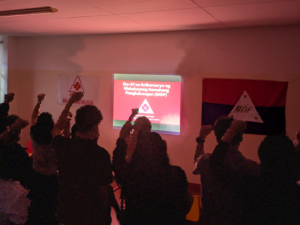
The celebration of the 25th anniversary of the PLGA on December 2 demonstrated the revolutionary movement of India’s determination to advance. During the Week of Celebration from December 2–8, group meetings and small gatherings were held in forests, plains, and urban centers. The revolutionaries posted and distributed posters and leaflets calling for the strengthening of and membership to the PLGA. They carried this out with strict precaution and priority on security amid intensified state attacks.