US counterinsurgency operations under the cover of war games
After Balikatan 2026, the US in May immediately launched its succeeding war games Salaknib, Kasangga, and Marine Exercise (MAREX). More than 8,000 troops from the US, Japan, Australia, and the Philippines, along with troops from New Zealand and Canada, participated in these war games. Contrary to claimed aims of “external defense,” all three are carrying out counterinsurgency operations in Filipino peasant and fisherfolk communities.
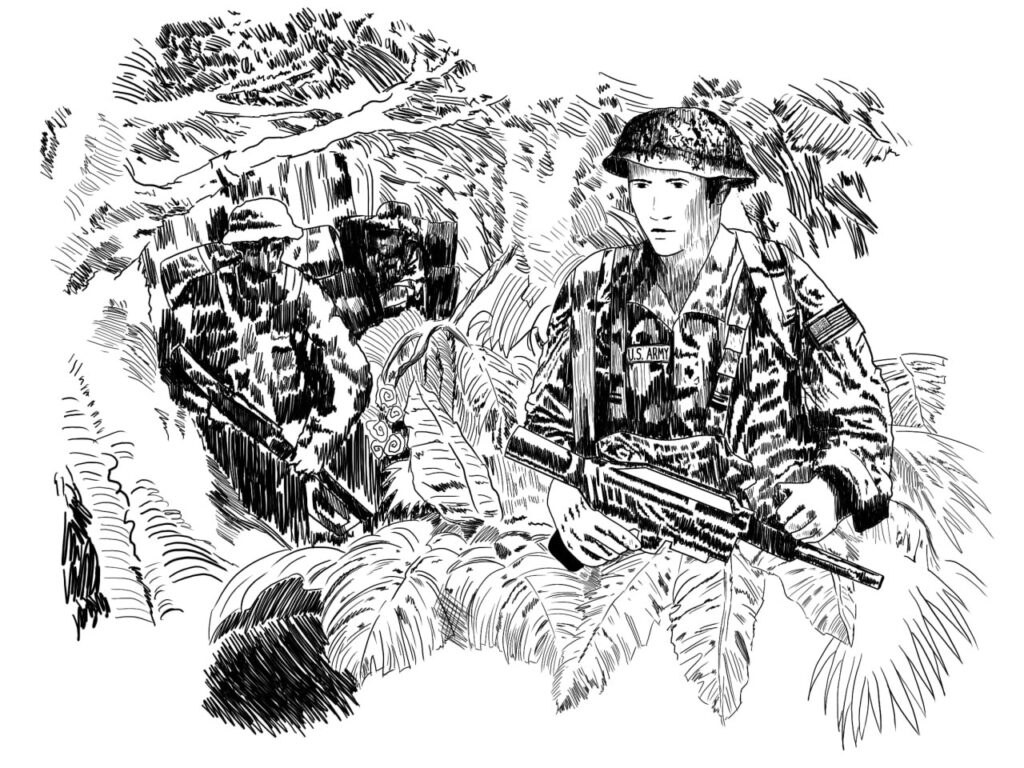
The US is conducting Salaknib 2026 in Luzon with the participation of naval forces from the US, the Philippines, and New Zealand, and the Japan Ground Self-Defense Force. It rehearses moving military equipment between islands under the pretext of “archipelagic defense.” The war games focus on jungle warfare and small unit tactics training under “real time” conditions. “Jungle combat training centers” were set up for this.
Kasangga 2026-1 in Camarines Sur was launched on May 26 with troops from the Australian Army. It focuses on intelligence and combat operations in communities. Foreign troops had already landed in the province even before the war game formally opened. They used the coastal and mountainous areas of Pasacao, Balatan, San Fernando, Libmanan, and Ragay. They intruded into communities and tightened restrictions on the movement and livelihoods of farmers and fisherfolk.
The US is conducting MAREX 2026 with the Philippine Marine Corps in Maguindanao del Norte, Mindanao. It focuses on jungle patrols outside Camp Iranun and artillery firing near populated areas in Datu Blah Sinsuat and Barira. The shelling terrorized residents.
War games by the US have from the outset emphasized counterinsurgency operations. Before it became a multinational display of troops and weapons, Balikatan focused on “internal defense” or experimenting with tactics and equipment against the Bangsamoro armed movement and against the New People’s Army. Under its cover, the US staged large-scale hypocritical civil-military operations such as building schools, conducting medical missions, digging wells, and other schemes to win the people’s “hearts and minds” away from revolution.
First launched in 2016, Salaknib emphasizes developing the Philippine Army’s tactics and capabilities in jungle warfare, small unit tactics, the use of K-9 units, explosive ordnance disposal, and artillery and mortar fire. It has for two years tested the use of large numbers of small drones (“eye in the sky” in Cagayan Valley in 2025) and modern counter-drone and electronic warfare (2026), alongside joint unit operations. The US later sold the weapons used in these war games to the Philippines.