Strike against the inutile Marcos regime and the greedy oil companies
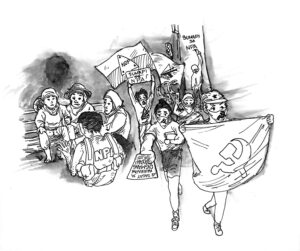
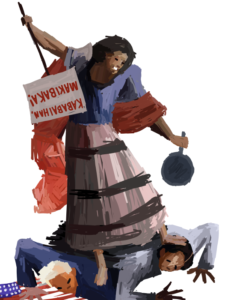
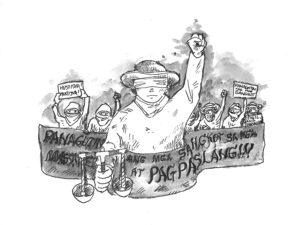
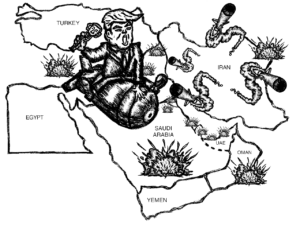
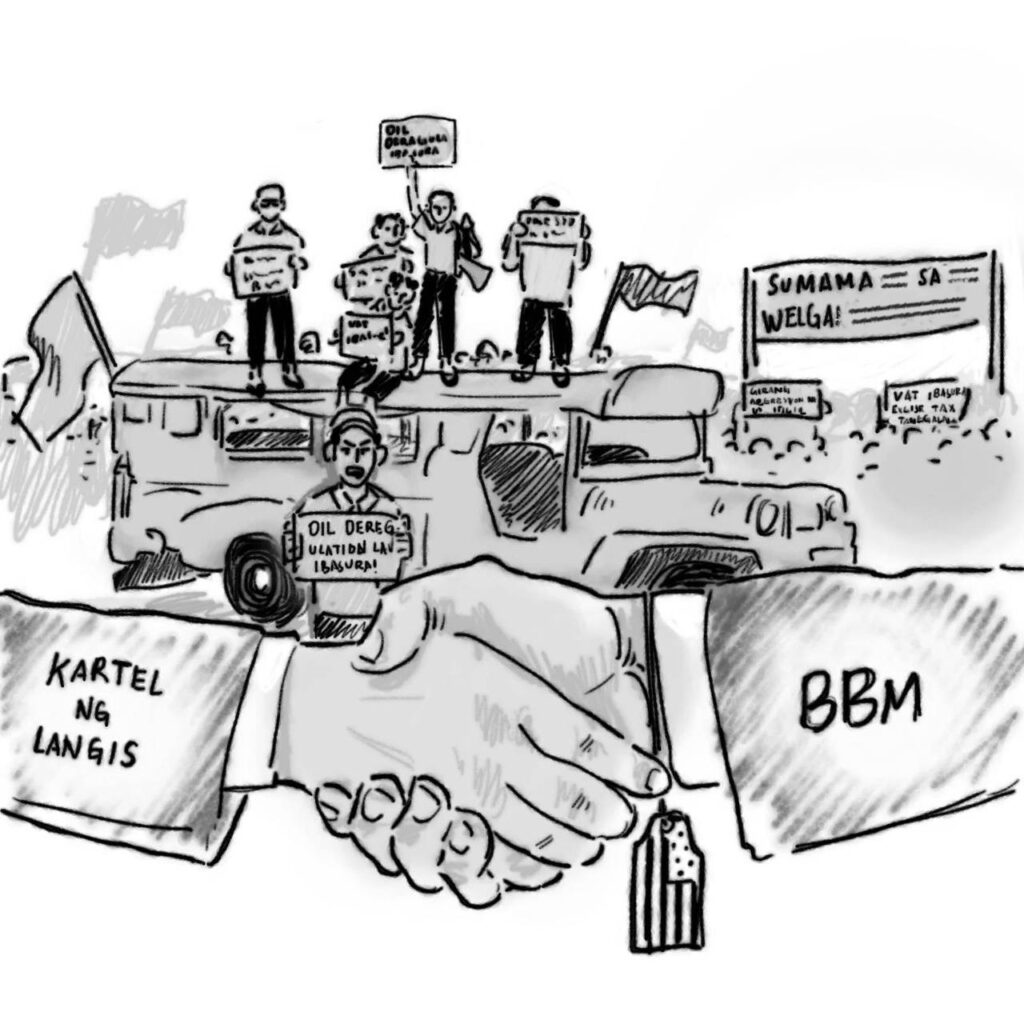
Jeepney drivers and operators led by Piston (Pagkakaisa ng mga Samahan ng Tsuper at Opereytor Nationwide, or Unity of Drivers’ and Operators’ Associations Nationwide), along with students, workers, the urban poor and other sectors, launched a two-day transport strike and people’s protest on March 19 and 20. Their protest-strike calls for an immediate rollback of petroleum product prices to ₱55/liter and for an end to the US war of aggression against Iran.
They also demand increasing wages to a living level, removing taxes on petroleum and other basic commodities, and junking the Oil Deregulation Law.
Youth groups at the University of the Philippines-Diliman and the Polytechnic University of the Philippines-Santa Mesa protested a day before in support of the strike call. Environmental groups and others trooped to the Petron Corporation office inside the compound of its owner San Miguel Corporation in Pasig City on March 16. They denounced profit-greedy Petron, and hurled mud and paint at the large tarpaulins hanging on the compound fence.
Miserable livelihoods
Alongside the immediate oil prices rollback, Piston is calling for a just fare increase of up to ₱5. The ₱1 fare increase announced by the Land Transportation Franchising and Regulatory Board (LTFRB) on March 17 is gravely insulting. Ferdinand Marcos Jr even revoked the already meager proposal.
The LTFRB earlier granted provincial buses a ₱1 fare increase for the first four kilometers and ₱0.30–₱0.45 for every succeeding kilometer, depending on the class of bus. Bus owners initially demanding a ₱20 increase in the base fare also opposed this.
The government last ordered a temporary ₱1 fare increase for jeepneys in 2023. Oil prices have tripled since then. Oil companies imposed two “jumbo” price hikes just this March. Gasoline prices were increased by ₱20–₱40+; diesel by ₱40–₱60+; and kerosene by ₱32–₱38.50/liter. On March 19, gasoline prices at gas stations were already at ₱80–₱96/liter; diesel at ₱95–₱114/liter; and kerosene at ₱85–₱134.89/liter.
According to Piston, when diesel prices reach ₱120 per liter, drivers will lose ₱3,600 daily at a consumption rate of 30 liters for a whole day of operations. This will force many of them to altogether stop plying their routes.
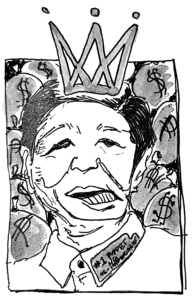
Profit greedy
Local companies amassed billions of pesos by overpricing petroleum products in 2025.
According to data from the International Monetary Fund and the Department of Energy, the price of Dubai crude oil fell from $81.80 per barrel in January 2025 to $61.83 in December 2025, or by 24%. Diesel prices in the NCR did not change despite this: ₱57.79 in January and ₱57.76 in December 2025.
The claim that local petroleum product prices merely “reflect” crude oil prices on the world market is utter nonsense. While oil companies are quick to pass on to consumers even slight increases in crude prices in the global market, they are extremely slow to roll back prices when these go down.
In the past 17–18 days, for example, crude oil prices in the world market rose by around 40–50% (from $70 to $102). Price hikes in the Philippines have been even steeper, especially for diesel, which went up by 50%–100% over the same period. The Oil Deregulation Law makes these the highest in all of Southeast Asia.
This greed explains why oil companies are among those that amass the biggest profits. Petron boasted of a “historic” 84% surge in its net income, from ₱8.5 billion in 2024 to ₱15.6 billion in 2025. Shell Philippines’ net income in the first nine months of 2025 also rose by 33%.
Burdensome taxes
Before the US war of aggression against Iran, at least ₱15 in taxes were imposed on every liter of diesel (₱6 as excise tax and ₱9 as value-added tax or VAT) and ₱17 on gasoline. Piston and Bayan demand removing not only the excise tax but especially the VAT, which rises as the base price increases.
Removing these taxes—starting with VAT—will lower petroleum product prices by ₱15–₱22/liter. This would be a huge relief not only for them and for public transportation commuters, but also for fisherfolk and farmers who use diesel in production.
Band-aid solutions
The Marcos regime’s hyped aid from the Department of Social Welfare and Development’s (DSWD) Assistance to Individuals in Crisis Situations (AICS) is grossly inadequate. The ₱5,000 “one-time cash payout” or lump-sum aid for jeepney, tricycle, taxi and TNVS drivers is insufficient and will last only three days. Very few have received it so far, and nationwide distribution will only begin in April. Many have already complained not being listed as eligible for aid.
Like AICS, the fuel subsidy of the Department of Transportation (DoTR) and LTFRB allocated for around 400,000 public transport drivers nationwide is also merely a one-shot deal. It will grant only ₱5,000 to drivers of traditional jeepneys and tricycles, while ₱10,000 will be given to drivers of “modern jeepneys.”